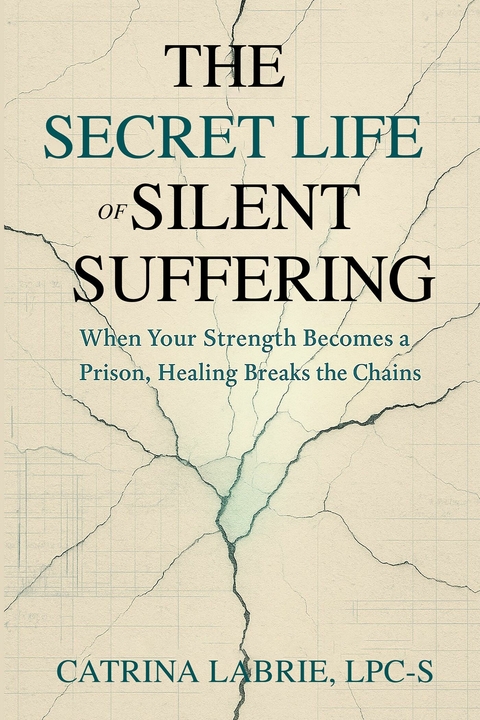
The Secret Life of Silent Suffering (eBook)
184 Seiten
Bookbaby (Verlag)
9798317825560 (ISBN)
Catrina Labrie is the Founder and Owner of Renew Restoration, LLC, in McKinney, Texas, where she serves as a Licensed Professional Counselor. She holds a Bachelor of Science in Family Studies and Child Development, with a minor in Youth Ministry, from Oklahoma Christian University, and a Master of Arts in Professional Counseling from Liberty University in Lynchburg, Virginia. With extensive experience working with children, youth, and families, Catrina is a Certified Trauma Professional who specializes in trauma-informed care. Her work centers on helping individuals understand their self-worth, heal from past experiences, and navigate life with renewed purpose. In addition to her counseling practice, Catrina is a Certified Coach and Trainer dedicated to empowering others to make meaningful, lasting change. As a published author, she shares her insights and expertise to inspire growth, resilience, and restoration.
Chapter 1
The Foundation/Blueprint Beneath:
Recognizing the Hidden Struggles That Shape You
How Did We Get Here?
In silence, we wear our smiles like armor, concealing the weight of suffering that others cannot see.
B
efore we can build anything new, we must first understand the foundation beneath us, the hidden layers of silent suffering that support, and sometimes threaten, the entire structure of our lives.
But how did we get here? How did silence become the default way we deal with pain?
From a young age, many of us are taught to keep our emotions under wraps. We’ve heard phrases like “Stop crying before I give you something to cry about”, “You’re fine, shake it off”, “Stop being so sensitive”, “Other people have it worse”, and “There’s nothing to be upset about” echoing through family rooms and school hallways. These early lessons plant the idea that pain isn’t something to be shared openly, but something to be hidden away.
Beyond family, the broader culture around us often teaches us to value strength, productivity, and appearance over vulnerability and authenticity. In a world that applauds business and “pushing through,” admitting struggle can feel like failure. The message is clear: keep going, keep smiling, and never let anyone see you falter.
Take a moment now to think, have you ever noticed how you respond when you or someone else expresses pain? What messages did you receive about showing vulnerability growing up?
The Collective Sense of Dysfunction
Over the past year, I have been studying a concept known as the collective sense of dysfunc-tion. Silent suffering doesn’t happen in isolation. It is part of a larger dysfunction that often weaves into the fabric of our communities, families, and workplaces, not just through obvious problems but also through the unspoken, heavy expectations tied to the roles we play.
Every role, whether a mom, an employee, a pastor, or a student, comes with silent, unvoiced de-mands about how we are “supposed” to be. These expectations weigh on us, even when no one says them aloud. For example:
- The mom who feels she must always be nurturing, organized, and endlessly patient with-out showing when she’s tired or overwhelmed.
- The employee who is expected to be dependable and productive at all times, rarely admit-ting to stress or burnout.
- The pastor who carries the weight of being a spiritual guide often feels like they must hold everything together for others while quietly wrestling with their own doubts.
- The student who is supposed to be resilient, capable, and successful, even when anxiety and pressure mount beneath the surface.
These roles come with invisible rules: Don’t complain. Don’t falter. Don’t let others see your cracks. They create a collective atmosphere where vulnerability feels unsafe, and where people silently endure their struggles to avoid disappointing others or losing respect.
This unspoken weight forms a kind of collective dysfunction, where everyone plays their part, but few feel truly seen or supported. The pressure to live up to these silent expectations keeps people isolated in their pain, even as they’re surrounded by others doing the same.
I’ve experienced this myself, feeling the quiet pressure to “have it all together” and to meet expectations without faltering. Whether it was at work, in community leadership, or within fam-ily, I often found myself pretending to be fine, even when exhaustion and doubt were creeping in. It wasn’t until I recognized that many others carry similar silent burdens that I realized how widespread and deeply rooted this collective silence really is.
Understanding this collective dynamic is important because it helps us realize that silent suffering isn’t just an individual issue; it’s baked into the systems and roles that shape our daily lives. It challenges us to rethink how we support one another and how we create spaces where honesty and vulnerability are not just allowed but encouraged.
Have you felt the silent weight of expectations tied to your role? How does it affect the way you show up in your relationships and responsibilities?
When Silence Speaks Louder Than Words
You might be reading this and thinking, “I don’t suffer like this.” But silent suffering doesn’t always look the way we expect. It often hides in plain sight, wrapped in everyday smiles, busy routines, and polite conversations.
Maybe you don’t see it in yourself, but it might be quietly living inside someone you love or en-counter every day. Your spouse may be carrying the weight of their own hidden battles, strug-gling to keep it all together while pretending everything is fine. Your child might be putting on a brave face at school, concealing fears and worries they don’t know how to express. The work leader who always seems to have the answers may be running on empty after sleepless nights. The employee who smiles through exhaustion and stress could be silently drowning beneath the surface.
Silent suffering is more common than we realize, and often people don’t even recognize it until it’s named. It thrives in the spaces where pain isn’t talked about, where vulnerability is feared, and where “fine” becomes the default answer to every “How are you?”
Think about the people in your life who seem strong, capable, and put-together. Could any of them be carrying silent burdens that you don’t know about? And what would it mean if you of-fered them a little more grace, a little more space to be real?
Why Do We Hide Our Pain?
But why is talking about it so hard? Why do we hide it in the first place? The reasons can be as varied as the people who experience them, and often, they feel like a heavy weight all by them-selves.
For some, it’s the fear of being judged. We worry that if we open up, people will see us as weak, be disappointed, or worse, treat us differently. Maybe you’ve asked yourself, “What will they think of me if they knew the truth? What if I’m no longer the person they expected?”
Then there’s the shame that often accompanies our struggles. Whether it’s feeling like we’re fail-ing or falling short of our own standards, shame keeps us trapped in silence. We believe no one else could understand, or that our pain is “too much” for others to handle. You may fear your pain is too messy, inconvenient, or overwhelming for those around you. However, the truth is that everyone carries burdens; some wear them more quietly.
Perhaps it’s the desire to protect those we love. We don’t want to add to their struggles or weigh them down with our own. So, we stay silent, thinking we’re doing the right thing. Yet, in hold-ing back, we often create a deeper distance between ourselves and the people who care.
And then there’s that internal voice telling us to be stronger. We tell ourselves we should handle it alone, that admitting struggle means failure. You might feel like you’ve been the one everyone leans on, providing steady support, so asking for help now feels wrong. But here’s the truth: ask-ing for support isn’t weakness, it’s a courageous step toward healing.
If I can be honest and sum it up, the main reason I stayed silent for so long and sometimes still do is that, deep down, I wondered, “Why does it even matter?”
That thought became the quiet wall between me and healing. When pain feels endless, when your voice feels unheard, or when you’ve convinced yourself that your story won’t change anything, silence can feel easier than hope. But I’ve learned that your voice does matter. Your story does matter. The moment you begin to believe that truth, even just a little, something begins to shift.
Take a moment to reflect: Which of these reasons feels most familiar to you? Or is there another reason you’ve discovered that keeps your pain hidden?
The Effects of Silent Suffering
Silent suffering can creep into your life without you even realizing it. You might think that if you just keep pushing through, everything will eventually get better on its own. However, the longer you hold onto your inner struggles in silence, the more they can subtly affect various aspects of your life. Your emotions, physical health, relationships, and even how you see yourself.
At first the signs may seem minor. Perhaps you feel more drained than usual or lose interest in things that once brought you joy. You may not recognize it as silent suffering at first, but over time, these small changes accumulate. You might withdraw more from others or struggle to maintain connections.
Silent suffering doesn’t always announce itself with dramatic symptoms; it often works quietly in the background until you realize something isn’t quite right.
The Emotional Impact
One of the most common effects is emotional numbness. You might think, “I’m just tired or stressed, it’s nothing serious.” However, emotional numbness isn’t always a complete shutdown. It can be a subtle fading of connection, joy feels harder to come by, life feels a bit more distant, and you may find yourself just going through the motions.
This emotional distance can creep up slowly, disguised as normal business or stress. But when emotions aren’t processed, they don’t disappear. They build walls between you and the people you care about.
Chronic Stress and Physical Consequences
The physical effects of silent suffering can sometimes manifest in subtle, unexpected ways. For many people, emotional pain doesn’t stay confined to the mind...
| Erscheint lt. Verlag | 1.12.2025 |
|---|---|
| Sprache | englisch |
| Themenwelt | Sachbuch/Ratgeber ► Gesundheit / Leben / Psychologie ► Lebenshilfe / Lebensführung |
| ISBN-13 | 9798317825560 / 9798317825560 |
| Informationen gemäß Produktsicherheitsverordnung (GPSR) | |
| Haben Sie eine Frage zum Produkt? |
 EPUB (Ohne DRM)
Digital Rights Management: ohne DRM
Dieses eBook enthält kein DRM oder Kopierschutz. Eine Weitergabe an Dritte ist jedoch rechtlich nicht zulässig, weil Sie beim Kauf nur die Rechte an der persönlichen Nutzung erwerben.
Dateiformat: EPUB (Electronic Publication)
EPUB ist ein offener Standard für eBooks und eignet sich besonders zur Darstellung von Belletristik und Sachbüchern. Der Fließtext wird dynamisch an die Display- und Schriftgröße angepasst. Auch für mobile Lesegeräte ist EPUB daher gut geeignet.
Systemvoraussetzungen:
PC/Mac: Mit einem PC oder Mac können Sie dieses eBook lesen. Sie benötigen dafür die kostenlose Software Adobe Digital Editions.
eReader: Dieses eBook kann mit (fast) allen eBook-Readern gelesen werden. Mit dem amazon-Kindle ist es aber nicht kompatibel.
Smartphone/Tablet: Egal ob Apple oder Android, dieses eBook können Sie lesen. Sie benötigen dafür eine kostenlose App.
Geräteliste und zusätzliche Hinweise
Buying eBooks from abroad
For tax law reasons we can sell eBooks just within Germany and Switzerland. Regrettably we cannot fulfill eBook-orders from other countries.
aus dem Bereich