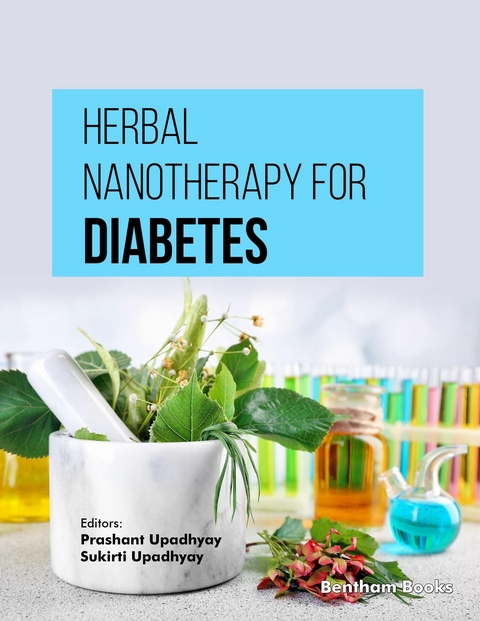
Herbal Nanotherapy for Diabetes (eBook)
275 Seiten
Bentham Science Publishers (Verlag)
979-8-89881-108-2 (ISBN)
Herbal Nanotherapy for Diabetes merges the therapeutic potential of phytochemicals with advanced nano-delivery systems, the book highlights innovative strategies to improve bioavailability, ensure targeted delivery, and minimize side effects in diabetes therapy. Beginning with an overview of diabetes as a global metabolic disorder, the book outlines its challenges in conventional treatment and the limitations of herbal remedies in their raw form. It then transitions into the principles and methodologies of designing herbal nanoparticles, emphasizing formulation strategies, delivery mechanisms, and preclinical evaluations.Chapters also analyze clinical applications, therapeutic outcomes, and mechanisms of action, before culminating in future perspectives on nanotechnology-enabled herbal therapeutics for diabetes care. Key Features: Examines the challenges of conventional diabetes treatments and the role of herbal medicine. Explores the design, formulation, and development of herbal nanoparticles. Analyzes the mechanisms and therapeutic pathways of phytochemicals in diabetes care. Investigates nanotechnology-enabled strategies for targeted delivery and improved bioavailability. Assesses preclinical and clinical studies supporting the efficacy of herbal nanotherapy. Highlights future directions and innovations in herbal nanomedicine for diabetes management.
Introduction to Herbal Nano Therapy: Understanding the Science
Prashant Upadhyay1, *, Shipra Sharma2, Reetika Rawat2, Tapasvi Gupta3, Durga Prasad3, Divya Sharma2, Sukirti Upadhyay4, Arti Gupta2
Abstract
Herbal medicines have served humanity for numerous generations all across the world. Current methods in phytochemical and phytopharmacological sciences base the clinical applicability of numerous medicinal plants on the composition of active compounds and how much of these compounds are present in samples. Numerous therapeutic compounds such as flavonoids, tannins along terpenoids exist as water-soluble substances yet they have limited potential for absorption. Multiple barriers prevent these compounds from penetrating cell membranes or taking absorption or crossing cell membrane barriers because of their large molecular size and poor absorption and inability to cross cell membranes. This causes them to have low bioavailability and reduced efficacy. Plant extracts fail to enter clinical practice due to these circumscribing factors. Researchers have extensively recommended using nanotechnology to overcome the obstacles related to herbal medicine delivery. Nanoscale technology increases the efficacy of plant extracts by reducing the amount of administration required while reducing side effects and producing therapeutic advantages. Nanocarriers maintain active components at their best concentrations during therapy while guiding them to specific destinations. Treatment methods that exist in the conservative healthcare system typically do not achieve these standards. This section evaluates both nanotechnology principles and their use in herbal drug delivery systems. The drug delivery system using herbal nanotechnology remains essential for diabetes management because polymeric and lipid nanoparticles, liposomes, dendrimers, and niosomes show superior performance than traditional oral hypoglycaemic agent treatments.
* Corresponding author Prashant Upadhyay: Department of Pharmaceutics, School of Pharmaceutical Science, Faculty of Pharmacy, IFTM University, Moradabad, Uttar Pradesh, India; E-mail: p23upadhyay@yahoo.com
INTRODUCTION
Medicinal plants have been leveraged for their therapeutic benefits since the beginning of human civilization; potential uses for several plant parts have been widely recognized, and they are also considered to have fewer undesirable effects relative to chemically synthesized drugs, therefore holding a crucial position in healthcare [1]. The introduction of modern scientific methods like nanotechnology in recent years has altered the delivery and potentiality of phytopharmaceuticals. Nanotechnology, the design of materials at the nanoscale level has opened new frontiers to elevate the bioavailability, stability, and target specificity of plant-based medicine [2]
A prime example of how useful this symbiosis is in the context of a chronic condition like diabetes mellitus, where an imbalance in the blood glucose levels is prevalent owing to a lack of insulin synthesis or utilize it optimally. India, often referred to as the “diabetes capital of the world” with >61 million affected individuals underscores the necessity for a better alternative [3]. Biologically active components such as flavonoids, alkaloids, phenolics, and tannins are known for their antidiabetic properties and medicinal plants have traditionally been used to help control diabetes. They work by stimulating the secretion of insulin from pancreatic cells, blocking intestinal absorption of glucose, and modulating metabolic pathways. Nonetheless, conventional plant-based therapies have limitations such as poor solubility and absorption, which limit their therapeutic activity [4].
The nanotechnology-based delivery system has been developed for the beneficial action of these bioactive compounds by providing maximum absorption and stability which in turn increases their effectiveness in maintaining glucose levels and better sensitivity towards insulin. Herbal nano therapy is a potential treatment that reduces complications of diabetes therapies and it offers a new optimized addition to conventional therapies by trapping those compounds into nanoparticles [5, 6]. Nanotechnology application in phytopharmaceuticals extends beyond diabetes to the behavior and treatment of many diseases including cancer, cardiovascular, neurodegenerative, and autoimmune diseases. However, diabetes is only one avenue, the application of nanotechnology in phytopharmaceuticals covers other diseases as well. The targeted delivery is a particularly different therapy as different strategies of nano-based drug delivery systems have been already approved by regulatory authorities like the FDA. This guarantees that the active compound of the plant extract is stable during transport in the body and controlled release from nanocarriers at the action site, improving the treatment efficiency [7].
Herbal nanotherapy continues to face multiple obstacles that prevent it from reaching its complete potential. Achieving consistent therapeutic results is complicated by the complex nature of plant-based compounds and variable raw material quality. Active phytoconstituents found in herbal medicines may interfere with the metabolism or therapeutic effectiveness of synthetic drugs and thus create potential risks during treatment [8]. Resolving quality control and regulatory concerns about herbal medicine contamination from heavy metals and synthetic drugs is essential for ensuring these products remain safe and effective. The field of herbal nanotherapy depends on the standardization of herbal medicines through proper identification and collection practices to resolve current challenges [9].
Herbal nanotherapy unites traditional medicine practice and contemporary scientific methods to boost medicinal plant treatment capabilities. Nanotechnology enables herbal compounds to achieve better bioavailability and stability while ensuring controlled release and safeguarding them against gastrointestinal damage. Nanotechnology-based herbal therapy shows potential for treating long-term conditions such as diabetes which requires continuous management. Through Nano encapsulation techniques such as liposomes, dendrimers, and polymeric nanoparticles active plant compounds achieve increased solubility and absorption rates which enhance their pharmacological effects and minimize toxicity levels. This innovation resolves herbal medicine issues by delivering safer treatment options while establishing standardized phytopharmaceutical products that blend traditional methods with modern scientific advancements [10].
TRANSFORMING DIABETIC CARE WITH NANOTECHNOLOGY
Medicinal plants provide phytopharmaceuticals that have served global healthcare needs for centuries since healthcare providers and patients value their therapeutic advantages and reduced side effects over traditional medications. Modern drug delivery technology such as nanotechnology can greatly enhance the efficacy of phytopharmaceuticals when these are developed through scientific and methodical methods. This approach leads to improved patient adherence while simultaneously increasing bioavailability and guaranteeing precise delivery of the active compound [11].
Nanocarriers in Phytopharmaceuticals
By developing a new delivery system around nanocarriers the field of phytopharmaceuticals now benefits from enhanced drug properties including solubility and bioavailability together with stability and target specificity through nanoformulations like liposomes, dendrimers, and polymeric nanoparticles, plant extracts are encapsulated such that their absorption across lipid membranes is enhanced and their circulation times are prolonged [12]. This leads to enhanced pharmacological activity while reducing systemic toxicity. Nanocarrier-based phytopharmaceuticals have...
| Erscheint lt. Verlag | 22.10.2025 |
|---|---|
| Sprache | englisch |
| Themenwelt | Sachbuch/Ratgeber ► Gesundheit / Leben / Psychologie ► Ernährung / Diät / Fasten |
| ISBN-13 | 979-8-89881-108-2 / 9798898811082 |
| Informationen gemäß Produktsicherheitsverordnung (GPSR) | |
| Haben Sie eine Frage zum Produkt? |
 EPUB (Ohne DRM)
Digital Rights Management: ohne DRM
Dieses eBook enthält kein DRM oder Kopierschutz. Eine Weitergabe an Dritte ist jedoch rechtlich nicht zulässig, weil Sie beim Kauf nur die Rechte an der persönlichen Nutzung erwerben.
Dateiformat: EPUB (Electronic Publication)
EPUB ist ein offener Standard für eBooks und eignet sich besonders zur Darstellung von Belletristik und Sachbüchern. Der Fließtext wird dynamisch an die Display- und Schriftgröße angepasst. Auch für mobile Lesegeräte ist EPUB daher gut geeignet.
Systemvoraussetzungen:
PC/Mac: Mit einem PC oder Mac können Sie dieses eBook lesen. Sie benötigen dafür die kostenlose Software Adobe Digital Editions.
eReader: Dieses eBook kann mit (fast) allen eBook-Readern gelesen werden. Mit dem amazon-Kindle ist es aber nicht kompatibel.
Smartphone/Tablet: Egal ob Apple oder Android, dieses eBook können Sie lesen. Sie benötigen dafür eine kostenlose App.
Geräteliste und zusätzliche Hinweise
Buying eBooks from abroad
For tax law reasons we can sell eBooks just within Germany and Switzerland. Regrettably we cannot fulfill eBook-orders from other countries.
aus dem Bereich