



Tanks and Armour at Leningrad 1941–1944
Seiten
2026
Pen & Sword Books Ltd (Verlag)
978-1-0361-2259-1 (ISBN)
Pen & Sword Books Ltd (Verlag)
978-1-0361-2259-1 (ISBN)
- Noch nicht erschienen (ca. April 2026)
- Portofrei ab CHF 40
- Auch auf Rechnung
- Artikel merken
At dawn on 22 June 1941, along an 1,800-mile-long invasion front, three million German soldiers on the frontier of the Soviet Union unleashed the largest offensive in military history – Operation Barbarossa. Spearheading this titanic clash was Field Marshal Ritter von Leeb, commander of Army Group North. With 500,000 men at his disposal, comprising almost thirty divisions, six of them armoured and motorized, with 1,500 Panzers and 12,000 heavy weapons, plus an air fleet of nearly 1,000 planes, he was determined to strike through the Baltic states of Lithuania, Latvia and Estonia, straight towards their objective – Leningrad.
Leeb’s offensive on Leningrad was rapid. Its armoured force was the backbone of the advance comprising of the 3rd and 4th Panzer Group with Field Marshal Erich von Manstein commanding the LVI Motorized Corps and General Rudolf Schmidt’s XXXIX Motorized Corps that included the 12th, 18th and 20th Panzer Divisions.
Tanks and Armour at Leningrad 1941–1944 provides a powerful visual chronicle of how the Panzerwaffe attacked and supported the infantry that battled around the besieged city of Leningrad. With 150 rare and often unpublished images, this book provides a unique insight into German armour that operated around Leningrad from its early triumphant days in 1941 and 1943 to its slow and painful retreat in early 1944.
Leeb’s offensive on Leningrad was rapid. Its armoured force was the backbone of the advance comprising of the 3rd and 4th Panzer Group with Field Marshal Erich von Manstein commanding the LVI Motorized Corps and General Rudolf Schmidt’s XXXIX Motorized Corps that included the 12th, 18th and 20th Panzer Divisions.
Tanks and Armour at Leningrad 1941–1944 provides a powerful visual chronicle of how the Panzerwaffe attacked and supported the infantry that battled around the besieged city of Leningrad. With 150 rare and often unpublished images, this book provides a unique insight into German armour that operated around Leningrad from its early triumphant days in 1941 and 1943 to its slow and painful retreat in early 1944.
Ian Baxter is an avid collector of WW2 photographs. His previous books in this Series include Hitler’s Boy Soldiers, Nazi Concentration Camp Commandants and German Army on the Eastern Front – The Advance, German Army on the Eastern Front – The Retreat and Nazi Concentration Camp Commandants, The Crushing of Army Group (North) and the SS Waffen Division series including SS Leibstandarte Division and SS Totenkopf Division At War. He lives near Chelmsford, Essex.
| Erscheint lt. Verlag | 30.4.2026 |
|---|---|
| Zusatzinfo | 200 mono illustrations |
| Verlagsort | Barnsley |
| Sprache | englisch |
| Maße | 172 x 246 mm |
| Themenwelt | Natur / Technik ► Fahrzeuge / Flugzeuge / Schiffe ► Militärfahrzeuge / -flugzeuge / -schiffe |
| Sozialwissenschaften ► Politik / Verwaltung | |
| ISBN-10 | 1-0361-2259-X / 103612259X |
| ISBN-13 | 978-1-0361-2259-1 / 9781036122591 |
| Zustand | Neuware |
| Informationen gemäß Produktsicherheitsverordnung (GPSR) | |
| Haben Sie eine Frage zum Produkt? |
Mehr entdecken
aus dem Bereich
aus dem Bereich
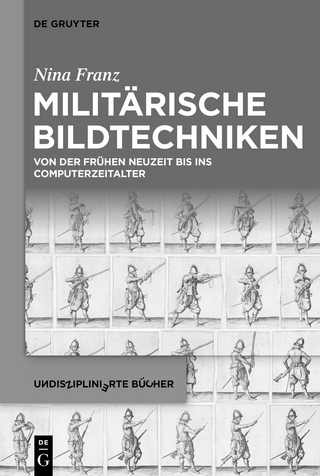
von der frühen Neuzeit bis ins Computerzeitalter
Buch | Hardcover (2025)
De Gruyter (Verlag)
CHF 83,90
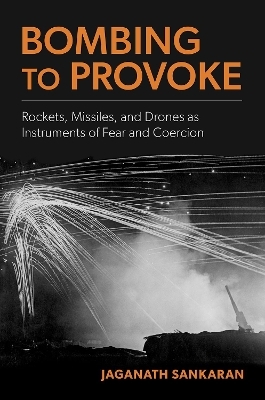
rockets, missiles, and drones as instruments of fear and coercion
Buch | Softcover (2025)
Oxford University Press Inc (Verlag)
CHF 34,90


