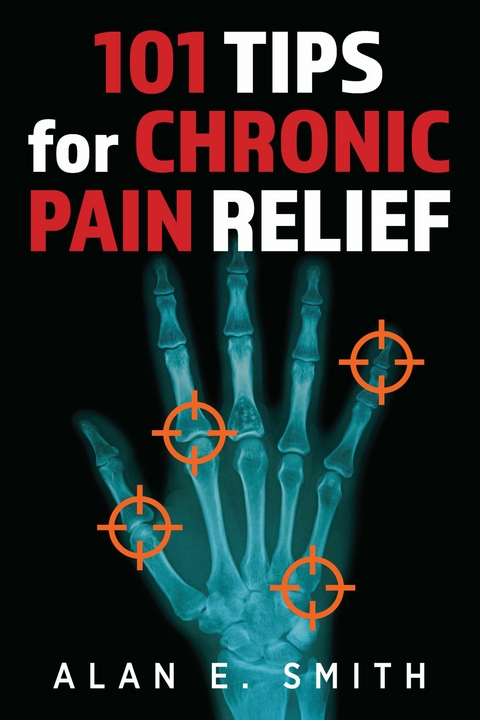
101 Tips for Chronic Pain Relief (eBook)
130 Seiten
Loving Healing Press (Verlag)
978-1-61599-853-1 (ISBN)
Pain. It can be low, pounding, never-seems-to-go-away pain or stabbing, piercing, want-to-scream-at-the-top-of-your-lungs pain. I've watched chronic pain slowly eat away at a life. Sixty years ago my mother was one of the first to have a new surgical procedure to relieve her pain. It didn't work. Years later her pain finally ended her life shortly after her 40th birthday.What is pain? You know what it is: it's your nervous system telling you that something isn't right and it hurts. Pain is a complex process and it can vary from one person to the next even if they have similar injuries or illnesses.
The American Chronic Pain Association simply says that 'It's hard to know how to move forward once chronic pain has entered your life. It helps to think of a person with chronic pain like a car with four flat tires.' It may take more than one type of therapy or treatment to get the car (your life) moving again.
'A thorough collection of things to consider if dealing with chronic pain. Drugs, modern and alternative, OTC and ones to avoid. Treatments new and medieval. Just enough information about each option to let chronic pain sufferers know whether this is an avenue they should pursue.' --Jeff H.
'This book will expand your possibilities for finding an effective source of chronic pain relief. More than just a list, Alan Smith explains each entry in layman's terms while also providing background information, research credentials, advantages and disadvantages, with helpful warnings about possible side effects or addiction.' --Bob Moody, author of The Terror of Indiana: Bent Jones & The Moody-Tolliver Feud
'Chronic pain issues combined with poor meds management can be lethal. Smith's book offers new hope for the not-infrequently damaging and sometimes possibly lethal pain management programs of the past. I am excited by the future possibilities within.' --Molly G.
From the 101 Tips Series
Over-The-Counter Pain Relief
Tip #16: Aspirin
Aspirin is one of the oldest medicines available for pain relief and it’s the most widely used drug in the world today. Willow bark has been used as a medicine for thousands of years and salicin is its effective ingredient. Aspirin is a salicylate that works to reduce substances in the body that can cause pain, fever, and inflammation. It can even be used to prevent heart attacks, strokes and chest pain or to treat those conditions. It was synthesized by the folks at Bayer at the end of the 19th century. Today, aspirin is available from baby aspirins to coated aspirins to prescription aspirin which is used to relieve the pain of rheumatoid arthritis, osteoarthritis and other rheumatologic conditions.
It is often recommended to take aspirin with food to prevent it upsetting your stomach. The Mayo Clinic website lists over 60 side effects of aspirin. You shouldn’t take aspirin if you have hemophilia or intestinal bleeding. Avoid aspirin if you are allergic to an NSAID (non-steroidal anti-inflammatory drug) such as Advil, Motrin, Aleve or other similar drug. Also avoid drinking while you’re taking aspirin since it can increase your risk of stomach bleeding.
Never give aspirin to a child or teenager with a fever, flu symptoms or chickenpox. Taking aspirin late in a pregnancy may cause bleeding in the mother or baby during delivery. Aspirin can also pass into breast milk and harm a baby.
To make sure aspirin is safe, be sure to tell your doctor if you have asthma or seasonal allergies, stomach ulcers, liver or kidney disease, gout, heart disease or high blood pressure.
Tip #17: Alcohol
there has been alcohol almost since the beginning of human history, and sad to say, it seems to be a pretty effective pain reliever. Science doesn’t know why it works, only that it works, so well that an estimated 28% of chronic pain sufferers turn to alcohol for their symptoms. Not that scientists haven’t tried to figure out why it’s even better than some painkillers, in fact recent research examined 18 different studies on pain showing how effective it is.
Many drinkers turned to alcohol for pain relief for its ability to depress the central nervous system, or in other words, pain relief. The issue is, how much and how often. It appears that after three drinks for men and two drinks for women, the painkilling effectiveness can be described as “moderate to large.” Unfortunately, the Dietary Guidelines for Americans 2020-2025 recommend only two drinks per day for men and only one drink per day for women. However, booze is cheaper than most prescription drugs, which makes it very attractive. However, eventually you’ll have to drink more and more to get the same amount of pain relief. That’s how an alcoholic is created. Being in chronic pain leads to alcohol abuse, which is basically trading one problem for another.
Using alcohol and opioids together can cause an overdose because it depresses parts of the brain that control breathing. In fact, research seems to suggest that alcohol is involved in about one in five deaths from opioid overdoses. But the dangers of alcohol aren’t just with opioids. If you’ve ever taken an over-the-counter pain reliever like Tylenol, Advil or Aleve after a night of drinking to treat your hangover, you may also be creating an ulcer, stomach bleeding, liver and kidney damage and more. Withdrawing from chronic alcohol use can not only increase pain sensitivity but it’s frequently a motivation for some to increase their drinking.
Tip #18: Hempvana™
One of the newer over-the-counter (OTC) pain solutions is Hempvana, which is a pain relief cream with hemp seed oil. It relieves both pain and inflammation. One of its advantages is that it treats the pain and not the entire body like a drug. The key to its effectiveness is that it contains CBD from the oil of the seeds of the Cannabis Sativa plant, but it does not get you “high” because it does not contain THC, which is what causes psychotropic effects. This topical pain relief product is produced in America in an FDA-registered facility. Warnings on the jar say not to use more than three times each day.
Tip #19: Biofreeze
Biofreeze is the brand name of a menthol topical medicine that’s been around for over 25 years. It’s made from extracts of mint oil and provides a cooling sensation when applied to the skin. This feeling of cooling helps to relieve pain temporarily in the tissues underneath the skin, such as muscles. It’s used to treat joint pain and even bruises, and is even been used for arthritis pain. The major ingredient is menthol, which stimulates the thermoreceptors in the skin, giving a cooling sensation, which then stimulates non-nociceptive nerve fibers that act as a counterirritant. It also causes vasodilation, which improves blood flow and improves lymphatic drainage, which also reduces inflammation.
This product is non-systemic, non-narcotic and contains no NSAIDs, salicylates or any addictive substance. It comes in a variety of products including gel, spray, roll-on, cream, in a large patch, single-use patches, pump, foam, pen and strip. Do not apply to serious burns or deep wounds. Do not use on broken or irritated skin and on open wounds. Do not cover the treated area with a heating pad or with a tight bandage. It should not be used more than three or four times per day. Rinse with water if it gets into your eyes or mouth. For your first use, only apply Biofreeze to a small area of skin to see how it reacts.
Tip #20: Salonpas Pain Patch
Salonpas Pain Patch (for the skin) is used for temporary relief of minor aches and pains caused by everything from strains and sprains to arthritis, bruising, nerve pain, down to a simple backache. There are different types of patches available over the counter, depending on your pain and its location. One type of patch contains a 4% Lidocaine ingredient while another uses a combination of 3% Menthol and 10% Menthyl Salicylate. In addition to patches, Salonpas also offers gels and even spray products for pain relief. Please note that you should never cover treated skin with a bandage or heating pad.
Tip #21: Tylenol / Paracetamol
Tylenol™, or acetaminophen, is an over-the-counter pain reliever for a wide variety of pain ranging from headaches and arthritic pain to all types of muscle and even sinus pain. It’s available in tablets, capsules, liquid, chewable tablets and dissolvable powders. Outside North America, acetaminophen is branded as Panadol™ or generically as Paracetamol. Rest assured that all four of these names are chemically identical to each other: Tylenol, acetaminophen, Panadol, and Paracetamol. This is an important fact for world travelers to know!
Be warned that anyone weighing at least 110 pounds should not take more than 1000 milligrams at one time or more than 4000 mg in 24 hours. If you drink more than three drinks per, day you may not be able to take Tylenol because it can damage your liver. Stop taking Tylenol and contact your doctor if you continue to have a sore throat after using it for two days, or if you still have a fever after three days. Obviously, call your doctor immediately if you develop a skin rash or nausea, vomiting, swelling or other serious reaction. While this may be an over-the-counter medication, it is still potentially dangerous.
Tip #22: Advil
Advil, or ibuprofen, which is its generic name, is a nonsteroidal anti-inflammatory drug that eases pain by reducing certain hormones in the body. By lowering inflammation, it reduces your pain, fever and other issues, which is why it’s recommended for everything from headache to a toothache.
There are several variations of Advil but normally the product is taken by mouth every four to six hours with a full glass of water. Don’t take any more of it or take it any more frequently than recommended, as it can damage your stomach and intestines. It’s usually recommended that you take it with food or milk. Also, do not lie down for at least ten minutes after taking an Advil.
There can be adverse reactions as with any over-the-counter medication. Advil can increase the risk of a fatal heart attack or stroke, even if you don’t have any of the normal risk factors. It can also cause stomach or intestinal bleeding, which can also be fatal, and these risks increase for elderly patients.
Tip #23: Emu Oil
Who would have thought we’d be talking about large, flightless birds originally from Australia? But the Aboriginal people there have reportedly used Emu oil for more than 40,000 years. When emus started being raised for their meat in America, it was only a matter of time before emu oil was used for pain relief.
There are many types of emu oil products available today, but Blue Emu cream is probably the best known. It contains glucosamine and methylsulfonylmethane (MSM) added to emu oil along with aloe vera. It’s rich in essential fatty acids—omega 3, 6, and 9. Oleic acid (a monounsaturated omega-9 fatty acid). Emu oil is a natural type of transdermal carrier, which simply means it can penetrate the skin with its anti-inflammatory, antibacterial and anti-fungal properties.
A study reported in the National Library of Medicine says that Emu oil has been found to help relieve muscle pain and treat inflamed joints. This makes it perfect for back pain, painful joints and for arthritic pain.
It’s very simply to use Emu oil products. Simply rub a thin layer on the painful area. Although it is not recommended to put it on cuts, open wounds or any type of damaged skin, Australian aborigines find it to be soothing and to alleviate scar tissue. Don’t wrap the area too tightly with a bandage or...
| Erscheint lt. Verlag | 1.10.2024 |
|---|---|
| Sprache | englisch |
| Themenwelt | Sachbuch/Ratgeber ► Gesundheit / Leben / Psychologie ► Alternative Heilverfahren |
| Schlagworte | Chronic fatigue syndrome • Diseases • Fitness • Health • India • Medical • pain management • Pain Medicine |
| ISBN-10 | 1-61599-853-5 / 1615998535 |
| ISBN-13 | 978-1-61599-853-1 / 9781615998531 |
| Informationen gemäß Produktsicherheitsverordnung (GPSR) | |
| Haben Sie eine Frage zum Produkt? |
 EPUB (Ohne DRM)
Digital Rights Management: ohne DRM
Dieses eBook enthält kein DRM oder Kopierschutz. Eine Weitergabe an Dritte ist jedoch rechtlich nicht zulässig, weil Sie beim Kauf nur die Rechte an der persönlichen Nutzung erwerben.
Dateiformat: EPUB (Electronic Publication)
EPUB ist ein offener Standard für eBooks und eignet sich besonders zur Darstellung von Belletristik und Sachbüchern. Der Fließtext wird dynamisch an die Display- und Schriftgröße angepasst. Auch für mobile Lesegeräte ist EPUB daher gut geeignet.
Systemvoraussetzungen:
PC/Mac: Mit einem PC oder Mac können Sie dieses eBook lesen. Sie benötigen dafür die kostenlose Software Adobe Digital Editions.
eReader: Dieses eBook kann mit (fast) allen eBook-Readern gelesen werden. Mit dem amazon-Kindle ist es aber nicht kompatibel.
Smartphone/Tablet: Egal ob Apple oder Android, dieses eBook können Sie lesen. Sie benötigen dafür eine kostenlose App.
Geräteliste und zusätzliche Hinweise
Buying eBooks from abroad
For tax law reasons we can sell eBooks just within Germany and Switzerland. Regrettably we cannot fulfill eBook-orders from other countries.
aus dem Bereich