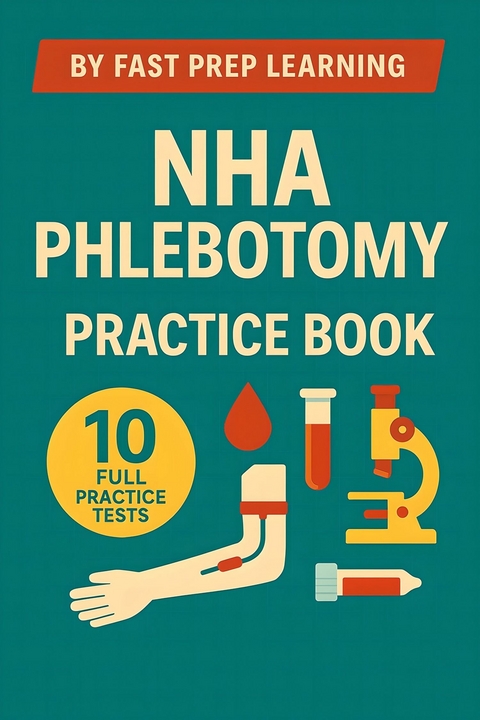
NHA Phlebotomy Practice Book (eBook)
309 Seiten
Publishdrive (Verlag)
978-0-00-109648-6 (ISBN)
What if I told you that preparing for the NHA Phlebotomy exam with real confidence-without stress, without confusion, and without feeling unready-can become your reality?
If you're worried you haven't practiced enough realistic questions or you're unsure how you'll perform under real exam pressure, then training with full-length, exam-accurate practice tests can be your answer.
It can significantly improve your testing speed, accuracy, and understanding of what the NHA truly expects-because nothing prepares you better than practicing with the same structure and logic used on the real exam.
This practice book was created with one goal: to simulate the NHA Phlebotomy exam with 15 full-length practice tests that mirror the official format, each including clear answer explanations to help reinforce your learning.
Every test follows the National Healthcareer Association's layout and competency areas, giving you realistic exposure to questions covering safety, infection control, order of draw, specimen handling, patient interaction, and procedural steps.
Whether you're taking the exam for the first time or retaking it for a higher score, these tests build the confidence and familiarity you need to pass. You also don't need hours of daily study. Even with 30-40 minutes a day, this system helps you stay consistent and improve your performance steadily.
If you feel unsure whether this will help, don't worry. Inside this book you'll find complete practice exams that reveal your strengths, expose your weak points, and give you a clear roadmap toward readiness. This is ideal if you want a cost-effective, structured practice solution without relying on expensive prep courses or scattered online questions.
Whether you struggle with order of draw, labeling, safety procedures, patient identification, or tricky scenario-based questions, these tests train you to think exactly like the NHA exam requires.
Here is just a fraction of what you'll discover inside this book:
15 full-length NHA Phlebotomy practice tests matching the official exam
• Answer explanations that help you understand mistakes immediately
• A 4-week testing plan to organize your practice step-by-step
• Realistic questions covering safety, infection control, patient prep, equipment, and procedures
• Hundreds of exam-style items that build accuracy and confidence
• Timed practice sessions to help you improve testing speed
• Up-to-date content aligned with current NHA standards
• A true exam simulation for candidates who learn best through repetition
Practice Test 1
SECTION 1 — SAFETY & COMPLIANCE (26 QUESTIONS)
Q1. Which action best prevents the transmission of infection between patients?
A) Wearing gloves only for venipuncture
B) Hand hygiene before and after each patient
C) Using alcohol pads twice
D) Wearing a gown for every procedure
E) Only disinfecting surfaces at end of shift
Correct: B
Why: Hand hygiene is the most effective infection-control measure.
Q2. A phlebotomist accidentally receives a small cut while opening a box. What should they do first?
A) Report it to HR
B) Continue working and bandage later
C) Wash the area with soap and water
D) Apply alcohol only
E) Ignore it
Correct: C
Why: Wounds must be immediately cleaned to reduce infection risk.
Q3. OSHA requires employers to provide which item to all phlebotomists?
A) Paid meals
B) Gloves and other PPE
C) Weekly bonuses
D) Free vaccinations for families
E) Personal health insurance
Correct: B
Why: OSHA mandates appropriate PPE for safety.
Q4. Which needle disposal action is compliant with OSHA’s Needlestick Safety Act?
A) Recapping used needles slowly
B) Recapping with two hands
C) Immediately discarding needles in a sharps container
D) Placing needles in a trash bin
E) Leaving uncapped needles on a tray
Correct: C
Why: All used sharps must go into an approved sharps container.
Q5. A patient with airborne precautions must be collected in which environment?
A) Any open waiting room
B) A private room with closed door
C) A negative-pressure room
D) A hallway to ensure ventilation
E) Outdoors
Correct: C
Why: Airborne pathogens require negative-pressure rooms.
Q6. Which color bag is used for biohazardous waste?
A) Green
B) Clear
C) Red
D) Yellow
E) Blue
Correct: C
Why: Red bags signify biohazard waste.
Q7. When labeling specimens, which mistake violates safety standards?
A) Using printed labels
B) Labeling at the bedside
C) Pre-labeling tubes before collection
D) Writing date/time on label
E) Including two identifiers
Correct: C
Why: Pre-labeling can cause specimen mix-ups.
Q8. A patient refuses a blood draw. What must the phlebotomist do?
A) Proceed anyway
B) Force consent
C) Document refusal and notify nurse
D) Ask family for permission only
E) Ignore and leave
Correct: C
Why: Refusals must be documented and communicated.
Q9. Which glove action is unsafe?
A) Changing gloves between patients
B) Sanitizing hands after glove removal
C) Using torn gloves
D) Wearing gloves for venipuncture
E) Donning gloves before contact
Correct: C
Why: Damaged gloves compromise protection.
Q10. What is the correct response to a large blood spill?
A) Spray with water
B) Cover with bleach solution (1:10)
C) Wipe with dry towel
D) Use alcohol pads
E) Ignore small areas
Correct: B
Why: Large spills require 1:10 bleach disinfectant.
Q11. Which tube must be inverted 8–10 times to prevent clotting?
A) Red
B) SST
C) Lavender (EDTA)
D) Gray
E) Green
Correct: C
Why: EDTA tubes require adequate mixing.
Q12. HIPAA protects which type of information?
A) Billing only
B) Medicare records only
C) Any patient-identifiable health information
D) Only physician notes
E) Anonymous lab data
Correct: C
Why: HIPAA covers all PHI.
Q13. Which action increases the risk of hemoglobin exposure?
A) Wearing gloves
B) Using closed transfer devices
C) Opening a full sharps container
D) Immediate disposal of sharps
E) Using safety-engineered needles
Correct: C
Why: Overfilled containers increase exposure risk.
Q14. Which is a required patient identifier?
A) Room number
B) Favorite color
C) Full name
D) Insurance price
E) Diet
Correct: C
Why: Accepted identifiers include name, DOB, or MRN.
Q15. What should the phlebotomist do when they see liquid leaking from a specimen bag?
A) Ignore it
B) Carry by hand
C) Place inside a second biohazard bag
D) Throw in regular trash
E) Wipe the outside only
Correct: C
Why: Double-bagging prevents contamination.
Q16. According to CLSI, which order of draw comes first?
A) Lavender
B) Red
C) Light blue
D) Gray
E) Green
Correct: C
Why: Coagulation tubes (light blue) come first after blood cultures.
Q17. Which PPE is required for a patient with C. difficile?
A) N95 only
B) Face shield only
C) Gloves and gown
D) Shoe covers only
E) Hair net
Correct: C
Why: Contact precautions require gloves and gown.
Q18. Which item is regulated medical waste?
A) Paper packaging
B) Empty soda can
C) Blood-soaked gauze
D) Syringe wrapper
E) Cotton balls after cleaning
Correct: C
Why: Items saturated with blood are regulated waste.
Q19. Needle gauge refers to:
A) Needle length
B) Internal diameter
C) Tube additive
D) Label type
E) Blood color
Correct: B
Why: Gauge indicates internal bore size.
Q20. Which exposure requires an incident report?
A) Glove allergy
B) Paper cut away from work
C) Blood splash to eyes
D) Minor bruise
E) Old scar reopening
Correct: C
Why: Blood exposures require official reporting.
Q21. The first step after a needlestick injury is to:
A) Complain to coworkers
B) Wash with soap and water
C) Sign out for break
D) Hide the injury
E) Continue working
Correct: B
Why: Immediate washing reduces risk.
Q22. Which scenario violates patient privacy?
A) Discussing results with nurse
B) Logging out of EMR
C) Leaving results on a shared printer
D) Closing computer screens
E) Speaking quietly
Correct: C
Why: PHI must never be left exposed.
Q23. Safety Data Sheets (SDS) provide information about:
A) Employee salaries
B) Hazardous chemicals
C) Patient diets
D) Insurance payments
E) Needle brands
Correct: B
Why: SDS covers handling and risks of chemicals.
Q24. Which is required for BBP training compliance?
A) Once per career
B) Annually
C) Every 10 years
D) Only after incidents
E) Optional
Correct: B
Why: OSHA requires annual BBP training.
Q25. Which method minimizes aerosol formation when opening tubes?
A) Flicking tubes
B) Quickly popping caps off
C) Using a safety shield
D) Shaking vigorously
E) Heating tubes
Correct: C
Why: Safety shields reduce aerosol exposure.
Q26. Which scenario is permissible under HIPAA?
A) Talking loudly about patient results
B) Sharing PHI with unauthorized staff
C) Using PHI for gossip
D) Accessing only patients assigned to your care
E) Posting patient info online
Correct: D
Why: Staff may access PHI only as needed.
SECTION 2 — PATIENT PREPARATION (20 QUESTIONS)
Q27. Before drawing blood, what is the FIRST step in patient preparation?
A) Put on gloves
B) Clean the site
C) Introduce yourself and verify identity
D) Apply the tourniquet
E) Label the tubes
Correct: C
Why: Proper identification must occur before any procedure.
Q28. A fasting specimen is required. The patient reports drinking coffee with cream. What should the phlebotomist do?
A) Proceed normally
B) Draw but mark “fasting”
C) Notify the nurse and delay the draw
D) Ignore it
E) Tell the patient it doesn’t matter
Correct: C
Why: Cream breaks the fasting requirement.
Q29. Which patient statement indicates proper understanding of basal state?
A) “I can eat fruit before the test.”
B) “I should avoid fasting for too long.”
C) “I should not eat or exercise before the test.”
D) “I can drink milk.”
E) “I only need to skip dinner.”
Correct: C
Why: Basal state requires no food or strenuous activity.
Q30. A patient with a history of syncope begins to sweat before the draw. What should the phlebotomist do first?
A) Continue working quickly
B) Ask the patient to lie down
C) Throw water on the patient
D) Elevate the arm
E) End the procedure permanently
Correct: B
Why: Patients at risk of fainting should be drawn lying down.
Q31. Which patient condition requires using a butterfly needle?
A) High blood pressure
B) Small or fragile veins
C) Fast heartbeat
D) Athlete veins
E) High hematocrit
Correct: B
Why: Butterfly needles help with fragile or small veins.
Q32. What should be avoided before an alcohol test (BAC)?
A) Using iodine
B) Using soap
C) Using alcohol to clean the site
D) Using paper towels
E) Keeping the arm still
Correct: C
Why: Alcohol contamination affects BAC results.
Q33. Which vein is most commonly used for venipuncture?
A) Basilic
B) Cephalic
C) Median...
| Erscheint lt. Verlag | 4.11.2025 |
|---|---|
| Sprache | englisch |
| Themenwelt | Sachbuch/Ratgeber ► Beruf / Finanzen / Recht / Wirtschaft ► Bewerbung / Karriere |
| ISBN-10 | 0-00-109648-6 / 0001096486 |
| ISBN-13 | 978-0-00-109648-6 / 9780001096486 |
| Informationen gemäß Produktsicherheitsverordnung (GPSR) | |
| Haben Sie eine Frage zum Produkt? |
 EPUB (Adobe DRM)
Größe: 1,0 MB
Kopierschutz: Adobe-DRM
Adobe-DRM ist ein Kopierschutz, der das eBook vor Mißbrauch schützen soll. Dabei wird das eBook bereits beim Download auf Ihre persönliche Adobe-ID autorisiert. Lesen können Sie das eBook dann nur auf den Geräten, welche ebenfalls auf Ihre Adobe-ID registriert sind.
Details zum Adobe-DRM
Dateiformat: EPUB (Electronic Publication)
EPUB ist ein offener Standard für eBooks und eignet sich besonders zur Darstellung von Belletristik und Sachbüchern. Der Fließtext wird dynamisch an die Display- und Schriftgröße angepasst. Auch für mobile Lesegeräte ist EPUB daher gut geeignet.
Systemvoraussetzungen:
PC/Mac: Mit einem PC oder Mac können Sie dieses eBook lesen. Sie benötigen eine
eReader: Dieses eBook kann mit (fast) allen eBook-Readern gelesen werden. Mit dem amazon-Kindle ist es aber nicht kompatibel.
Smartphone/Tablet: Egal ob Apple oder Android, dieses eBook können Sie lesen. Sie benötigen eine
Geräteliste und zusätzliche Hinweise
Buying eBooks from abroad
For tax law reasons we can sell eBooks just within Germany and Switzerland. Regrettably we cannot fulfill eBook-orders from other countries.
aus dem Bereich