It's Okay to Talk About Adoption (eBook)
220 Seiten
Bookbaby (Verlag)
979-8-3178-0915-7 (ISBN)
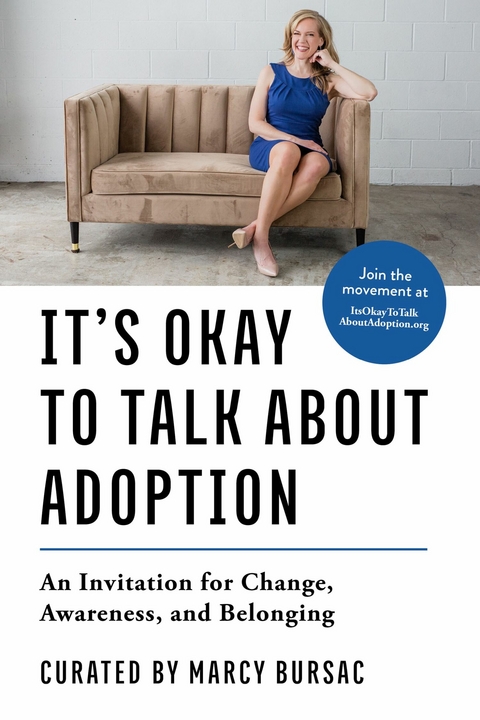
Marcy Bursac is a nationally recognized foster care adoption advocate, author, speaker, researcher, and founder of The Forgotten Adoption Option, a national nonprofit that equips adults to adopt from foster care and brings age-appropriate adoption books into K-12 classrooms. Her journey into motherhood began with the bold decision to choose adoption as her plan A. She and her husband adopted preschool-aged siblings who had spent years in foster care. Living as an adoptive mom opened her eyes to how often adoption is left out of the places that shape our daily lives-schools, workplaces, and faith communities. Through this book, she passes the torch and invites everyone to change how adoption is understood and discussed-with truth, tenderness, and courage.
"e;It's Okay to Talk About Adoption"e; arrives at a moment when adoption remains widely misunderstood, emotionally charged, and often left out of everyday conversations. While adoption touches millions of lives, it's still overlooked in classrooms, workplaces, faith communities, and public policy. According to estimates based on U.S. Census data, as many as 1 in 25 U.S. families with children include an adopted child-yet adoption remains an invisible or avoided topic in many areas of life. That silence breeds stigma, confusion, and missed opportunities for empathy and support. This book exists to change that. Through 18 authentic voices adoptees, birth parents, adoptive parents, faith leaders, researchers, and policymakers "e;It's Okay to Talk About Adoption"e; offers readers both real stories and actionable insight. With courage and compassion, these contributors open up about the complexity of adoption, especially through foster care, and the power of creating inclusive spaces where adoption isn't treated as taboo. Compiled by Marcy Bursac, a nationally recognized foster care adoption advocate and founder of The Forgotten Adoption Option, this anthology is both heartfelt and practical. This book is perfect for: Adoptees, birth parents, and adoptive parents. School administrators, teachers, school counselors, and child welfare professionals. Human resources teams, DEI leaders, and workplace decision-makers. Faith leaders, ministry teams, and church communities. Journalists, storytellers, and community influencers.
Introduction
Holding the Silence
“Can you send in a baby photo of your son?”
That one-line request from my son’s teacher left me speechless. I wasn’t prepared for how something so simple could feel so complicated. I didn’t realize how much adoption could require families to be on guard—always ready to respond to the unexpected, to think quickly, to protect our kids in moments that sneak up out of nowhere.
Adoption was always my Plan A. I knew there were children who needed families, and whether I was single or married, I wanted to be a mom to one—or more—of them. My dream was a big family, but my husband lovingly set the limit at two kids. I grew up with three older sisters and couldn’t imagine being separated, so I suggested we adopt siblings. And that’s exactly what we did.
We adopted through the foster care system. Our son was four, and our daughter was a week away from her third birthday when we met them. We were their seventh home. By the time our daughter was finishing preschool and our son was starting kindergarten, we celebrated their adoption day surrounded by friends and family in a courtroom—followed by an outdoor party that was pure joy.
The school photo request came sometime the following year. We had been given a few early pictures but hardly any from their baby years. Maybe those photos were lost. Maybe they were never taken. From what we were told, life during that season was chaotic. Either way, we didn’t have one.
What hurt wasn’t just that we couldn’t provide a baby photo; it was that there wasn’t an alternative offered. No one seemed to consider that not all families could meet that request. I held my discomfort quietly and confided in my husband. I didn’t email the teacher. I didn’t tell our son. I wanted to. But my husband—who’s a teacher—gently reminded me that even though she knew our son was adopted, she probably hadn’t thought about how that assignment might land for an adoptive family. The best photo I had available was one from his toddler stage. So, I sent it in, hoping that it would not stand out among his classmates’ infant pictures.
I never heard another word about it. When the photos were displayed, I saw that several other families had sent in toddler pictures too. It turns out “baby” just meant “little.” I felt kind of foolish for assuming “baby” meant during the first 12 months of their life. But that experience stayed with me—and reminded me just how many everyday things still carry assumptions that not every family can meet.
Years later, when our son moved into the fifth grade in a new building with new teachers, something shifted. I had been mentoring families on adopting through the foster care system since our adoption hearing—right from our living room. And somewhere in that season—between teaching others and navigating these moments with my own kids—I began to see things differently. It wasn’t that people were trying to exclude us. It was that they hadn’t thought to include us.
During the same season, my kids were learning virtually as the world shut down for the pandemic. My son, now eleven, was given an open-topic writing assignment. Around that time, I had just published my first book, The Forgotten Adoption Option, and I asked my kids if they were comfortable with a family photo on the back cover. My son paused, then asked, “Mom, if I say yes, do you think it might help another kid get adopted?”
He chose to write about foster care adoption for that assignment. After struggling through online sources filled with legal jargon, his teacher offered him the chance to change topics. But he said he couldn’t—because it mattered. Because kids like him deserve to be understood.
That school project revealed more than I expected. It became so clear to me that adoption doesn’t live quietly in the background; it intersects with every part of life. And when we don’t talk about it, we leave too many people—children and adults—without the language or support they need to belong.
The Silent Spaces
Even as an adoptive parent who encourages open conversations at home and talks about the complexities of adoption with friends, peers, and even new acquaintances, I’ve come to realize that adoption is far more nuanced—and often more misunderstood—than many people realize. For families like mine, adoption isn’t just a personal journey; it’s a cultural puzzle we’re constantly navigating.
In recent years, some adoptees have raised their voices publicly—sharing their anger, grief, or frustration about how adoption impacted their identity, sense of belonging, or understanding of self. These stories can be hard to hear, especially for adoptive parents, but they offer something valuable: a deeper look into the lifelong nature of adoption. These voices remind us that adoption doesn’t erase loss—and that truly understanding adoption means listening to the experiences of those who have lived it. When we make space for adoptees to share their truth, we build a culture that is more honest, inclusive, and compassionate.
One of the first challenges many people face when considering adoption is how their immediate and extended family will respond. It can feel a bit like receiving an unspoken vote—a dynamic where people who aren’t living the decision still carry influence. Some loved ones respond with immediate, heartfelt support. Others hesitate, fall quiet, or express concerns—not out of a lack of care, but often because of uncertainty, unfamiliarity, or a story they once heard—or someone they once knew. Even those subtle reactions can cause hopeful adoptive parents to question what they feel called to do.
Then there’s the language we hear from people who mean well but don’t realize how much weight their words carry. Comments like “You’re such a saint” or “Those kids should be grateful” may sound like compliments, but they reinforce harmful stereotypes. They put adoptive parents on a pedestal and put pressure on adopted children to feel thankful for simply having a family. These are children, not charity projects.
Despite the challenges, we live in a time when we have the tools to do better. We can streamline systems, match families with children more efficiently, and raise awareness more broadly than ever before. But every year in the United States, more than 15,000 children age out of foster care without ever being adopted. That’s more than 15,000 lives starting adulthood without the stability, encouragement, or support of a permanent family—not because there aren’t willing families out there, but because the system is hard to navigate, under-resourced, and deeply misunderstood.
What’s worse is that adoption remains almost entirely invisible in many of the spaces where people spend their daily lives. Workplaces often offer employee resource groups for women, parents, veterans, LGBTQ+ employees, and multicultural teams—but adoption is rarely included. And when it’s overlooked, so are the people it touches: adoptees, birth parents, adoptive parents, and the advocates who support them. In schools, adoption is typically left out of classroom conversations unless a student or parent brings it up. Assignments often assume that every child has baby photos or lives with their birth parents. These assumptions may seem small; however, they quietly reinforce what society views as “normal” and in doing so, leave many adoptive families and adopted children feeling unseen.
Faith communities have started to move the needle. Some congregations have built adoption and foster care ministries that not only celebrate these families but walk alongside them with meaningful, ongoing support. But these examples are still more the exception than the norm. In some spaces, support is shaped by theological beliefs or community values, which can influence who feels fully welcomed into adoption-related programs. For example, some faith communities may have limitations based on their views about same-sex marriage. While these convictions are deeply held, they can unintentionally leave some hopeful adoptive parents, adoptees, and youth in foster care uncertain about whether they truly belong.
This is the heart of the problem: adoption lives in the shadows. Not because it should, but because we haven’t made space for it in our conversations, policies, or institutions. And when something remains unspoken, it becomes misunderstood—and people get left out.
The Reality Hidden in Plain Sight
All around the world, children are growing up without families. Some are placed in orphanages because their parents died, fled conflict, or simply couldn’t afford to raise them. Others live in institutional care, group homes, or on the streets—unseen and uncertain of their future. Around the world millions of children lack permanent families and the security, love, and guidance that come with one.
In the United States, the situation looks different, but it still carries deep consequences. Tens of thousands of children in foster care are awaiting adoption.1 These aren’t hypothetical kids or vague statistics. These are real lives—older children, tweens, and teens—waiting for someone to step in. And when no one does, many of them exit the system without...
| Erscheint lt. Verlag | 7.11.2025 |
|---|---|
| Sprache | englisch |
| Themenwelt | Sachbuch/Ratgeber ► Gesundheit / Leben / Psychologie ► Familie / Erziehung |
| ISBN-13 | 979-8-3178-0915-7 / 9798317809157 |
| Informationen gemäß Produktsicherheitsverordnung (GPSR) | |
| Haben Sie eine Frage zum Produkt? |
 EPUB (Ohne DRM)
Größe: 1,1 MB
Digital Rights Management: ohne DRM
Dieses eBook enthält kein DRM oder Kopierschutz. Eine Weitergabe an Dritte ist jedoch rechtlich nicht zulässig, weil Sie beim Kauf nur die Rechte an der persönlichen Nutzung erwerben.
Dateiformat: EPUB (Electronic Publication)
EPUB ist ein offener Standard für eBooks und eignet sich besonders zur Darstellung von Belletristik und Sachbüchern. Der Fließtext wird dynamisch an die Display- und Schriftgröße angepasst. Auch für mobile Lesegeräte ist EPUB daher gut geeignet.
Systemvoraussetzungen:
PC/Mac: Mit einem PC oder Mac können Sie dieses eBook lesen. Sie benötigen dafür die kostenlose Software Adobe Digital Editions.
eReader: Dieses eBook kann mit (fast) allen eBook-Readern gelesen werden. Mit dem amazon-Kindle ist es aber nicht kompatibel.
Smartphone/Tablet: Egal ob Apple oder Android, dieses eBook können Sie lesen. Sie benötigen dafür eine kostenlose App.
Geräteliste und zusätzliche Hinweise
Buying eBooks from abroad
For tax law reasons we can sell eBooks just within Germany and Switzerland. Regrettably we cannot fulfill eBook-orders from other countries.
aus dem Bereich