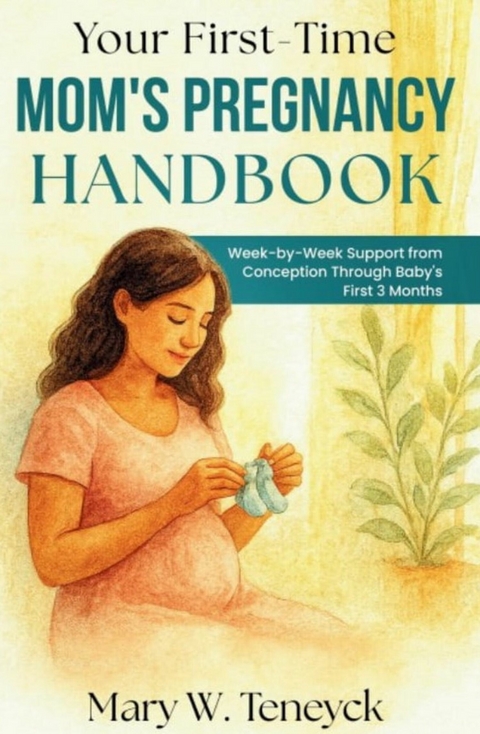
Your First-Time Mom's Pregnancy Handbook (eBook)
163 Seiten
Seahorse Pub (Verlag)
978-0-00-108878-8 (ISBN)
Discover the ultimate companion for your journey into motherhood with 'Your First-Time Mom's Pregnancy Handbook: Week-by-Week Support from Conception Through Baby's First 3 Months' by Mary W. Teneyck. This comprehensive pregnancy guide for first-time moms cuts through the confusion of outdated advice and overwhelming online searches, delivering evidence-based, compassionate insights tailored to your unique experience.
From the moment you see that positive test, dive into week-by-week breakdowns of fetal development, maternal changes, and practical tips to manage morning sickness, fatigue, and emotional ups and downs. Learn essential nutrition foundations, safe exercise routines, and how to build your healthcare team-drawing from the latest 2024-2025 ACOG and AAP guidelines. Whether you're navigating high-risk factors, cultural traditions, or modern family dynamics, this new mom pregnancy book empowers you with inclusive, realistic strategies for a confident pregnancy.
Prepare for labor and delivery with detailed overviews of birth options, pain management, and emergency protocols. Then, seamlessly transition to postpartum recovery and newborn care, covering breastfeeding success, sleep patterns, soothing techniques, and your baby's first milestones up to three months. Teneyck's empathetic voice-blending medical excellence with her own experiences as a working mom-normalizes the challenges while celebrating the miracle of growing life.
Packed with quick-reference charts, symptom trackers, partner integration tips, and a resource directory, this essential first-time pregnancy book is your trusted ally. Say goodbye to anxiety and hello to empowered motherhood. Perfect for expectant mothers seeking a modern, supportive pregnancy bible that grows with you from conception to cuddles. Join thousands who've transformed their journey-grab your copy today and embrace pregnancy with knowledge, grace, and joy.
Chapter 1
Understanding Your Pregnancy Journey
The Miracle of Pregnancy: Conception to Birth Overview
Pregnancy represents one of nature's most extraordinary processes, transforming a single fertilized cell into a fully formed human being capable of independent life. This remarkable transformation occurs over approximately 280 days, or 40 weeks, calculated from your last menstrual period. Understanding this timeline helps you appreciate the incredible changes occurring within your body while preparing for the months ahead.
The pregnancy timeline begins with conception, typically occurring around two weeks after your last menstrual period. During the first trimester, spanning weeks 1-12, your baby's major organs and body systems form while your body adapts to hormonal changes supporting pregnancy. Morning sickness, fatigue, and breast tenderness commonly occur as your body increases blood volume, adjusts hormone levels, and creates the placenta that will nourish your growing baby.
The second trimester, weeks 13-27, often brings renewed energy as morning sickness subsides and your body settles into pregnancy rhythms. Your baby's movements become noticeable around week 18-22, creating profound emotional connections as pregnancy becomes more tangible. This period typically involves important screenings, anatomy ultrasounds, and glucose tolerance testing to monitor both maternal and fetal health.
The third trimester, weeks 28-40, focuses on final fetal development and birth preparation. Your baby gains weight rapidly while developing lung maturity and neurological sophistication necessary for independent life. Your body prepares for labor through Braxton Hicks contractions, cervical changes, and positioning adjustments that may cause increased discomfort but signal approaching birth.
Labor and delivery mark the culmination of pregnancy, though experiences vary dramatically in duration, intensity, and progression. Whether your labor lasts hours or days, proceeds naturally or requires medical intervention, results in vaginal delivery or cesarean birth, your body accomplishes the remarkable feat of bringing your baby safely into the world.
The postpartum period, extending through your baby's first three months, represents continued transformation as your body recovers from pregnancy and birth while adapting to breastfeeding demands. Your baby undergoes rapid development outside the womb, learning to breathe independently, regulate body temperature, coordinate feeding reflexes, and begin forming social connections with caregivers.
Throughout this entire timeline, your healthcare team monitors both your health and your baby's development through regular appointments, screening tests, and assessments designed to identify any concerns early while supporting optimal outcomes. This comprehensive care approach ensures you receive appropriate support and intervention when needed while celebrating the normal, healthy progression of most pregnancies.
Understanding Pregnancy Stages and Milestones
Pregnancy progression follows predictable patterns while allowing for significant individual variation. Understanding these stages helps you recognize normal development while appreciating your unique experience within broader frameworks of healthy pregnancy progression.
First Trimester Development encompasses the most critical period of organ formation. By week 4, your baby's heart begins beating. Week 6 brings brain development and the formation of arm and leg buds. Neural tube closure occurs around week 7, preventing serious developmental abnormalities. By week 12, all major organs have formed, and your baby measures approximately 2 inches long while weighing less than half an ounce.
Maternal changes during the first trimester include increased hormone production, particularly human chorionic gonadotropin (hCG), which maintains pregnancy and often causes nausea. Your blood volume begins increasing, contributing to fatigue as your cardiovascular system adapts. Breast changes prepare for eventual breastfeeding, while your uterus begins expanding to accommodate fetal growth.
Second Trimester Progression focuses on growth and refinement of established organ systems. Your baby's skeleton transforms from cartilage to bone, while developing senses allow responses to light, sound, and touch. Vernix caseosa, a protective waxy coating, covers your baby's skin, while lanugo, fine hair, provides additional protection. By week 27, your baby weighs approximately 2 pounds and measures 14 inches long.
This trimester typically brings welcome relief from early pregnancy symptoms while introducing new experiences like fetal movement, often described as fluttering sensations that strengthen into definite kicks and rolls. Your growing uterus becomes visible as your abdomen expands, while your center of gravity shifts, affecting balance and posture.
Third Trimester Maturation emphasizes final preparations for independent life. Your baby's lungs develop surfactant, essential for breathing after birth. Brain development accelerates, establishing connections necessary for complex behaviors. Your baby gains approximately half a pound per week, accumulating fat stores that regulate body temperature and provide energy reserves.
Maternal changes focus on birth preparation as your body produces relaxin, softening ligaments and joints for delivery. Your pelvis widens slightly, while your cervix begins softening and thinning in preparation for labor. Braxton Hicks contractions become more frequent and noticeable as your uterus practices for active labor.
Labor and Birth Milestones vary significantly but typically include three distinct stages. Early labor involves gradual cervical dilation and effacement with increasingly regular contractions. Active labor brings intense contractions that fully dilate your cervix, allowing your baby to descend through the birth canal. The final stage involves placental delivery and immediate postpartum recovery.
Postpartum Milestones include physical recovery from birth, establishment of breastfeeding routines, and emotional adjustment to parenthood. Your uterus contracts back to pre-pregnancy size over six weeks, while hormonal changes support milk production and gradual return of menstrual cycles. Your baby's milestones include regaining birth weight by two weeks, establishing feeding patterns, and beginning social interactions through eye contact and responsive behaviors.
Individual Variations and What's Considered Normal
Pregnancy experiences vary dramatically among women, with factors including maternal age, pre-pregnancy health, lifestyle, genetics, and environmental influences all contributing to individual differences. Understanding normal variation helps you avoid unnecessary worry while recognizing when professional evaluation is appropriate.
Physical Symptom Variations affect virtually every aspect of pregnancy. Morning sickness ranges from absent to severe, with some women experiencing no nausea while others require medical intervention for hyperemesis gravidarum. Fatigue levels vary from mild tiredness to exhaustion requiring significant lifestyle modifications. Weight gain patterns differ based on pre-pregnancy weight, with recommendations ranging from 11-40 pounds depending on starting body mass index.
Fetal movement patterns show remarkable individual differences. Some babies are consistently active throughout pregnancy, while others have quieter personalities even in utero. First-time mothers typically feel movement between weeks 18-22, while experienced mothers may notice movement earlier due to familiarity with sensations. Movement frequency and intensity vary throughout pregnancy as your baby's sleep patterns develop and available space decreases.
Timing Variations affect every pregnancy milestone. Conception may occur immediately or require months of trying, both representing normal fertility ranges. Due dates represent estimates rather than precise predictions, with only 5% of babies arriving on their calculated due date. Full-term pregnancy ranges from 37-42 weeks, with most babies arriving safely within this timeframe.
Labor onset varies from gradual buildup over days to sudden, intense contractions. Labor duration ranges from rapid 2-3 hour deliveries to extended processes lasting 24-48 hours, both potentially normal depending on individual circumstances. Postpartum recovery timelines differ significantly, with some women feeling recovered within weeks while others require months to regain pre-pregnancy energy levels.
Body Type Influences affect pregnancy appearance and experience. Women with longer torsos may not show obvious pregnancy until later stages, while those with shorter torsos appear pregnant earlier. Athletic women often experience different physical challenges than sedentary women, with muscle tone affecting pregnancy comfort and labor progression. Pelvic structure variations influence labor progression and delivery methods.
Age-Related Differences create distinct pregnancy experiences. Younger mothers often have more energy and faster physical recovery but may lack emotional readiness or financial stability. Older mothers may experience more physical discomforts and require additional monitoring but often bring greater emotional maturity and life experience to parenting.
Cultural and Family Influences shape pregnancy expectations and experiences. Family histories of pregnancy complications don't guarantee similar experiences, while supportive family traditions can enhance pregnancy enjoyment. Cultural practices around pregnancy restrictions, celebration, and preparation vary widely, all...
| Erscheint lt. Verlag | 28.10.2025 |
|---|---|
| Sprache | englisch |
| Themenwelt | Sachbuch/Ratgeber ► Gesundheit / Leben / Psychologie ► Familie / Erziehung |
| ISBN-10 | 0-00-108878-5 / 0001088785 |
| ISBN-13 | 978-0-00-108878-8 / 9780001088788 |
| Informationen gemäß Produktsicherheitsverordnung (GPSR) | |
| Haben Sie eine Frage zum Produkt? |
 EPUB (Adobe DRM)
Größe: 1 MB
Kopierschutz: Adobe-DRM
Adobe-DRM ist ein Kopierschutz, der das eBook vor Mißbrauch schützen soll. Dabei wird das eBook bereits beim Download auf Ihre persönliche Adobe-ID autorisiert. Lesen können Sie das eBook dann nur auf den Geräten, welche ebenfalls auf Ihre Adobe-ID registriert sind.
Details zum Adobe-DRM
Dateiformat: EPUB (Electronic Publication)
EPUB ist ein offener Standard für eBooks und eignet sich besonders zur Darstellung von Belletristik und Sachbüchern. Der Fließtext wird dynamisch an die Display- und Schriftgröße angepasst. Auch für mobile Lesegeräte ist EPUB daher gut geeignet.
Systemvoraussetzungen:
PC/Mac: Mit einem PC oder Mac können Sie dieses eBook lesen. Sie benötigen eine
eReader: Dieses eBook kann mit (fast) allen eBook-Readern gelesen werden. Mit dem amazon-Kindle ist es aber nicht kompatibel.
Smartphone/Tablet: Egal ob Apple oder Android, dieses eBook können Sie lesen. Sie benötigen eine
Geräteliste und zusätzliche Hinweise
Buying eBooks from abroad
For tax law reasons we can sell eBooks just within Germany and Switzerland. Regrettably we cannot fulfill eBook-orders from other countries.
aus dem Bereich