


Trains in Japanese Art
Seiten
2025
BoD – Books on Demand – Spanien (Verlag)
978-84-1174-870-4 (ISBN)
BoD – Books on Demand – Spanien (Verlag)
978-84-1174-870-4 (ISBN)
- Titel nicht im Sortiment
- Artikel merken
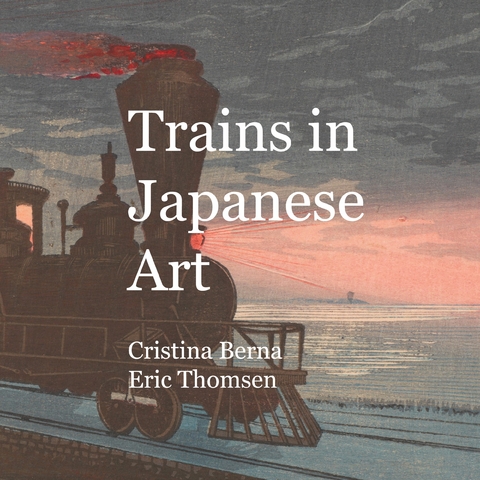
This small book has been put together at the request of the ardent railfan in the family, who happened to see one of these interesting prints.
It is intended for teaching such younger railfans not only in history, but also science and art and the commentary and criticism is kept at this level. This work does not presume to be in any way exhaustive of the railroad subject.
Japan's railroads started with two miniature steam locomotives introduced from abroad. The first arrived in Nagasaki on a Russian ship in 1853, while the second came to Yokohama in 1854 aboard one of Commodore Perry's black ships.
Ukiyo-e artists especially Hiroshige III began churning out colorful and sometimes fanciful renderings of the bizarre smoke-belching machines. The father showing a locomotive to his son is very charming.
Later followed prints with locomotives overturned in the Great Kanto Earthquake and a Russian locomotive that had gone through the ice on Lake Baikal during he Russo-Japanese War.
After this trains came to occupy Japanese prints and Japanese art much in the same way European artists have always adored them.
The authors include a few examples of other art work, ending with Shinkansen.
It is intended for teaching such younger railfans not only in history, but also science and art and the commentary and criticism is kept at this level. This work does not presume to be in any way exhaustive of the railroad subject.
Japan's railroads started with two miniature steam locomotives introduced from abroad. The first arrived in Nagasaki on a Russian ship in 1853, while the second came to Yokohama in 1854 aboard one of Commodore Perry's black ships.
Ukiyo-e artists especially Hiroshige III began churning out colorful and sometimes fanciful renderings of the bizarre smoke-belching machines. The father showing a locomotive to his son is very charming.
Later followed prints with locomotives overturned in the Great Kanto Earthquake and a Russian locomotive that had gone through the ice on Lake Baikal during he Russo-Japanese War.
After this trains came to occupy Japanese prints and Japanese art much in the same way European artists have always adored them.
The authors include a few examples of other art work, ending with Shinkansen.
Cristina Berna loves photographing and writing. She also creates designs and advice on fashion and styling.
Eric Thomsen has published in science, economics and law, created exhibitions and arranged concerts.
| Erscheinungsdatum | 20.10.2025 |
|---|---|
| Sprache | englisch |
| Maße | 215 x 216 mm |
| Gewicht | 322 g |
| Themenwelt | Kunst / Musik / Theater ► Malerei / Plastik |
| Natur / Technik ► Fahrzeuge / Flugzeuge / Schiffe ► Schienenfahrzeuge | |
| Reisen ► Reiseberichte ► Asien | |
| Schlagworte | great kanto earthquake • nishiki-e • Shinkansen • steam locomotive • Train Station |
| ISBN-10 | 84-1174-870-7 / 8411748707 |
| ISBN-13 | 978-84-1174-870-4 / 9788411748704 |
| Zustand | Neuware |
| Informationen gemäß Produktsicherheitsverordnung (GPSR) | |
| Haben Sie eine Frage zum Produkt? |
Mehr entdecken
aus dem Bereich


aus dem Bereich
The Definitive Guide
Buch | Softcover (2024)
hidden europe publications (Verlag)
CHF 36,65
die visuelle Chronik der Schienenfahrzeuge
Buch | Hardcover (2024)
DK Verlag Dorling Kindersley
CHF 49,90
Vielfalt verbindet Baden-Württemberg
Buch | Softcover (2025)
VUD Medien (Verlag)
CHF 18,90


