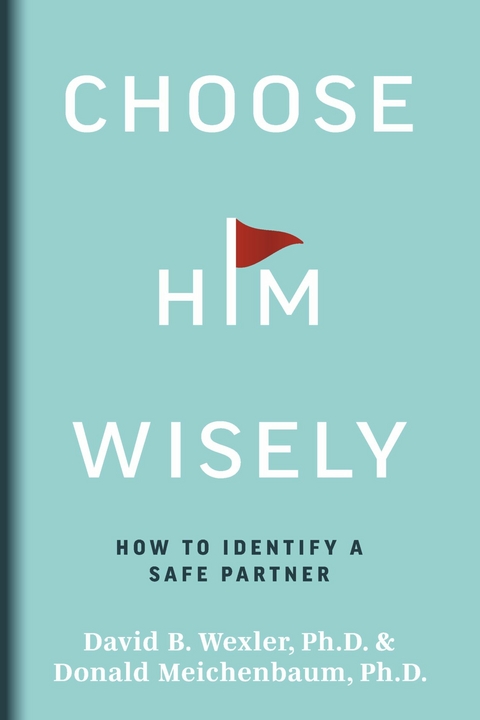
Choose Him Wisely (eBook)
100 Seiten
Bookbaby (Verlag)
979-8-3178-1816-6 (ISBN)
Donald Meichenbaum, PhD, is a distinguished professor emeritus from the University of Waterloo in Ontario, Canada. He took an early retirement 28 years ago to become a research director of the Melissa Institute for Violence Prevention in Miami, Florida. Additionally, he is one of the founders of cognitive behavior therapy and, as a result, has won many awards. He was voted one of the ten most influential psychotherapists of the 20th century by clinicians, as reported by the American Psychologist Journal. Donald has also published extensively, including 'Classic Cognitive Behavior Modification,' 'Pain and Behavior Medicine,' 'Stress Inoculation Training,' 'Treatment of PTSD,' and many more. Most recently, he published his book 'Roadmap to Resilience,' which has been downloaded by 50,000 people in 138 countries. Dr. Meichenbaum has presented workshops in all 50 U.S. states as well as internationally. Currently, he is training psychotherapists via Zoom in China.
"e;Choose Him Wisely"e; is written by PhD clinical psychologists with a combined nine decades of clinical and research experience working with victims of domestic violence and male abuse. Fueled by Dr. Meichenbaum's passion for protecting the women closest to him, he and Dr. Wexler created a way to help women make smart and safe decisions about their partners with this practical, user-friendly, and compact book that can help both men and women make critical decisions. Together, the authors dive into the stories of Gabby Petito and many others celebrities and everyday people alike. What questions and tools did these women miss when choosing a partner? No system for doing this is perfect but it is vital for everyone to become equipped with the right knowledge to try and steer clear of an abusive relationship. "e;Quite simply, we sincerely believe that if our daughter Gabby Petito had learned about domestic violence, whether in school, through conversations, or from a book like Drs. Wexler and Meichenbaum's Choose Him Wisely, her life could have been very different. In short, Choose Him Wisely is full of compassion, wisdom, and practical information that can save lives. We strongly endorse this book in honor of Gabby's memory."e;--Nichole and Jim Schmidt, mother and stepfather of Gabby Petito, Founders of the Gabby Petito FoundationI read "e;Choose Him Wisely"e; from cover to cover without putting it down. It is a must read for any woman at any age. Two great experts in the field, sharing what they have learned from years of experience. This book helps you understand what you might be feeling. Buy a dozen and give them to your relatives, friends and coworkers. They will thank you for it. --Gael Strack, CEO and Co-Founder, Alliance for HOPE International"e;Choose Him Wisely"e; is a powerful, practical guide to building safe and respectful relationships. Wexler and Meichenbaum empower readers to trust their instincts, recognize early signs of abuse, and make informed, life-changing choices. A must-read for anyone ready to break the cycle and build a future rooted in trust and emotional well-being. -- Etiony Aldarondo, Ph.D., Executive Director, The Melissa InstituteIf you have any concerns that your relationship could become abusive, read this book!--Dr. K. Daniel O'Leary, Intimate Partner Violence Researcher, Research Professor and Distinguished Professor Emeritas, Stony Brook University, Stony Brook, NY "e;Choose Him Wisely"e; will save many women from injury and heartache. Readers learn the often-overlooked early warning signs of an abusive partner before the damage is done. This small but mighty book is a must read for every woman choosing a life partner. --Christine A. Padesky, PhD, author of "e;Mind Over Mood: Change How You Feel by Changing the Way you Think"e;It is often true, that we may have more influence over the entrance into a dangerous relationship than we realize. The problem is, we can't avoid what we don't identify. "e;CHOOSE HIM WISELY"e; has taken the crucial steps that can help potential victims identify and predict problem partners before they get involved. This book will have a positive impact in preventing dangerous partner selection. --Sandra L. Brown, M.A., author of "e;How to Spot a Dangerous Man Before You Get Involved"e;As a family lawyer and therapist, I have been following the work of Wexler and Meichenbaum for over twenty years. They are the experts in treatment for intimate partner violence, developing methods and training tens of thousands of professionals. In this book they use simple and compassionate terms to help women (and men) recognize seemingly innocent relationship behaviors that are actually quite dangerous. I strongly recommend this book for individuals and professionals. --Bill Eddy, LCSW, Esq., Co-Founder, High Conflict Institute
1
PREDICTING ABUSE: HOW NOT TO BECOME A STATISTIC OF ABUSE
In August 2021, twenty-two-year-old American travelling “vlogger” Gabby Petito was killed by her fiancé Brian Laundrie while they were traveling together on a van-life journey across the United States. Gabby documented her life and travels on YouTube and Instagram where she described her interests as “art, yoga, and veggies.”
The trip was planned to last for four months and began on July 2, but Gabby disappeared on August 27. On September 19, her remains were found in Wyoming’s Bridger-Teton National Forest. An autopsy found that she was killed by blunt-force injuries to her head and neck and manual strangulation. A month later, Brian’s remains were found in Florida, and it was confirmed by an autopsy that he had died from a self-inflicted gunshot wound to the head. The FBI later announced that, in his notebook (found near his remains), he had admitted to killing Gabby.
Gabby was a young woman full of vitality who fell in love with Brian when she was nineteen years old. She had no history of any significant psychological problems, substance abuse, criminal behavior, intense and disturbed relationships, or emotional instability. As far as we know, neither did he. She and Brian “clicked,” and within a few months, they were steadily dating. Then they got engaged and decided to hop in a converted van and, as so many young people in love have been doing forever, take off to explore the world together. Gabby had video skills, and her vision was to chronicle their adventures and create a video blog as an influencer.
How did this happen? How did her boyfriend get to the point of murdering her and then killing himself? What were the missed warning signs?
With the brilliance of 20/20 hindsight, the following warning signs were flashing. There was some physical aggression. Her friends felt like something seemed off about Brian. Gabby consistently blamed herself when something went wrong between the two of them. Brian became increasingly jealous and possessive. He would also “love bomb” her and shower her with all sorts of amazing gifts. He found ways to steadily isolate Gabby from her friends and keep track of her while she was working. Gabby felt bad about seeing Brian in pain and kept wanting to rescue and soothe him. Mixed in with the good times, they had more and more blowout arguments and tense fights.
And, there is evidence that he had strangled her at some point in sexual encounters —now recognized as one of the most lethal predictors of future dangerous behavior that there is.
Throughout this book, we will describe these warning signs and many others. Brian Laundrie did not show evidence of every single one (no one ever does), but we will flag each time that these did show up in the reconstructed history of Gabby and Brian.
In addition to Gabby Petito, consider what the following attractive, talented women each have in common.
Loretta Lynn Halle Berry
Mariah Carey La Toya Jackson
Rihanna Whitney Houston
Tina Turner Pamela Anderson
Aretha Franklin Angelina Jolie
Christina Aguilera Doris Day
Each of these women have had a relationship with a male partner who turned out to be abusive with them. You can Google “celebrities and
domestic violence,” and the list goes on.
Table 1 (see appendix if you want the data) shows that the abuse these celebrities experienced is not unique. This is not just men behaving abusively with women. In fact, the incidence of abuse in gay and lesbian couples (and couples with a non-binary person) is comparable to what we find in straight couples. Abuse from one’s partner occurs across all age groups, races, and religions. It is a worldwide problem.
When it comes to females considering a relationship with a male, the bottom line in these statistics is this: women are more likely to be assaulted by their current or previous intimate partner than by a stranger, acquaintance, or family member. The person you choose as a partner is critical. We don’t want you to make a mistake.
WARNING SIGNS
Intimate partner violence (IPV) can take various forms, often in combination, including both psychological and physical abuse. Physical abuse, as we all know, is damaging to the body and the soul.
| BRIAN AND GABBY When they were on their ill-fated road trip, a witness reported to police they saw a man slap a woman, after which the man and woman (Brian and Gabby) ran up and down the sidewalk, then the man hit the woman again before they drove off together. The witness said it looked like Brian was trying to leave her behind and take her phone with him. Before they drove off together, she climbed into the driver’s seat, moved over into the passenger’s seat so he could drive, and asked him, “Why do you have to be In a recorded interview with police, Gabby said, “We’ve just been fighting all morning and he wouldn’t let me in the car before.” She said that Brian kept telling her to shut up and grabbed her face, which had caused an injury. |
Surprisingly, psychological abuse often results in even more lasting psychological damage, feelings of powerlessness, and behavioral distress. Years afterwards, many abuse victims report that the words have left more scars than the blows. In combination, they are brutal.
The best predictor of your future relationship with your prospective partner is the nature of your current relationship. The next best predictor is his behavior in the past—before you.
The worst scenario—and the most dangerous predictor of the future you may have together—would be if there has already been an example of ANY type of physical assault by him (or by you, for that matter) in this relationship. If he’s done it before, there is a significant risk (not a certainty) that he will do it again. This does not necessarily mean that your partner is doomed to repeat this and unable to change. But we need you to be hyperalert, because any man who has assaulted you once is extremely more likely to do it again.
Every assessment tool to predict physical abuse in a relationship highlights the history of this behavior, both in the current relationship and in the past. That’s why the following questions show up on the most prominent risk assessment inventories—and why we are asking you to answer the following questions:
• Has he been physically aggressive (shoved, slapped, punched, kicked, etc.) toward you (or any other partner) at any time? (Stith, 2016: Kropp, 1994) Or not?
• Has he avoided being arrested for domestic violence? (Campbell, 2009). In other words, has he been violent but no one has ever reported this to police or other authorities? Or not?
We want you to be keenly aware of signs that will help you answer this question: Does your partner (or prospective partner) show the behaviors, resilience, and values that act like lighthouses and moral compasses that indicate the prosocial direction he wants to move toward? Or not?
A special note about strangulation: Strangulation, or what some people call “choking”, describes intentionally, knowingly, or recklessly impeding the breathing or normal circulation of blood of a person by applying pressure to the head or neck—regardless of whether there is injury or an intent to kill or injure. Suffocation is the same, by covering the mouth or nose of the person or both.
Strangulation is a form of violence that is distinct from most other forms of intimate partner violence (Glass, 2008; Thomas 2014), because, in a straight relationship at least, it is almost always gendered (male-to female), and it dramatically displays power and control over the victim (“I could really cut off your air supply and kill you if I want to”).
Many domestic violence offenders do not strangle their partners to kill them; they strangle them to let them know they CAN kill them—any time they wish.
And, most significantly, the presence of these acts in a relationship –more than any other form of physical abuse--has been found to be highly predictive of future violence and highly correlated cases of actual intimate partner violence murder. Prior non-fatal strangulation (NFS) increases the likelihood of a future attempted homicide by 600% (Glass, 2008).
|
Even acts of consensual strangulation during sex, while not always predictive of dangerous abuse, still represent a red flag that this man enjoys this and has this in his behavioral repertoire—and is more likely to use it in conflicts when he wants to exert...
| Erscheint lt. Verlag | 18.10.2025 |
|---|---|
| Sprache | englisch |
| Themenwelt | Sachbuch/Ratgeber ► Gesundheit / Leben / Psychologie ► Partnerschaft / Sexualität |
| ISBN-13 | 979-8-3178-1816-6 / 9798317818166 |
| Informationen gemäß Produktsicherheitsverordnung (GPSR) | |
| Haben Sie eine Frage zum Produkt? |
 EPUB (Ohne DRM)
Größe: 1,1 MB
Digital Rights Management: ohne DRM
Dieses eBook enthält kein DRM oder Kopierschutz. Eine Weitergabe an Dritte ist jedoch rechtlich nicht zulässig, weil Sie beim Kauf nur die Rechte an der persönlichen Nutzung erwerben.
Dateiformat: EPUB (Electronic Publication)
EPUB ist ein offener Standard für eBooks und eignet sich besonders zur Darstellung von Belletristik und Sachbüchern. Der Fließtext wird dynamisch an die Display- und Schriftgröße angepasst. Auch für mobile Lesegeräte ist EPUB daher gut geeignet.
Systemvoraussetzungen:
PC/Mac: Mit einem PC oder Mac können Sie dieses eBook lesen. Sie benötigen dafür die kostenlose Software Adobe Digital Editions.
eReader: Dieses eBook kann mit (fast) allen eBook-Readern gelesen werden. Mit dem amazon-Kindle ist es aber nicht kompatibel.
Smartphone/Tablet: Egal ob Apple oder Android, dieses eBook können Sie lesen. Sie benötigen dafür eine kostenlose App.
Geräteliste und zusätzliche Hinweise
Buying eBooks from abroad
For tax law reasons we can sell eBooks just within Germany and Switzerland. Regrettably we cannot fulfill eBook-orders from other countries.
aus dem Bereich