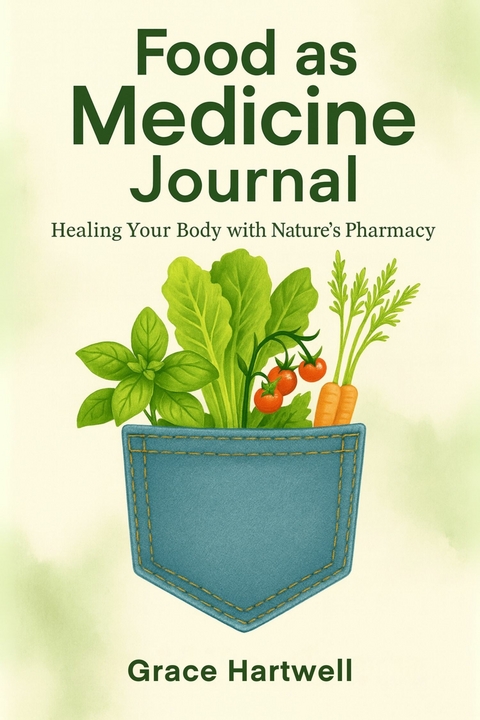
Food as Medicine Journal (eBook)
136 Seiten
Publishdrive (Verlag)
978-0-00-106850-6 (ISBN)
Food as Medicine Journal: Healing Your Body with Nature's Pharmacy
Do you feel overwhelmed by conflicting health advice and unsure which foods truly support your wellbeing? Are you looking for a simple, step-by-step guide to harness the healing power of food and transform your health naturally? Do you want to take control of your wellness and nourish your body like true health experts recommend?
If you answered YES to at least one of these questions, you MUST KEEP READING...
Unlock the Secrets to Healing with Food and Reclaim Your Vitality
Many people struggle with their health, trying countless diets and supplements without lasting results. The frustration of chronic fatigue, digestive issues, inflammation, or feeling like your body is working against you can be overwhelming. It's no surprise that most people give up on natural healing, stuck in a cycle of quick fixes that never address the root cause. But don't despair-you're not alone in this journey...
Presenting: Food as Medicine Journal
Chapter 1: The Molecular Foundation of Food Medicine
“In every walk with nature, one receives far more than they seek.” – John Muir
Recent research has revealed a stunning reality: plant foods are chemical treasure chests, containing more than 25,000 distinct bioactive compounds that interact with the human body in ways that rival, and sometimes surpass, pharmaceutical interventions. Unlike synthetic drugs, which typically target one pathway or receptor, these compounds act in concert, creating a symphony of effects that support health, prevent disease, and restore balance. They are not simply nutrients; they are biological messengers, regulators, and protectors. This chapter begins at the molecular level, where the hidden pharmacology of food unfolds in all its complexity.
1.1 Phytochemicals: Nature’s Pharmaceutical Arsenal
The word “phytochemical” literally means “plant chemical,” yet this simple label hardly does justice to the profound influence these compounds have on human health. Found in fruits, vegetables, herbs, spices, seeds, and grains, phytochemicals are not essential in the same sense as vitamins or minerals—our bodies can survive without them—but they are indispensable for thriving. They represent an evolutionary dialogue between plants and the environment, molecules originally crafted by nature to defend against predators, infections, or oxidative stress. When we consume these compounds, we inherit those defenses, converting the plant’s survival strategies into our own.
Phytochemicals are extraordinarily diverse, numbering in the tens of thousands. Their structures range from small, volatile molecules like terpenes that give herbs and citrus their characteristic aromas, to larger, complex polyphenols that contribute to the color and bitterness of tea, berries, and dark chocolate. Despite this diversity, what unites them is their pharmacological potency. They modulate inflammation, regulate metabolism, influence gene expression, and even alter the microbiome in ways that ripple across human physiology.
To appreciate their impact, we can examine three major classes: polyphenols, terpenes, and alkaloids. Each represents a different strategy in nature’s chemical arsenal, yet together they illustrate how food operates as a pharmacy hidden in plain sight.
Polyphenols and Their Anti-Inflammatory Mechanisms
Polyphenols are perhaps the most extensively studied group of phytochemicals. Found abundantly in fruits, vegetables, tea, wine, cocoa, and spices, they are best known for their antioxidant capacity. But the story goes deeper than merely neutralizing free radicals. Modern biochemistry shows that polyphenols act as modulators of cellular signaling, particularly in the realm of inflammation.
Inflammation is a double-edged sword: necessary for defense against injury and infection, yet damaging when chronic. Conditions such as arthritis, cardiovascular disease, diabetes, and even depression are now understood to be fueled by low-grade, persistent inflammation. Here is where polyphenols step in, targeting key molecular players in the inflammatory cascade.
One of the central pathways influenced by polyphenols is NF-κB, often described as the “master switch” of inflammation. When activated, NF-κB turns on genes that produce pro-inflammatory cytokines—molecules that recruit immune cells and sustain the inflammatory response. Compounds like quercetin (abundant in onions and apples), resveratrol (found in grapes and red wine), and curcumin (the golden pigment of turmeric) have been shown to inhibit NF-κB activation, essentially putting a brake on the cellular machinery of inflammation.
Quercetin, for instance, stabilizes mast cells and reduces histamine release, providing relief in allergic conditions. Resveratrol, beyond its reputation as the “red wine molecule,” influences sirtuin pathways associated with longevity while simultaneously calming inflammatory cytokines. Curcumin, though notorious for its poor bioavailability, exerts powerful effects once absorbed, suppressing not just NF-κB but also COX-2, another enzyme central to inflammatory processes. Together, these compounds do not merely suppress symptoms; they help recalibrate the body’s immune responses at the source.
Moreover, polyphenols act synergistically. A diet rich in multiple polyphenol sources—berries, green tea, dark leafy greens, and spices—creates overlapping layers of protection. This is one reason why whole foods often outperform isolated supplements: nature has already designed them to work as ensembles rather than soloists.
Terpenes and Their Therapeutic Applications
While polyphenols influence inflammation and oxidative stress, terpenes bring another dimension to the pharmacological table. These are volatile compounds responsible for the fragrance of herbs, spices, and fruits. Think of the uplifting scent of citrus peel, the calming aroma of lavender, or the pungent kick of oregano—these are terpenes at work. Yet their role extends far beyond sensory pleasure.
Terpenes are potent antimicrobial agents, helping plants resist bacterial, viral, and fungal attacks. When consumed or inhaled by humans, these same properties translate into therapeutic applications. For example, limonene, abundant in citrus peels, demonstrates both antimicrobial and anticancer properties. Laboratory studies show limonene can induce apoptosis—programmed cell death—in certain cancer cells, disrupting their uncontrolled growth. Unlike harsh chemotherapeutic agents, limonene does so selectively and with minimal collateral damage to healthy tissues.
Other terpenes, such as linalool from lavender, exhibit calming effects on the nervous system, likely through interactions with the GABA neurotransmitter system. This helps explain why lavender has long been used in aromatherapy for relaxation and sleep enhancement. Similarly, carvacrol, found in oregano and thyme, disrupts bacterial membranes, providing a natural antibacterial effect that complements the immune system.
The neuroprotective potential of terpenes is especially intriguing. Compounds like pinene—common in pine needles and rosemary—show promise in improving memory and cognitive function. Animal studies suggest they may counteract acetylcholinesterase activity, the same target addressed by certain Alzheimer’s drugs. This raises the possibility that dietary intake of terpene-rich foods and herbs could contribute to cognitive resilience over a lifetime.
Thus, terpenes illustrate the multidimensional role of food compounds: they delight our senses, protect against pathogens, and even shield the brain from decline. They remind us that flavor is not incidental—it is often the fingerprint of pharmacological activity.
Alkaloids as Natural Medicine
If polyphenols are the body’s inflammation modulators and terpenes its microbial guardians, alkaloids represent a more stimulating side of nature’s pharmacy. Defined by their nitrogen-containing structures, alkaloids are some of the most pharmacologically active plant compounds known. Many familiar drugs—morphine, quinine, atropine—are alkaloids derived from plants. Yet even those alkaloids commonly found in foods and spices exert significant effects on human physiology.
Consider caffeine, the world’s most widely consumed psychoactive compound. Found in coffee, tea, and cacao, caffeine works primarily by blocking adenosine receptors in the brain, preventing drowsiness and promoting alertness. Its effects ripple across the nervous system, increasing dopamine activity and sharpening mental performance. While excessive intake can lead to anxiety or insomnia, moderate consumption is consistently linked to reduced risk of Parkinson’s disease, type 2 diabetes, and even certain cancers.
Another alkaloid, capsaicin, gives chili peppers their fiery heat. Capsaicin binds to TRPV1 receptors, which detect heat and pain, effectively tricking the nervous system into releasing endorphins. This produces both a burning sensation and a paradoxical pain-relieving effect, which has been harnessed in topical creams for arthritis and neuropathic pain. Capsaicin also boosts metabolism by stimulating thermogenesis, making it a valuable ally in weight management.
Equally compelling is berberine, a yellow alkaloid found in plants such as barberry and goldenseal. Unlike caffeine or capsaicin, berberine works more quietly, influencing metabolic pathways at a cellular level. Research shows it activates AMPK, a metabolic “master switch” that regulates energy balance. Through this mechanism, berberine improves insulin sensitivity, lowers blood glucose, and reduces cholesterol levels—effects so robust that some studies compare it to pharmaceutical drugs like metformin.
Alkaloids demonstrate the power and potency of phytochemicals, underscoring the need for respect as well as appreciation. They remind us that nature’s pharmacy is strong medicine, requiring knowledge, balance, and context to be used effectively.
The Bigger Picture
Polyphenols, terpenes, and alkaloids represent just a fraction of the vast phytochemical universe, yet they illustrate a critical truth: food is not inert. Every bite delivers an array of molecules with the capacity to alter physiology, gene expression, and disease outcomes. Unlike synthetic drugs, which often act like hammers striking a single nail, phytochemicals behave more like conductors guiding an orchestra—subtly adjusting, balancing, and harmonizing multiple systems simultaneously.
The rediscovery of this truth is reshaping the way we understand medicine. It challenges us to think beyond...
| Erscheint lt. Verlag | 1.10.2025 |
|---|---|
| Sprache | englisch |
| Themenwelt | Sachbuch/Ratgeber ► Gesundheit / Leben / Psychologie |
| ISBN-10 | 0-00-106850-4 / 0001068504 |
| ISBN-13 | 978-0-00-106850-6 / 9780001068506 |
| Informationen gemäß Produktsicherheitsverordnung (GPSR) | |
| Haben Sie eine Frage zum Produkt? |
 EPUB (Adobe DRM)
Größe: 3,0 MB
Kopierschutz: Adobe-DRM
Adobe-DRM ist ein Kopierschutz, der das eBook vor Mißbrauch schützen soll. Dabei wird das eBook bereits beim Download auf Ihre persönliche Adobe-ID autorisiert. Lesen können Sie das eBook dann nur auf den Geräten, welche ebenfalls auf Ihre Adobe-ID registriert sind.
Details zum Adobe-DRM
Dateiformat: EPUB (Electronic Publication)
EPUB ist ein offener Standard für eBooks und eignet sich besonders zur Darstellung von Belletristik und Sachbüchern. Der Fließtext wird dynamisch an die Display- und Schriftgröße angepasst. Auch für mobile Lesegeräte ist EPUB daher gut geeignet.
Systemvoraussetzungen:
PC/Mac: Mit einem PC oder Mac können Sie dieses eBook lesen. Sie benötigen eine
eReader: Dieses eBook kann mit (fast) allen eBook-Readern gelesen werden. Mit dem amazon-Kindle ist es aber nicht kompatibel.
Smartphone/Tablet: Egal ob Apple oder Android, dieses eBook können Sie lesen. Sie benötigen eine
Geräteliste und zusätzliche Hinweise
Buying eBooks from abroad
For tax law reasons we can sell eBooks just within Germany and Switzerland. Regrettably we cannot fulfill eBook-orders from other countries.
aus dem Bereich