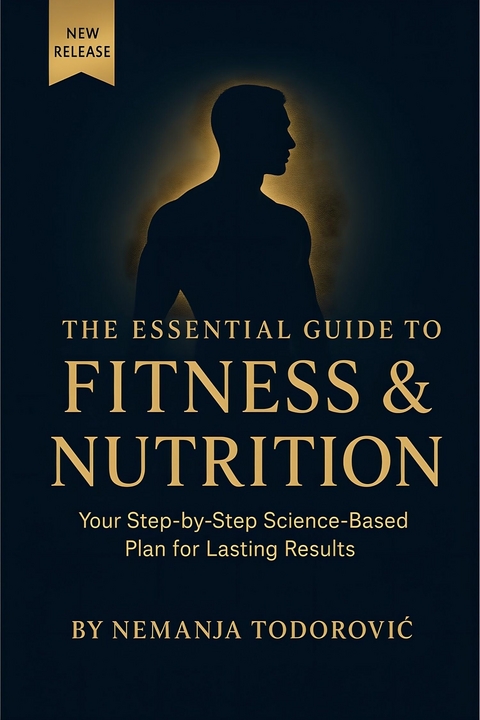
The Essential Guide to Fitness & Nutrition (eBook)
89 Seiten
Publishdrive (Verlag)
978-0-00-106575-8 (ISBN)
Tired of Fitness Gimmicks? Get the Blueprint for Lasting Results.
Stop wasting time on confusing fitness fads and restrictive diets. The fitness world is a noisy place, and it's easy to feel lost. This book is your definitive, science-backed guide to building a healthy, strong, and resilient body for life.
The Essential Guide to Fitness and Nutrition cuts through the misinformation and gives you a clear, actionable blueprint for success. This isn't a temporary fix or a six-week miracle plan. It's a comprehensive educational resource that empowers you with the knowledge to take control of your health journey, understand the 'why' behind everything you do, and build a sustainable lifestyle you can maintain forever.
What You Will Discover Inside:
The Foundational Pillars: Learn the three non-negotiable components of a complete fitness routine: Strength Training, Cardiovascular Training, and Mobility & Flexibility. Master these to build a solid foundation.
Nutrition Demystified: Understand the science of macronutrients, micronutrients, and hydration to create a balanced nutrition plan that fuels your body for peak performance and fat loss without restrictive dieting.
Proven Training Principles: Unlock the secrets of progressive overload and hypertrophy to stimulate consistent muscle growth and strength gains.
Effective Fat Loss: Learn science-backed strategies for sustainable fat loss that work for your body, debunking common myths and quick-fix fads.
The Ultimate Recovery Tool: Optimize your sleep for maximum performance, recovery, and overall well-being.
Building a Resilient Mindset: Develop the mental strategies and discipline needed to overcome plateaus, stay motivated, and build lasting, healthy habits.
Injury Prevention: Master the essential techniques for injury prevention and discover how prioritizing mobility will keep your body healthy and functional for life.
This is your blueprint to a stronger, healthier you. The journey to a better life starts with understanding the fundamentals. Start building your foundation today and transform your body from the inside out.
Chapter 1: Understanding the Fundamentals of Fitness
Why Fitness Matters
In our culture, the concept of "fitness" is often narrowly defined by physical appearance. We are conditioned to see it as a means to an aesthetic end, a way to look better in a swimsuit or fit into a certain size of clothing. While these can be motivating factors, they represent only a tiny fraction of what it truly means to be fit. True fitness is not about how your body looks; it's about how it functions and how it feels. It is, quite simply, about living better.
Imagine your body as a high-performance vehicle. To run optimally, it requires premium fuel (nutrition), regular engine checks (exercise), and proper maintenance for its moving parts (mobility and recovery). When you neglect any of these areas, performance suffers. You might experience sluggishness, breakdowns, and a general decline in capability. Conversely, when you invest in its care, your body rewards you with higher energy levels, a powerful defense against disease, and a clarity of mind that permeates every aspect of your life.
Whether your personal goal is to build muscle, lose fat, run a marathon, or simply keep up with your grandchildren, the path to achieving it begins with a firm grasp of the fundamentals. Understanding how your body responds to training and why certain principles are non-negotiable is the key to unlocking sustainable, long-term success.
The Benefits of Fitness
The rewards of a consistent fitness routine extend far beyond the mirror. They are profound, impacting your physical health, mental well-being, and overall quality of life. Let's move beyond a simple list and explore what these benefits truly mean.
A Stronger Heart
Your heart is a muscle, and like any other muscle, it adapts to the stress placed upon it. Cardiovascular exercise challenges the heart to pump blood more efficiently throughout your body. Over time, this training causes the heart's left ventricle (the main pumping chamber) to grow stronger and larger, allowing it to push out more blood with each beat. This increased efficiency means your heart doesn't have to work as hard during rest, leading to a lower resting heart rate and reduced blood pressure, two of the most significant indicators of cardiovascular health and longevity. A strong heart is your best defense against heart disease, the leading cause of death worldwide.
Better Endurance
Do you find yourself out of breath after climbing a single flight of stairs? This is a sign of limited cardiorespiratory endurance. Regular fitness training enhances your body's ability to take in, transport, and utilize oxygen. Your lungs become more efficient at oxygen exchange, and your body produces more red blood cells and capillaries, creating a more robust delivery network. At a cellular level, your muscles develop more mitochondria, the tiny "power plants" that convert oxygen and nutrients into usable energy. The real-world result? You can perform daily activities with less effort, feel more energetic throughout the day, and push yourself harder during workouts.
Stronger Muscles
Muscle is far more than just a tool for lifting heavy objects. It is a metabolically active tissue, meaning it burns calories even when you are at rest. The more muscle mass you have, the higher your basal metabolic rate (BMR), making it easier to maintain a healthy body weight. Strong muscles also act as a structural support system for your body, protecting your joints from injury, improving your posture, and enhancing your balance and stability. This becomes increasingly vital as we age, as strong muscles are a key factor in maintaining independence and preventing falls.
Enhanced Mental Clarity
The connection between the body and mind is undeniable. Exercise is one of the most powerful tools for managing mental health. Physical activity triggers the release of endorphins, neurochemicals that act as natural mood elevators and pain relievers. Simultaneously, it can reduce levels of the body's primary stress hormones, such as cortisol and adrenaline. Regular exercise also increases blood flow to the brain, which can improve cognitive function, sharpen focus, and protect against age-related mental decline. Many people find that a consistent workout routine is their most effective strategy for combating stress, anxiety, and symptoms of depression.
Sustainable Fat Loss
Notice that fat loss is a benefit of fitness, not its sole purpose. A healthy body composition is the natural outcome of building a stronger, more efficient system. By increasing your muscle mass, you elevate your resting metabolism. By engaging in regular exercise, you burn calories and improve your body's ability to use fat for fuel. When combined with proper nutrition, these adaptations create an environment where maintaining a healthy body weight is not a constant struggle but a sustainable result of your lifestyle.
The Three Pillars of Fitness
A truly effective and balanced fitness program is like a well-built tripod; it stands on three essential legs. If any one leg is weak or missing, the entire structure becomes unstable and is at risk of collapse. These three pillars are Strength Training, Cardiovascular Training, and Mobility & Flexibility. To build a body that is not just strong or lean but holistically healthy and resilient, you must incorporate all three into your routine.
1. Strength Training: Building Power and Muscle
Why It's So Important
Strength training, also known as resistance training, is the practice of using resistance, whether from weights, bands, or your own bodyweight, to induce muscular contraction. This process does far more than just build bigger muscles; it forges a more functional and resilient body from the inside out.
At its core, strength training is a conversation with your body. When you challenge your muscles, you create microscopic tears in the muscle fibers. This isn't a destructive process; it's a signal. You are telling your body, "The current level of strength is not enough to meet this challenge." In the recovery period that follows, your body responds to this signal with a remarkable process of adaptation. It doesn't just repair these fibers; it reinforces them, making them stronger and thicker to better handle future stress. This is the essence of getting stronger. Imagine your body is a fortress. Each workout is a simulated attack that reveals a minor weakness. In response, the body doesn't just patch the wall; it rebuilds it with stronger stone and adds reinforcements.
But the benefits run even deeper, extending to the very framework of your body: your skeleton. The mechanical load placed on your bones during exercises like squats and deadlifts is a powerful message. It signals specialized cells called osteoblasts to begin building new bone tissue, increasing your bone mineral density. In a world where osteoporosis, a condition that makes bones weak and brittle, is a major concern, particularly as we age, strength training stands as our single best defense. It builds a powerful internal "scaffolding" of muscle and bone that protects you from injury,
corrects the postural imbalances caused by modern sedentary life, and gives you the functional strength to navigate the world with confidence and capability.
How to Structure a Strength Workout
The cornerstone of any effective strength program is compound movements. These are multi-joint exercises that recruit large muscle groups simultaneously. Think of them as the most "bang for your buck" exercises. An isolation exercise, like a bicep curl, works a single, small muscle group. A compound exercise, like a pull-up, works the entire back, the biceps, and the core all at once. This efficiency means they are more time-effective, burn significantly more calories, and trigger a greater systemic hormonal response (like growth hormone and testosterone), which is beneficial for overall growth and health.
A beginner's routine should be built around mastering these fundamental human movement patterns:
- Squats: Often called the "king of lower-body exercises," the squat is a foundational movement that translates to countless daily activities, from sitting in a chair to lifting a heavy box off the floor. It is a comprehensive leg developer, targeting the quadriceps (front of the thighs), the glutes (buttocks), the hamstrings (back of the thighs), and the core, which must work hard to stabilize the torso. Proper form is paramount: keep your chest up and your back in a neutral, straight position. Initiate the movement by sending your hips back, as if sitting into a chair, and lower yourself until your thighs are at least parallel to the floor. Drive through your entire foot to return to the starting position.
- Deadlifts: If the squat is the king, the deadlift is the emperor of full-body strength. This movement engages virtually every muscle in your body, with a particular emphasis on the posterior chain, the powerful network of muscles on the backside of your body, including the entire back, glutes, and hamstrings. It also builds immense core strength and grip strength. Critically, the deadlift teaches the "hip hinge," the proper and safe way to lift heavy objects from the ground by hinging at your hips, not rounding your lower back. This is arguably one of the most important movement patterns you can learn to protect your spine for life.
- Bench Press: This is the classic upper-body "pushing" movement. It primarily targets the pectoral muscles of the chest,...
| Erscheint lt. Verlag | 8.3.2025 |
|---|---|
| Sprache | englisch |
| Themenwelt | Sachbuch/Ratgeber ► Gesundheit / Leben / Psychologie |
| ISBN-10 | 0-00-106575-0 / 0001065750 |
| ISBN-13 | 978-0-00-106575-8 / 9780001065758 |
| Informationen gemäß Produktsicherheitsverordnung (GPSR) | |
| Haben Sie eine Frage zum Produkt? |
 EPUB (Adobe DRM)
Größe: 1,4 MB
Kopierschutz: Adobe-DRM
Adobe-DRM ist ein Kopierschutz, der das eBook vor Mißbrauch schützen soll. Dabei wird das eBook bereits beim Download auf Ihre persönliche Adobe-ID autorisiert. Lesen können Sie das eBook dann nur auf den Geräten, welche ebenfalls auf Ihre Adobe-ID registriert sind.
Details zum Adobe-DRM
Dateiformat: EPUB (Electronic Publication)
EPUB ist ein offener Standard für eBooks und eignet sich besonders zur Darstellung von Belletristik und Sachbüchern. Der Fließtext wird dynamisch an die Display- und Schriftgröße angepasst. Auch für mobile Lesegeräte ist EPUB daher gut geeignet.
Systemvoraussetzungen:
PC/Mac: Mit einem PC oder Mac können Sie dieses eBook lesen. Sie benötigen eine
eReader: Dieses eBook kann mit (fast) allen eBook-Readern gelesen werden. Mit dem amazon-Kindle ist es aber nicht kompatibel.
Smartphone/Tablet: Egal ob Apple oder Android, dieses eBook können Sie lesen. Sie benötigen eine
Geräteliste und zusätzliche Hinweise
Buying eBooks from abroad
For tax law reasons we can sell eBooks just within Germany and Switzerland. Regrettably we cannot fulfill eBook-orders from other countries.
aus dem Bereich