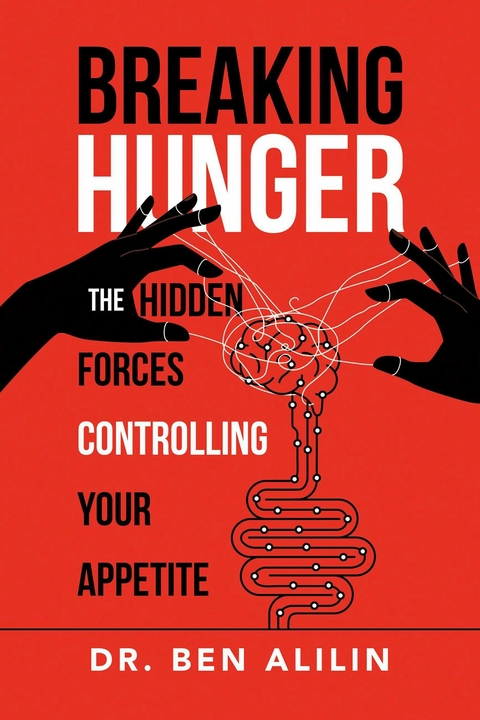
Breaking Hunger (eBook)
104 Seiten
Bookbaby (Verlag)
9798317802479 (ISBN)
Dr. Ben D. Alilin, MD, is a board-certified physician, metabolic health expert, and pioneering voice in obesity treatment. With over 20 years of experience in family medicine and weight management, he has helped thousands of patients reclaim their health through evidence-based medicine, cutting-edge therapies, and sustainable lifestyle changes. As the founder of AFM Healthcare, Dr. Alilin has dedicated his career to bridging the gap between traditional primary care and the latest advancements in obesity and metabolic science. He specializes in GLP-1 receptor agonists (Wegovy, Zepbound, Ozempic), gut microbiome optimization, hormonal balance, and equipping patients with practical, science-backed solutions for long-term weight loss. Beyond his clinical practice, Dr. Alilin is known for his ability to translate complex medical research into actionable strategies. His expertise lies in helping patients move beyond quick fixes, developing lasting habits that sustain metabolic health and vitality. In 'The GLP-1 Revolution: The Missing Piece in the Weight Loss Puzzle,' Dr. Alilin unveils the science, myths, and real-world applications of GLP-1 medications, offering a comprehensive blueprint for harnessing these breakthrough therapies while optimizing gut health, metabolism, and mindset. With a focus on practical implementation and long-term success, he empowers readers to take control of their weight loss journey-beyond just the prescription.
For decades, weight loss advice has centered on the tired mantra: eat less, move more. However, if it were really that simple, why are so many still struggling? The truth is weight loss isn't just about willpower-it's about biology. In "e;Breaking Hunger,"e; Dr. Ben D. Alilin-a physician, metabolic health expert, and bestselling author of "e;Breaking Point"e;-reveals the hidden forces driving food cravings, overeating, and weight loss resistance. The real problem isn't a lack of discipline-it's a hormonal imbalance fueled by modern food, stress, and gut health disruptions. At the center of this book is GLP-1, a powerful hormone that naturally regulates hunger and metabolism. Popular medications like Wegovy and Zepbound mimic its effects but what if you could harness your body's own GLP-1 production naturally, without expensive pharmaceuticals?You'll Learn: The truth about hunger: How modern processed food hijacks your brain and hormones to keep you eating. GLP-1 and metabolic control: Why this overlook hormone is the key to effortless weight loss. The gut-hormone connection: How gut health influences cravings, metabolism, and overall well-being. Science-backed strategies to enhance GLP-1 levels naturally through nutrition, movement, and lifestyle changes. How to finally silence 'food noise' and regain control over your eating habits without feeling deprived. Unlike restrictive diets and quick-fix weight loss fads, "e;Breaking Hunger"e; offers a physician-led, science-based approach that works with your body not against it. Whether you struggle with emotional eating, metabolic slowdowns, or constant cravings, this book gives you the tools to break free and take back control. If you've ever felt like your body is working against you, this book is your breakthrough. "e;Breaking Hunger"e; is the second book in "e;The Breaking Series"e; by Dr. Ben D. Alilin, following the acclaimed "e;Breaking Point."e;
Introduction
In my twenty years of experience as a general practitioner, I have seen it all when it comes to weight loss attempts and solutions for obesity-related problems. The challenge in this, however, is also the tendency to overcomplicate things. Over the past decades, I have had patients coming into my office telling me all about the different diets and exercise approaches they have attempted, each somewhat productive and efficient, yet still unable to fully address the problem. In this time period, we have also seen the problem of obesity becoming increasingly present in our lives, with over 30.7% of adults in the US being overweight. However, this figure represents adults with a Body Mass Index (BMI) between 25.0 and 29.9, which is categorized as overweight. Additionally, during the same period, 42.4% of adults had obesity (BMI of 30 or higher), and therefore overweight and obesity among U.S. adults reaches 73.1%. It’s no big surprise: we have access to food easily, we are less active than we have ever been, and so much information has been shared regarding potential approaches to weight loss that people are understandably confused. Now, medication is changing the game, but at the same time, it has made me rethink the problem altogether: what if the solution wasn’t the medication itself, but what the medication does?
See, GLP-1 medication has been increasingly popular because of the way in which it eases the act of weight loss. If you read comments online, testimonials, or people’s own descriptions of their experiences, they often repeat the same common phrases: “it takes away the food noise.” This short sentence gives us some insight into the real problem the medication fixes: it helps people stop feeling hungry all the time. And so, now comes the big question: why are we so hungry all the time? In a previous book I have written, which will be listed at the end of this book, I discussed the former question in depth. The results were clear: we are eating foods that aren’t good for us and that are designed to make us want to keep eating more even if we have already eaten enough. In other words, the food we eat is bypassing our hunger and satisfaction hormones, which means that despite having eaten enough, we still feel that strong need to eat more. The medication helps alleviate that extra hunger.
Now, of course, this is more complex than this. However, this book has been written for a general audience. Having tried to help thousands of people by now, one of the key problems I have faced is the fact that there is too much information out there. One day, patients are told to cut out all carbs from their diet. Next, they are told to avoid fats. Then, they are told to avoid processed foods altogether and to use supplements – usually those sold by influencers who, with all due respect, do not have the qualifications needed to sell such products. No wonder people are confused.
What’s disheartening is when I receive such patients, listen to their stories, and work with them to try to find solutions. Having dieted on and off for years, they often are at their wit’s end. They feel like nothing they might try to achieve will ever work. If years of dieting haven’t made a dent in their weight, why would anything I tell them help? In addition to this, the years of damage made by such diets, alongside poor lifestyle habits, do not help either: obesity, diabetes, heart disease, low metabolisms, I have seen it all. It’s a difficult journey for many to get through, and one that can feel impossible to get past due to the confusing information they are receiving left and right.
Now, new medication is arising. More patients are coming into my office, hoping that this miraculous injection will help them shed the weight. And indeed, it has worked fantastically. Many of the effects of obesity have been alleviated for patients, namely because of the strong links obesity has to other chronic diseases. However, having read more and more into the topic, I started to realize that the medication works in a way that is unnecessary – it replicates something that our hormones do naturally. Indeed, GLP-1 medications are just that: hormones, namely semaglutide, which we already naturally produce in our bodies. So, why is it that we still cannot figure weight loss out, and what can we do about it? I have seen thousands of patience lose life expectancy and struggle with their day to day life because of their weight. So, this topic is one that I hold dear to my heart. What if the solution for weight loss had always been right there, in front of our eyes?
Modern Medicine Has Fallen Short
With the incredible advancements made by modern medicine, I am still shocked by how much we are struggling with weight loss. However, in my opinion, the reason for this is simple: the reason why we struggle to address obesity and associated chronic diseases is that it treats symptoms rather than the root cause. Our medical model focuses primarily on acute conditions, and therefore on short-term outcomes. This makes chronic illnesses unique as a challenge. Most people do not gain 200 pounds overnight – they gain it slowly and steadily, and end up feeling like they have to lose it right away because of the narrative that diet culture champions. In reality, obesity is a symptom of other things that aren’t working right in the body. It is a sign that the person’s lifestyle is not ideal for a healthy weight, and thus, that we have to find the right causes. If medication can fix this problem so easily, the answer must be somewhere in there…
A key reason why we’re struggling with weight loss is that in this traditional medicine model, the treatments we are making use of are primarily focused around calorie counting, basic dietary recommendations, and increasing energy output via exercise. What we aren’t focusing on enough is the body’s extremely complex hormonal and metabolic regulation cycle. Our hormones determine the extent to which we feel hungry, and yet, we barely discuss these with patients. Your hormones – leptin, insulin, and ghrelin – are at the very heart of your hunger levels. So, why are we not working with them? Why are we not paying more attention to the aspects of our health which are affecting these hormones and the extent to which they work well, including the gut’s microbiome?
These gaps are not due to a lack of scientific knowledge. The science is there, as you will see throughout this book. Instead, these gaps exist because we are not incorporating this research into treatment frameworks. We typically approach obesity and chronic diseases from a reductionist approach, where we reduce the symptoms until they aren’t ‘so bad’ anymore. But the underlying problems remain, and the problem only resurfaces at a different time. Indeed, obesity is not only a matter of ‘calories in versus calories out.’ It is complex. The calories we eat have different impacts on our hunger levels. The food we consume isn’t all the same nutritionally. So, we need to pay attention to all of these components if we are to truly change how we approach weight loss.
The more I have been helping patients, the clearer it became to me that my patients are not receiving the depth of care they need when it comes to their weight. If it really was as simple as calories in and calories out, we wouldn’t have such a big problem on our hands. The world is unkind to larger people, and the consequences of being obese are often great. This means that for most people with obesity – many of which are in my office – the goal of weight loss is one that is constantly on their minds. If it was as easy as calories in, calories out, wouldn’t we have solved the problem by now? Now, of course, this isn’t to say that calories do not matter. They very much matter to our health and weight. However, calories have a different impact on our gut microbiome and thus, on our hunger hormones, which will be the core topic we will explore throughout the next few pages.
In fact, gut health is an area of medicine that only recently has been starting to gain more traction. Research has been done on the topic for many years, but with the rise of GLP-1 medications, more attention is given to the role that hormones have in regulating our hunger, and therefore, our weight. On top of this, research has been showing that the trillions of microbes in our digestive system play an important role in metabolism, immune function, and even mood regulation. This is why the gut tends to be referred to as the second brain, or namely because it is closely connected to the central nervous system, and thus, the many signaling pathways that pass between the two. As I read more about this, I realized that I needed to rethink the information I was providing to my patients. Their gut may, indeed, be at the root of all their problems.
So, understanding how the gut interacts with weight became a main point of focus for me. I learned more about the composition of the gut microbiome and how it influences the way in which we process food, regulate blood sugar, and store fat. For example, some strains of bacteria are associated with leanness, while others are linked to obesity. On top of this, inflammation, which is very common in patients with chronic diseases and obesity, is made worse by an unhealthy microbiome. This can trigger all sorts of metabolic issues. This alone made me realize that if I was shocked by it, so...
| Erscheint lt. Verlag | 11.6.2025 |
|---|---|
| Sprache | englisch |
| Themenwelt | Sachbuch/Ratgeber ► Gesundheit / Leben / Psychologie |
| ISBN-13 | 9798317802479 / 9798317802479 |
| Informationen gemäß Produktsicherheitsverordnung (GPSR) | |
| Haben Sie eine Frage zum Produkt? |
 EPUB (Ohne DRM)
Größe: 1,6 MB
Digital Rights Management: ohne DRM
Dieses eBook enthält kein DRM oder Kopierschutz. Eine Weitergabe an Dritte ist jedoch rechtlich nicht zulässig, weil Sie beim Kauf nur die Rechte an der persönlichen Nutzung erwerben.
Dateiformat: EPUB (Electronic Publication)
EPUB ist ein offener Standard für eBooks und eignet sich besonders zur Darstellung von Belletristik und Sachbüchern. Der Fließtext wird dynamisch an die Display- und Schriftgröße angepasst. Auch für mobile Lesegeräte ist EPUB daher gut geeignet.
Systemvoraussetzungen:
PC/Mac: Mit einem PC oder Mac können Sie dieses eBook lesen. Sie benötigen dafür die kostenlose Software Adobe Digital Editions.
eReader: Dieses eBook kann mit (fast) allen eBook-Readern gelesen werden. Mit dem amazon-Kindle ist es aber nicht kompatibel.
Smartphone/Tablet: Egal ob Apple oder Android, dieses eBook können Sie lesen. Sie benötigen dafür eine kostenlose App.
Geräteliste und zusätzliche Hinweise
Buying eBooks from abroad
For tax law reasons we can sell eBooks just within Germany and Switzerland. Regrettably we cannot fulfill eBook-orders from other countries.
aus dem Bereich