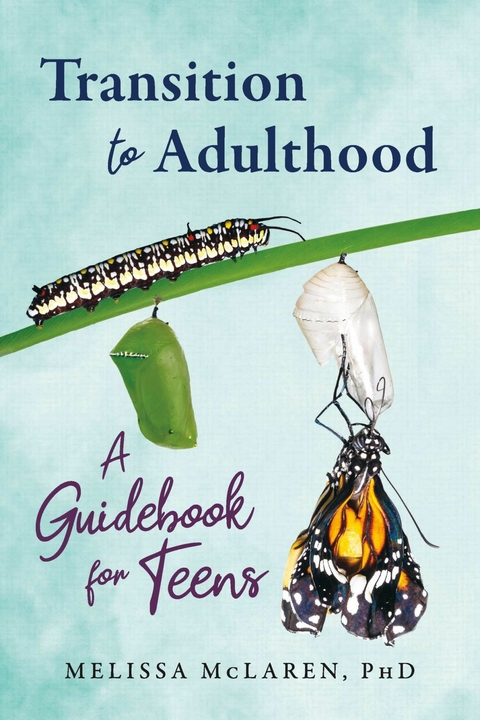
Transition to Adulthood (eBook)
560 Seiten
Bookbaby (Verlag)
979-8-3178-1415-1 (ISBN)
Melissa McLaren is passionate about helping young people build lives rooted in confidence and purpose. As a strategist, writer, and coach, she loves equipping others with practical tools to navigate life's transitions wisely and courageously. Melissa's professional journey spans years in consulting, leadership development, and strategic planning. These experiences shaped her ability to break down complex topics into clear, actionable steps. Yet her greatest lessons came not just from boardrooms, but from her own challenging life situations and changes. Melissa loves helping others design a life (or business) that honors God's unique calling versus others' expectations. In Transition to Adulthood, she combines her professional expertise with her passion for others to help guide teens as they step into independence. Her hope is to equip them with the strategic thinking, wisdom, and inner confidence that they need to navigate adulthood with strength and grace. Melissa lives with her husband, Simon and their beloved dog, Kai, finding joy and peace in everyday life while inspiring others to live purposely as they navigate the responsibilities that life can bring. She believes that adulthood is not about having it all figured out, but about walking each step with wisdom, courage, and hope. Learn more and find additional resources at www.transitiondesigns.com.
Do you ever feel unprepared for life in the "e;real world"e;? You're not alone, and you're not without help. Transition to Adulthood: A Guidebook for Teens is a refreshing and empowering resource designed to equip young people with essential skills and meaningful insights as they navigate adolescence and prepare for adult life. From life-saving tools like CPR, to everyday basics like operating a washing machine, and even tough conversations about things like gang involvement, this guidebook covers it all with wisdom and warmth. It addresses the realities teens face while encouraging them to make thoughtful choices about friendships, education, identity, and future careers. Adolescence is a season filled with questions and change. This book offers stability in that journey, delivering practical know-how with a compassionate tone. With its blend of strategic guidance and encouragement, it helps teens build confidence, establish foundations, and ultimately pursue what matters most: purpose, connection, and their dreams. Whether used alone or with mentors and peers, this guidebook is a launchpad for deeper reflection and conversation, and a faithful companion as young people rise into the fullness of who they're becoming.
Preface:
What Is Happening to Me?
Young adulthood, or adolescence, is a really important time of life that involves a transition into adulthood. Adolescence is essentially a time in life when you are an adult-in-training; you need to gain experience in handling things independently while under the supervision of caring adults who will ideally be there to support and guide you through the process of becoming a healthy and successful adult. Before adulthood begins, your life is full of important decisions and changes—some of them are too small to recognize, and many of them are so big that they are life changing. Some changes are very noticeable, such as physical changes. Other changes are less noticeable but are still occurring nonetheless—changes cognitively, emotionally, socially, and perhaps even spiritually.
While the changes that are occurring with your physical body are very obvious, many of the most important changes during adolescence happen within. During this stage of your life, you are forming very important values, opinions, thoughts, and preferences that will set the foundation for how you live your life and make decisions going forward. Does that mean that you will always choose the same things as your parents or other important adults want for your life? No. But it does mean that the way that you interact with yourself, and with others, as well as how you express and meet your desires, will become more important, because over time you will gain more control over these aspects of your life.
It may take some time to become fully independent as you begin to form close bonds with people outside of your family, attend college or vocational training, and find a job. Different minors make different decisions regarding when they choose to move away from home, how they maintain ties with their parents, and how to earn money. In certain circumstances, some of these decisions are forced upon you versus your choice. While there are certain legal rights and responsibilities that apply to you differently as you age, there is no specific age when “adulthood” has completely taken place. Some people mature very quickly while others take more time.
Physical Changes
Puberty is a highly developmental period physically. Hormonal changes cause rapid physical alterations in the body. Although the timing varies to some degree across cultures, the average age range for reaching puberty is between nine and fourteen years for girls and between ten and seventeen years for boys.
The pituitary gland is responsible for initiating puberty; it is about the size of a pea and located at the base of your brain. The pituitary gland is an important part of your endocrine system. The endocrine system is responsible for making sure that each cell in your body talks to other cells, and it helps to regulate your hormones, metabolism, growth, organs, and reproduction. When puberty begins, the pituitary gland stimulates the production of testosterone (the male sex hormone) in boys and estrogen and progesterone (the female sex hormones) in girls.
The release of these hormones helps to trigger both primary and secondary sex characteristics in boys and girls. Primary sex characteristics include the development of your reproductive organs—the enlargement of the penis and testicles in boys and the further development of the ovaries, uterus, and vagina in girls. Secondary sex characteristics include the following changes:
- For boys: rapid growth, an enlarged Adam’s apple, a deeper voice, pubic and underarm hair, facial hair, and body hair, which may be present all over the body and is likely to get coarser
- For girls: rapid growth, enlargement of the breasts (this is usually the first sign of puberty in girls), enlargement of the hips, pubic and underarm hair, and body hair, which may get coarser in select places on the body (such as legs).
There really is no perfect timing for puberty because it is different for every person. Some of these changes can occur very rapidly for some people (over a matter of months), and for others it can take ten years to reach full maturity once puberty has begun. The timing of puberty can have psychological effects on both boys and girls because whether someone is maturing earlier or faster than their peers can cause just as much distress as someone who is maturing later and slower. Each person is different.
A major milestone that girls achieve during puberty is called menarche, which refers to the first menstrual period. The age of menarche varies substantially and there is no right or perfect time for this to occur. It depends on genetics, diet, lifestyle, and having enough body fat. By age fifteen, 98% of teen girls have started their periods. Girls who are very slim, have physical problems, have a lot of stress, engage in strenuous athletic activities, or are malnourished or on medication may begin to menstruate later or not at all. A doctor can help figure out whether any of these causes may be the reason why menarche has not yet occurred.
Cognitive Changes
The cerebral cortex continues to develop during adolescence and early adulthood. This part of the brain enables improved reasoning, judgment, impulse control, and long-term planning. Adolescents and minors are perceived to frequently act impulsively, rather than thoughtfully. Part of this may be due to the slower development of the prefrontal cortex of the brain, which is responsible for a variety of complex behaviors, including planning and risk management, and greatly contributes to personality development. Another contributor to impulsive or emotional reactions is the hormonal surge that is associated with puberty. This can influence emotional reactions and can create strong emotions which may result in impulsive behavior. Newly developed cognitive abilities during adolescence can result in an egocentric perspective, in which minors believe that they can do anything and that they know better than anyone else.
Social Changes
A primary aspect of young adulthood is the important change that involves the development of an individuated self-concept, which leads to new attachments in addition to the primary family. Although young children are strongly attached to their parents, the attachments of an adolescent move increasingly away from parents and towards peers. As a result, parental influence evolves at this stage.
The chosen peer group of teenagers can be a great source of valuable information regarding their overall self-concept. Teenagers may try out a variety of identities in different social situations to help them figure out and process their identity. This is the root cause behind why many teens have a certain type of “accepted and familiar” persona when they are at home versus how they act and behave when they are around their various peer groups. Eventually, most teenagers are successful in integrating who they are in a variety of situations to develop an integrated self-concept and sense of identity.
Adolescents define their social identities according to their similarities and differences from others. They may therefore derive significant meaning in the sports, religious, school, gender, ethnic, or other groups that they choose to belong to.
Independence and Identity
During adolescence, one of the most important things that occurs is the development of a sense of independence and identity. The importance of independence and identity cannot be underestimated and sets the foundation for building an effective life in adulthood. Many young people, however, don’t have the knowledge, skills, tools, or permission from the adults in their lives to develop the independence and sense of identity that they need in order to confidently step out into the world. This can happen if a child has overprotective or overbearing parents, has developmental issues, or does not have the right guides to be able to establish a sense of independence and identity.
A sense of independence refers to being able to depend on and to take responsibility for yourself, to be able to make decisions and solve problems, and to work out your life values or those things that you prioritize and consider to be important.
A sense of identity represents a sense of who you are as a person—what you believe, what you prefer, the type of people that you want to be around, and developing flexibility. A healthy sense of identity also includes listening to feedback from others, taking a position on issues, and more.
Here is a list developed by Joanna Lee Williams, PhD, that outlines how the identity evolves and changes over time:
Early Adolescence (ages 11–14):
- Desire to identify themselves in multiple ways outside of their role in the family;
- Increase awareness of themselves as part of a peer group (this may take time and involve multiple changes);
- Develop flexibility in how they present themselves in different situations;
- Prioritize personal values and decisions to reflect how they see themselves; and
- Experience greater sensitivity to feedback from others, particularly peers.
Middle Adolescence (ages 14–18):
- Begin to imagine their own adolescent identity and role in the larger world;
- Actively explore adolescent identity alternatives—trying on...
| Erscheint lt. Verlag | 30.8.2025 |
|---|---|
| Sprache | englisch |
| Themenwelt | Sachbuch/Ratgeber ► Gesundheit / Leben / Psychologie ► Familie / Erziehung |
| ISBN-13 | 979-8-3178-1415-1 / 9798317814151 |
| Informationen gemäß Produktsicherheitsverordnung (GPSR) | |
| Haben Sie eine Frage zum Produkt? |
 EPUB (Ohne DRM)
Digital Rights Management: ohne DRM
Dieses eBook enthält kein DRM oder Kopierschutz. Eine Weitergabe an Dritte ist jedoch rechtlich nicht zulässig, weil Sie beim Kauf nur die Rechte an der persönlichen Nutzung erwerben.
Dateiformat: EPUB (Electronic Publication)
EPUB ist ein offener Standard für eBooks und eignet sich besonders zur Darstellung von Belletristik und Sachbüchern. Der Fließtext wird dynamisch an die Display- und Schriftgröße angepasst. Auch für mobile Lesegeräte ist EPUB daher gut geeignet.
Systemvoraussetzungen:
PC/Mac: Mit einem PC oder Mac können Sie dieses eBook lesen. Sie benötigen dafür die kostenlose Software Adobe Digital Editions.
eReader: Dieses eBook kann mit (fast) allen eBook-Readern gelesen werden. Mit dem amazon-Kindle ist es aber nicht kompatibel.
Smartphone/Tablet: Egal ob Apple oder Android, dieses eBook können Sie lesen. Sie benötigen dafür eine kostenlose App.
Geräteliste und zusätzliche Hinweise
Buying eBooks from abroad
For tax law reasons we can sell eBooks just within Germany and Switzerland. Regrettably we cannot fulfill eBook-orders from other countries.
aus dem Bereich