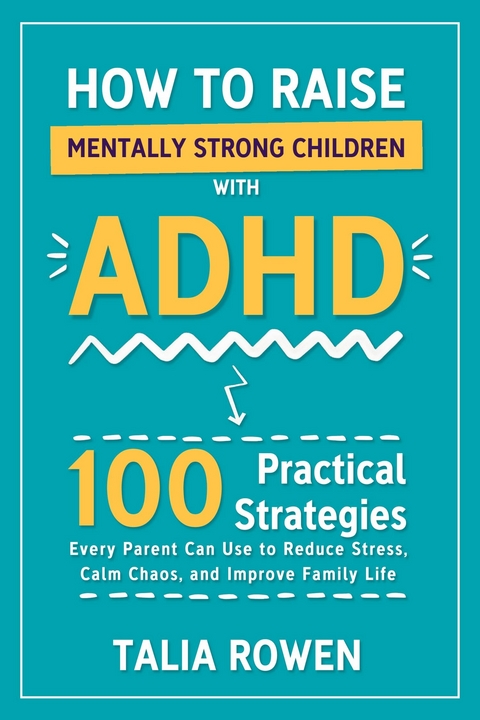
How to Raise Mentally Strong Children With ADHD (eBook)
150 Seiten
Publishdrive (Verlag)
978-1-78793-993-6 (ISBN)
Do your days feel like a never-ending cycle of chaos, guilt, and exhaustion?
Mornings spiral out of control before breakfast is even on the table. Homework time ends in shouting matches. Bedtime turns into a battle of negotiations. And in between, you wonder if you're failing your child, because nothing you try seems to stick.
You're not failing. You just need tools that work in the real world.
Most parenting books talk in circles, offering vague advice like 'be consistent' or 'set routines.' This guide is different. It gives you 100 practical strategies, each one short, clear, and ready to use. Every tool is organized by category-routines, school, discipline, self-esteem, social skills, communication, health, technology, family life, and parent well-being-so you can jump straight to the area you need most and put it into practice today.
Does this sound familiar?
Every request turns into an argument
You repeat the same reminders until your voice gives out
Homework is either avoided, half-done, or lost in the backpack
Bedtime drags late into the night with tears and resistance
Technology feels like a constant fight for control
Siblings clash daily, leaving the whole house on edge
Rewards and charts work for a week, then fall apart
You collapse into bed wondering if tomorrow will be just as hard
Now imagine:
Mornings that move smoothly without yelling
Homework finished in small steps, without meltdowns
Evenings that close with calm words and connection
Clear routines that cut through the chaos
Siblings who share laughter instead of rivalry
Technology managed with rules that actually stick
A calmer you-able to breathe, guide, and enjoy your family again
A quick reality check: there are no magic fixes. This book won't erase ADHD, and it won't hand you 'perfect parenting.' What it will give you are 100 proven strategies-simple, realistic steps that fit into daily life. Change doesn't come all at once. It builds slowly, one practical tool at a time, until home feels lighter and more manageable.
Inside you'll discover how to:
Cut morning chaos with simple 10-minute routines
Get homework started-and finished-without fights
Discipline with calm, not yelling or punishments
Boost your child's self-esteem in everyday moments
Teach social skills that help friendships stick
Spark real conversations with your child
Improve sleep, food, and energy for smoother days
Set tech limits that end constant battles
Turn siblings from rivals into teammates
Protect your own energy so you don't burn out
You don't need to do it all. You don't need to be perfect. You only need one new strategy to start changing tomorrow.
Do your days feel like a never-ending cycle of chaos, guilt, and exhaustion?Mornings spiral out of control before breakfast is even on the table. Homework time ends in shouting matches. Bedtime turns into a battle of negotiations. And in between, you wonder if you re failing your child, because nothing you try seems to stick.You re not failing. You just need tools that work in the real world.Most parenting books talk in circles, offering vague advice like be consistent or set routines. This guide is different. It gives you 100 practical strategies, each one short, clear, and ready to use. Every tool is organized by category routines, school, discipline, self-esteem, social skills, communication, health, technology, family life, and parent well-being so you can jump straight to the area you need most and put it into practice today.Does this sound familiar?Every request turns into an argumentYou repeat the same reminders until your voice gives outHomework is either avoided, half-done, or lost in the backpackBedtime drags late into the night with tears and resistanceTechnology feels like a constant fight for controlSiblings clash daily, leaving the whole house on edgeRewards and charts work for a week, then fall apartYou collapse into bed wondering if tomorrow will be just as hardNow imagine:Mornings that move smoothly without yellingHomework finished in small steps, without meltdownsEvenings that close with calm words and connectionClear routines that cut through the chaosSiblings who share laughter instead of rivalryTechnology managed with rules that actually stickA calmer you able to breathe, guide, and enjoy your family againA quick reality check: there are no magic fixes. This book won t erase ADHD, and it won t hand you perfect parenting. What it will give you are 100 proven strategies simple, realistic steps that fit into daily life. Change doesn t come all at once. It builds slowly, one practical tool at a time, until home feels lighter and more manageable.Inside you ll discover how to:Cut morning chaos with simple 10-minute routinesGet homework started and finished without fightsDiscipline with calm, not yelling or punishmentsBoost your child s self-esteem in everyday momentsTeach social skills that help friendships stickSpark real conversations with your childImprove sleep, food, and energy for smoother daysSet tech limits that end constant battlesTurn siblings from rivals into teammatesProtect your own energy so you don t burn outYou don t need to do it all. You don t need to be perfect. You only need one new strategy to start changing tomorrow.
Chapter 1:
Strategies To Build Stress Free Daily Routines
"Children thrive when their world is predictable, and parents thrive when stress does not rule the day." — Ross Greene
It’s 7:15 in the morning. One child can’t find their shoes, another is still in pajamas, the kitchen table is covered with half-eaten cereal bowls, and you’re already raising your voice for the third time. Backpacks aren’t packed, the bus is coming, and someone just remembered a permission slip that was supposed to be signed last night. By the time you get out the door, everyone’s heart is racing, tempers are flaring, and you feel like you’ve already run a marathon before the day has even begun.
Now picture a different version of that same morning. Clothes are laid out, breakfast is simple but ready, your child knows what to do next without being told ten times, and you actually have three minutes to sip your coffee before heading out. No yelling, no last-minute searches, no knots in your stomach. The difference between the two mornings isn’t luck—it’s routine. Predictable rhythms turn chaos into calm, and when you have a child with ADHD, this difference is even more powerful.
This chapter is about giving you tools to build that calmer version of family life. Not with abstract advice or complicated systems, but with clear, doable strategies you can start using tomorrow. You don’t need to overhaul your entire household at once. You just need to create small anchors—predictable steps your child can count on—that guide the day in a smoother direction.
Think of routine like the rails of a train track. Without them, the train wanders off course, stopping wherever distractions pull it. With them, it moves forward with less effort, less conflict, and more confidence. For children with ADHD, those rails don’t just help them stay on track; they also lower the daily battles that leave you drained.
I once spoke with a mother named Elena who used to dread weekday mornings. Her son, Matteo, would resist getting dressed, wander off in the middle of brushing his teeth, and melt down when it was time to leave. She felt like every day began with a fight. After putting a few simple routines in place—clothes folded on the chair the night before, a short checklist taped to the bathroom mirror, and a playful timer to keep tasks moving—things shifted. Instead of constant arguing, Matteo began following the routine on his own. Elena told me the real gift wasn’t just that they left on time; it was that she and her son could actually smile at each other before school.
That’s what these strategies are about: giving you back those small but meaningful moments of peace. In the next pages, you’ll find ten practical ways to build daily routines that lower stress for you and your child. Each strategy is specific, tested in real family life, and designed to help mornings, evenings, and everything in between feel less like a battleground.
You won’t find theory here. What you’ll find are things you can try in your own home: morning checklists, evening shortcuts, playful cues, and flexible plans that hold steady even when real life gets messy. By the end of this chapter, you’ll have a toolkit of routines that reduce arguments, save time, and bring back a sense of control. More importantly, you’ll see how routine—done in a way that fits your family—can transform not only the flow of your day but also the tone of your relationships.
Strategy 1: Establish A Predictable Morning Routine
Mornings can easily spiral into chaos. Your child gets distracted halfway through brushing teeth, pajamas are still on when it’s almost time to leave, and you feel like you’ve asked the same thing ten times. By the time everyone is out the door, stress levels are already high.
What makes the difference is a routine your child can rely on. A simple, repeatable sequence—wake up, wash, dress, eat, grab backpack, leave—removes the guesswork and cuts down on arguments. If clothes and school items are already set aside, the steps flow even more smoothly.
David, a father of a 7-year-old girl named Lily, was used to shouting through the mornings. Lily would forget tasks or get lost in play, and both of them ended up frustrated. David created a poster with five boxes: brush teeth, get dressed, eat breakfast, pack backpack, put on shoes. Each time Lily completed a step, she placed a sticker on the chart. Within a week, mornings turned calmer. Lily followed the sequence with less resistance, and David no longer felt like a drill sergeant.
You can build the same sense of order with tools that fit your home: a checklist taped to the wall, a series of drawings for younger kids, or a simple whiteboard where tasks are checked off. These small visual reminders reduce the need for constant verbal directions and give your child a clear map of what’s next.
The key is to keep it consistent. When your child knows the sequence by heart, mornings shift from unpredictable battles to manageable routines. Start with one clear pattern, stick with it, and let the calm build day by day.
Strategy 2: Prepare The Night Before To Avoid Morning Chaos
The most stressful mornings usually begin the same way: clothes are missing, the kitchen is messy, and everyone is rushing in different directions. By the time you’re out the door, you’re already drained.
A simple evening routine changes that. Ten minutes the night before can clear the biggest roadblocks—laying out tomorrow’s clothes, setting the table for breakfast, and creating a ready-to-go spot near the entrance for jackets and shoes. With these basics handled, the morning flows instead of stalls.
The Garcias, a family of four, used to start every day in a rush. Arguments about what to wear or where the sneakers had gone left everyone frustrated. They made one small shift: each evening, they placed outfits on chairs, set the kitchen table, and put shoes by the door. The change was immediate—less shouting, fewer delays, and a calmer atmosphere from the moment they woke up.
You can build the same rhythm at home. Before bed, take a few minutes to:
- Place clothes where your child can find them.
- Set out breakfast dishes so the table is ready.
- Keep shoes and jackets in one visible spot near the door.
These steps don’t take long, but together they prevent the frantic searches that fuel morning stress.
Start tonight. Choose just two things—prepare tomorrow’s clothes and put shoes by the door. Tomorrow morning you’ll feel the difference, and once it becomes habit, evenings will hand you back calmer mornings.
Strategy 3: Use Visual Schedules To Guide Daily Tasks
Children with ADHD often tune out repeated verbal reminders. A chart on the wall or a row of simple images works differently: it gives them a guide they can see and follow without constant prompting. Visual schedules reduce arguments because the instructions are already in front of your child, not coming from your mouth over and over again.
Mia discovered this with her son Alex. She drew a simple sequence on a poster—brush teeth, get dressed, eat breakfast, put on shoes—and hung it in the kitchen. Alex loved moving a clothespin down the list after each task. For the first time, he moved through the morning with minimal reminders. Mia said the biggest relief was not repeating herself a dozen times.
You can create the same tool in whatever style fits your family. Use drawings for younger kids, short written steps for older ones, or print icons you find online. Some families prefer a magnetic whiteboard with movable cards, others use a poster with checkboxes or stickers. The important part is that it stays visible and your child interacts with it, marking progress step by step.
Don’t try to cover every routine at once. Start with a short sequence of three to five tasks, keep it simple, and let your child choose at least one detail—like the color of the chart or the stickers used. Their involvement makes them more likely to use it.
Start with one small chart tonight. Place it where your child will see it first thing, and tomorrow you’ll notice the difference: the chart does the reminding, your voice gets a rest, and your child takes more ownership of their routine.
Strategy 4: Break Big Tasks Into Small Clear Steps
When you tell a child with ADHD to “get ready” or “clean your room,” it sounds huge and unmanageable. Their brain struggles to hold all the pieces at once, and that pressure often turns into resistance or delay.
Breaking the task into smaller steps changes the experience. One instruction at a time gives your child something concrete to do, without the weight of the bigger job. Each finished step builds momentum toward the next.
Sophie, a mother of two, discovered this during the morning rush. Every day she would say “Ethan, get ready for school,” and every day it ended in conflict. She switched to short, clear prompts: “Put on your socks… now your pants… now your shirt.” The same routine suddenly felt doable, and Ethan started moving through it without a fight.
You can apply the same approach to many situations. Instead of “clean your room,” say: “Pick up the clothes. Now put the toys in the box. Next, stack the books.” Instead of “get ready for bed,” try: “Change into pajamas. Brush teeth. Pick a book.” Writing a short list can help as a reminder, but the key is guiding your child one step at a time.
Try it today: choose one task your child usually avoids, and instead of giving the full command, break it into three...
| Erscheint lt. Verlag | 20.8.2025 |
|---|---|
| Sprache | englisch |
| Themenwelt | Sachbuch/Ratgeber ► Gesundheit / Leben / Psychologie ► Familie / Erziehung |
| Schlagworte | Explosive Inflexible Child Children Discipline ODD • Help ADHD Kids Get Organized Focus Self Regulate • How to Raise Mentally Strong Kids • Neurodivergent Child kids Thriving ADHD • Non medication treatments ADHD • Oppositional Defiant Disorder • Parenting Boys Girls with ADHD |
| ISBN-10 | 1-78793-993-6 / 1787939936 |
| ISBN-13 | 978-1-78793-993-6 / 9781787939936 |
| Informationen gemäß Produktsicherheitsverordnung (GPSR) | |
| Haben Sie eine Frage zum Produkt? |
 EPUB (Ohne DRM)
Digital Rights Management: ohne DRM
Dieses eBook enthält kein DRM oder Kopierschutz. Eine Weitergabe an Dritte ist jedoch rechtlich nicht zulässig, weil Sie beim Kauf nur die Rechte an der persönlichen Nutzung erwerben.
Dateiformat: EPUB (Electronic Publication)
EPUB ist ein offener Standard für eBooks und eignet sich besonders zur Darstellung von Belletristik und Sachbüchern. Der Fließtext wird dynamisch an die Display- und Schriftgröße angepasst. Auch für mobile Lesegeräte ist EPUB daher gut geeignet.
Systemvoraussetzungen:
PC/Mac: Mit einem PC oder Mac können Sie dieses eBook lesen. Sie benötigen dafür die kostenlose Software Adobe Digital Editions.
eReader: Dieses eBook kann mit (fast) allen eBook-Readern gelesen werden. Mit dem amazon-Kindle ist es aber nicht kompatibel.
Smartphone/Tablet: Egal ob Apple oder Android, dieses eBook können Sie lesen. Sie benötigen dafür eine kostenlose App.
Geräteliste und zusätzliche Hinweise
Buying eBooks from abroad
For tax law reasons we can sell eBooks just within Germany and Switzerland. Regrettably we cannot fulfill eBook-orders from other countries.
aus dem Bereich