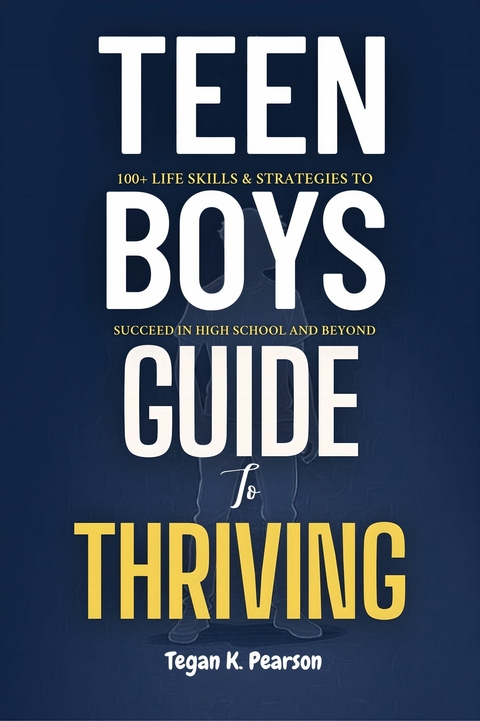
Teen Boys' Guide to Thriving (eBook)
112 Seiten
Seahorse Pub (Verlag)
978-0-00-102667-4 (ISBN)
Every teen boy deserves the tools to grow with confidence, make smart choices, and build a life that goes beyond surviving-into truly thriving.
Teen Boys' Guide to Thriving is your straightforward, no-judgment zone for mastering the essential life skills and real-world strategies that set successful young men apart. Whether you're navigating high school pressures, building friendships, managing time, or planning for the future, this guide delivers 100+ actionable insights designed specifically for teenage guys like you.
From improving communication and decision-making to boosting self-esteem and handling stress, each skill is broken down into simple, relatable steps. You'll discover how to:
Build confidence that lasts
Manage time without feeling overwhelmed
Navigate relationships and peer pressure
Set goals that actually stick
Handle conflict like a pro
Prepare for life after high school-whether it's college, work, or something else entirely
Written with input from educators, mentors, and real teen boys, this book speaks your language without talking down to you. It's not about being perfect-it's about being prepared, staying grounded, and growing into the best version of yourself.
Perfect for teens, parents, teachers, and youth leaders, Teen Boys' Guide to Thriving is more than just a book-it's a roadmap to becoming the kind of young man who leads with strength, empathy, and purpose.
Start thriving today. The right tools are here when you're ready.
Chapter 1: Know Yourself
Understanding Your Changing Self
Your Brain Under Construction
Right now, your brain is literally under construction—and construction sites are messy, noisy, and sometimes dangerous. But they're building something incredible. Between ages 13-18, your brain undergoes massive renovation, with the emotional control center (limbic system) developing years before the rational thinking headquarters (prefrontal cortex). This explains why you can feel emotions so intensely that they seem to take over your entire body, while your ability to think through consequences feels unreliable.
Think of your emotional brain as a high-powered sports car, while your rational brain is still learning to drive. The car isn't broken—it's actually more powerful than it will be when you're older. But the driver is still in training. This is why anger can feel like it erupts from nowhere, why sad songs make you cry harder than they used to, and why excitement about things adults consider minor can feel life-changing.
Your brain is also pruning unused connections while strengthening pathways you use frequently. This means the choices you make now—what you practice, focus on, and repeatedly do—are literally shaping your neural architecture. Every time you choose patience over anger, effort over avoidance, or kindness over cruelty, you're building stronger pathways for those responses.
This process continues until your mid-twenties, so be patient with yourself. The confusion, intensity, and occasional poor decisions aren't character flaws—they're normal parts of brain development. Understanding this helps you work with your developing brain rather than fighting against it, using strategies that support your current capabilities while building skills for the future.
Managing Emotional Intensity
When emotions hit during adolescence, they can feel overwhelming—like being caught in a riptide that pulls you under before you realize what's happening. The good news is that emotional intensity, while challenging, is also temporary and manageable with the right strategies.
Physical Reset Techniques: When emotions spike, your body floods with stress hormones. Physical movement helps metabolize these chemicals faster. Try the "5-4-3-2-1" technique: do 5 jumping jacks, take 4 deep breaths, name 3 things you can see, 2 things you can hear, and 1 thing you can smell. This engages your rational brain while giving your body something to do with the emotional energy.
Breathing for Regulation: Box breathing works exceptionally well for teenagers because it's simple and immediately effective. Breathe in for 4 counts, hold for 4, out for 4, hold for 4. Repeat until you feel your heart rate slow. This activates your parasympathetic nervous system, literally calming your body's stress response.
Safe Expression Methods: Emotions need somewhere to go. Keeping a voice memo journal lets you express feelings without worrying about writing skills. Physical activities like shooting baskets, punching a pillow, or going for a walk help discharge emotional energy safely. Creative expression—drawing, music, even angry cleaning—provides outlets that don't hurt you or others.
The 24-Hour Rule: For intense emotions that might lead to regrettable decisions, implement a 24-hour waiting period before taking action. Tell yourself, "I'll deal with this tomorrow after I've slept on it." This gives your prefrontal cortex time to come online and offer perspective your emotional brain can't access in the moment.
Remember: feeling emotions intensely isn't a weakness—it's a sign of a healthy, developing brain that will eventually give you greater emotional depth and empathy than people who never experienced this intensity.
Accepting Your Changing Body
Your body during adolescence is like a house under renovation—everything's changing at different rates, creating temporary awkwardness that eventually resolves into something stronger and more capable. Growth spurts can add inches in months, leaving you feeling like a stranger in your own skin. Your voice might crack unpredictably, your skin might break out despite your best efforts, and your coordination might feel off as your limbs adjust to new proportions.
Focus on Function Over Form: Instead of criticizing your appearance, appreciate what your body can do. Your growing muscles can lift heavier weights, your developing cardiovascular system can handle more intense activities, and your maturing coordination allows for more complex physical skills. Keep a "body gratitude" list—things your body does well, from healing cuts to allowing you to hug people you care about.
Health Habits That Support Development: Your changing body needs consistent fuel and recovery. Aim for three meals plus snacks, focusing on protein for muscle development and complex carbohydrates for brain function. Sleep becomes even more critical during adolescence—your body releases growth hormone primarily during deep sleep, and your brain consolidates learning and emotional processing overnight.
Hygiene as Self-Care: Increased hormone production means your body's systems are working harder, requiring adjusted hygiene routines. This isn't about vanity—it's about health and confidence. Establish consistent routines for showering, dental care, and skin care that work with your schedule rather than adding stress.
Clothing and Confidence: Your changing body shape might mean clothes fit differently than before. This is normal and temporary. Focus on clothes that are comfortable and make you feel confident rather than following every trend. Well-fitting basics build a foundation that works regardless of specific style preferences.
Most importantly, remember that everyone develops at different rates. Comparing your development timeline to others creates unnecessary stress. Your body is following its own genetic blueprint, and that timeline is exactly right for you.
Discovering Your Values and Beliefs
Identifying What Matters Most
Values are your internal compass—they guide decisions when external rules don't apply and help you stay true to yourself even when others disagree with your choices. During adolescence, you're naturally beginning to examine the values your family taught you, deciding which ones feel authentic to who you're becoming and which ones you might want to modify or replace.
Family Values Assessment: Start by listing the values your family emphasized while you were growing up. These might include honesty, hard work, kindness, loyalty, achievement, creativity, or spirituality. For each value, ask yourself: "Does this feel true to me personally?" "Do I want to carry this forward into my adult life?" "How might I want to express this value differently than my family does?"
Personal Values Discovery: Beyond family influence, what matters to you personally? Pay attention to moments when you feel proud of your choices or disappointed in your behavior—these emotional responses often reveal your authentic values. Notice what injustices make you angry, what achievements feel most meaningful, and what kinds of people you admire most.
Values in Action Exercise: For one week, keep track of how you spend your time and energy. At the end of each day, identify which activities aligned with your stated values and which ones didn't. This reveals the difference between your proclaimed values and your lived values—sometimes there's a gap that needs attention.
Dealing with Values Conflicts: You might discover that some of your emerging personal values conflict with family expectations or peer group norms. This is normal and healthy, though it can create temporary tension. Remember that developing your own value system doesn't mean rejecting everything your family taught you—it means making conscious choices about what you want to carry forward.
Values Evolution: Your values will continue developing throughout your life as you gain new experiences and insights. What matters most to you at 14 might shift by age 18, and that's perfectly normal. The goal isn't to lock in permanent values, but to develop the skill of regularly examining what matters to you and making choices that align with your current understanding of yourself.
Developing Your Personal Code
A personal code translates your values into actionable principles that guide daily decisions. Think of it as your internal rulebook—not rigid laws, but flexible guidelines that help you navigate complex situations with integrity.
Creating Decision-Making Principles: Transform each core value into a decision-making principle. If honesty is important to you, your principle might be "I tell the truth even when it's uncomfortable, but I consider timing and kindness in how I express it." If loyalty matters, you might decide "I support my friends unless they're harming themselves or others."
The Values-Based Decision Framework: When facing difficult choices, ask yourself: "Which option best honors my most important values?" "What would the person I want to become choose in this situation?" "How will I feel about this decision in five years?" This framework works for everything from choosing classes to handling peer pressure to resolving conflicts with family.
Handling Peer Pressure Through Values Clarity: When you're clear about your values, peer pressure becomes less powerful because you have internal criteria for decisions rather than relying solely on external approval. Practice phrases like "That doesn't align with who I want to be" or "I've decided I don't do that" rather than making...
| Erscheint lt. Verlag | 21.8.2025 |
|---|---|
| Sprache | englisch |
| Themenwelt | Sachbuch/Ratgeber ► Gesundheit / Leben / Psychologie ► Familie / Erziehung |
| ISBN-10 | 0-00-102667-4 / 0001026674 |
| ISBN-13 | 978-0-00-102667-4 / 9780001026674 |
| Informationen gemäß Produktsicherheitsverordnung (GPSR) | |
| Haben Sie eine Frage zum Produkt? |
 EPUB (Adobe DRM)
Größe: 1,4 MB
Kopierschutz: Adobe-DRM
Adobe-DRM ist ein Kopierschutz, der das eBook vor Mißbrauch schützen soll. Dabei wird das eBook bereits beim Download auf Ihre persönliche Adobe-ID autorisiert. Lesen können Sie das eBook dann nur auf den Geräten, welche ebenfalls auf Ihre Adobe-ID registriert sind.
Details zum Adobe-DRM
Dateiformat: EPUB (Electronic Publication)
EPUB ist ein offener Standard für eBooks und eignet sich besonders zur Darstellung von Belletristik und Sachbüchern. Der Fließtext wird dynamisch an die Display- und Schriftgröße angepasst. Auch für mobile Lesegeräte ist EPUB daher gut geeignet.
Systemvoraussetzungen:
PC/Mac: Mit einem PC oder Mac können Sie dieses eBook lesen. Sie benötigen eine
eReader: Dieses eBook kann mit (fast) allen eBook-Readern gelesen werden. Mit dem amazon-Kindle ist es aber nicht kompatibel.
Smartphone/Tablet: Egal ob Apple oder Android, dieses eBook können Sie lesen. Sie benötigen eine
Geräteliste und zusätzliche Hinweise
Buying eBooks from abroad
For tax law reasons we can sell eBooks just within Germany and Switzerland. Regrettably we cannot fulfill eBook-orders from other countries.
aus dem Bereich