Zum Hauptinhalt springen
Nicht aus der Schweiz? Besuchen Sie lehmanns.de
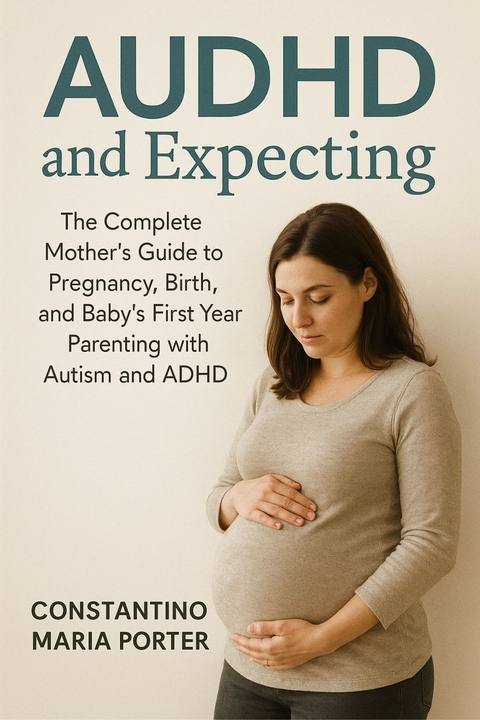
AUDHD and Expecting -  Constantino Maria Porter

AUDHD and Expecting (eBook)

The Complete Mother's Guide to Pregnancy, Birth, and Baby's First Year Parenting with Autism and ADHD
eBook Download: EPUB
2025 | 1. Auflage
218 Seiten
TherapyBooks Publishing (Verlag)
978-0-00-101932-4 (ISBN)
Systemvoraussetzungen
8,55 inkl. MwSt
(CHF 8,35)
Der eBook-Verkauf erfolgt durch die Lehmanns Media GmbH (Berlin) zum Preis in Euro inkl. MwSt.
  • Download sofort lieferbar
  • Zahlungsarten anzeigen

Discover the first comprehensive guide created specifically for mothers navigating pregnancy, birth, and early parenting with both autism and ADHD.


If you're an AUDHD mother feeling overwhelmed by traditional pregnancy advice that doesn't account for your unique brain, this essential guide provides the understanding and practical strategies you've been searching for. From managing sensory overload during prenatal appointments to creating sustainable routines with your newborn, every page addresses the real challenges you face.


Inside this complete mother's guide, you'll find:


Pregnancy strategies that work with your AUDHD brain, not against it - managing morning sickness, sensory sensitivities, and executive function challenges during each trimester


Birth preparation tailored for neurodivergent needs - creating sensory-friendly birth plans, communication strategies for medical teams, and advocacy tools for labor and delivery


Postpartum survival techniques for the fourth trimester free fall - navigating hormonal crashes, sleep deprivation, and building emergency support systems


Feeding solutions for both you and baby - addressing sensory aspects of breastfeeding, executive function challenges with feeding schedules, and managing your own nutrition


Sleep and routine strategies that satisfy both autism's need for predictability and ADHD's struggle with consistency - co-regulation techniques and sustainable sleep approaches


Building your support village differently - communicating your needs, finding neurodivergent parenting communities, and advocating for accommodations


First-year milestone navigation with neurodivergent awareness - managing healthcare appointments, recognizing potential neurodivergent traits in your baby, and maintaining your identity


Redefining parenting success for AUDHD families - recognizing your unique strengths, healing from internalized ableism, and creating sustainable approaches


This guide offers validation, practical tools, and evidence-based strategies from someone who understands that your different way of parenting isn't a problem to solve - it's a strength to celebrate. Each chapter includes real examples, accommodation checklists, communication scripts, and crisis planning worksheets designed specifically for AUDHD mothers.


Stop trying to fit into neurotypical parenting molds. Start building approaches that work with your brain's unique wiring and create the supportive, understanding pregnancy and parenting experience you deserve.


Transform your AUDHD motherhood journey from surviving to thriving.

Chapter 3: First Trimester Survival Strategies
The pregnancy test shows two lines, and suddenly your brain feels like it's been hit by a hormonal freight train. One minute you're researching the optimal folate intake and creating color-coded spreadsheets about baby development milestones. The next minute you're crying because your partner loaded the dishwasher differently than usual, and you can't remember if you took your prenatal vitamin this morning—or yesterday, for that matter.
Welcome to the first trimester with an AUDHD brain. It's like someone cranked up all your neurodivergent traits to maximum volume while simultaneously unplugging half your coping mechanisms. Your autism side is panicking about all the changes and unknowns. Your ADHD side can't focus long enough to process the pregnancy information you desperately want to research. And meanwhile, your body is producing hormones that make everything feel more intense, unpredictable, and overwhelming.
Here's what nobody tells you: the first trimester isn't just hard because of morning sickness and fatigue. For AUDHD brains, it's hard because pregnancy hormones interact with your neurotransmitter systems in ways that can temporarily scramble your usual functioning. Understanding this isn't about making excuses—it's about developing strategies that actually work when your brain feels like it's running on a completely different operating system.
Hormonal Havoc and Your AUDHD Brain
Let's start with what's actually happening in your brain during those first crucial weeks. Progesterone levels skyrocket during early pregnancy, increasing by 10-15 times their normal levels. For neurotypical brains, this creates manageable mood changes and some cognitive shifts. For AUDHD brains, it's like throwing a wrench into machinery that was already running custom software.
Progesterone affects GABA receptors in your brain—the same neurotransmitter system that helps regulate anxiety, sensory processing, and executive function. When you alreadyhave differences in how your brain processes GABA, sudden progesterone surges can temporarily worsen anxiety, increase sensory sensitivity, and make executive function tasks feel nearly impossible.
Dr. Michelle Mowbray, a reproductive psychiatrist who specializes in neurodevelopmental conditions, explains it this way: "AUDHD brains are already managing differences in dopamine, serotonin, and GABA systems. Early pregnancy hormones don't just add to the mix—they can temporarily hijack these systems entirely."
Elena, a 29-year-old marketing coordinator, described her experience: "I went from being the most organized person in my office to forgetting meetings I'd scheduled the day before. I couldn't understand why pregnancy was making me feel so scattered until my doctor explained that it wasn't just'pregnancy brain'—the hormones were literally changing how my ADHD brain functioned."
Estrogen levels also fluctuate wildly during the first trimester, which affects dopamine production and uptake. Since ADHD brains already have differences in dopamine functioning, these fluctuations can cause:
  • Attention and focus that varies dramatically from day to day
  • Working memory problems that feel more severe than your usual ADHD challenges
  • Emotional regulation difficulties that go beyond typical mood swings
  • Executive function crashes that feel completely overwhelming
For the autism side of your brain, first trimester hormones can intensify:
  • Sensory sensitivities, making normal environments feel overwhelming
  • Need for routine and predictability, just when pregnancy makes everything unpredictable
  • Anxiety about changes and unknowns, which pregnancy certainly provides in abundance
  • Difficulty with flexibility, exactly when you need to adapt to rapid physical and emotional changes
The key insight here is that you're not failing at pregnancy—your brain is responding normally to abnormal hormone levels. When you understand this, you can stop blaming yourself and start developing accommodations.
Morning Sickness Meets Sensory Sensitivity
If you thought regular morning sickness sounded challenging, try adding autism-level sensory sensitivities to the mix. Suddenly, the smell of your partner's coffee doesn't just make you queasy—it feels like a sensory assault that triggers both nausea and sensory overload simultaneously.
AUDHD brains process sensory information differently even under normal circumstances. Pregnancy hormones can amplify these differences significantly. Common first trimester sensory challenges include:
Smell hypersensitivity that goes beyond typical pregnancy aversions. Maya, a teacher pregnant with her first child, found herself leaving grocery stores in tears: "It wasn't just that smells made me nauseous—they felt like they were attacking my nervous system. The combination of food smells, cleaning products, and perfumes created this sensory chaos that made me feel panicked, not just sick."
Sound sensitivity that makes normal environments feel overwhelming. The hum of fluorescent lights that you could usually filter out might suddenly feel unbearable. Background conversations, traffic noise, or even the sound of your own chewing might trigger both sensory overload and nausea.
Texture aversions that affect both food and non-food items. You might find that fabrics you normally tolerate feel scratchy or confining. Foods with certain textures might trigger immediate gag reflexes that go beyond normal pregnancy food aversions.
Visual sensitivity that makes bright lights, busy patterns, or flickering screens feel physically painful. This can make routine activities like grocery shopping, working on a computer, or even watching TV feel overwhelming.
Practical strategies for managing sensory-sensitive morning sickness:
Create sensory-safe zones in your home where you can retreat when feeling overwhelmed. This might mean blackout curtains in your bedroom, a white noise machine to mask unpredictable sounds, and keeping strong-smelling items (like cleaning products or scented candles) in closed containers.
Use the buddy system for sensory-challenging environments. Ask your partner or a friend to accompany you to grocery stores, medical appointments, or other potentially overwhelming places. They can help navigate environments, carry items, and provide support if you need to leave quickly.
Develop a sensory emergency kit that you carry with you. This might include noise-canceling headphones, sunglasses, unscented gum or mints, and a soft scarf or cardigan for texture comfort.
Time activities for your best sensory periods. Many AUDHD people find their sensory tolerance is higher at certain times of day. Schedule challenging activities (like grocery shopping or medical appointments) for when your sensory system typically feels more stable.
Jen, a graphic designer, learned to work with her sensory patterns: "I realized my sensory sensitivity was worst in the afternoons when I was tired and hungry. I started scheduling all my pregnancy appointments for mid-morning, and I asked my partner to handle grocery shopping after 3 PM. It sounds simple, but it made a huge difference in how overwhelming everyday tasks felt."
Executive Function in Free Fall
If you thought your ADHD executive function challenges were manageable before pregnancy, the first trimester might make you feel like your brain's CEO just quit without notice. Pregnancy hormones don't just affect attention and memory—they can temporarily disrupt all the cognitive systems you rely on to manage daily life.
Dr. Julia Rucklidge, who researches ADHD and nutrition, notes: "The executive function demands of early pregnancy—managing medical appointments, tracking symptoms, making dietary changes, processing new information—can overwhelm even well-functioning ADHD brains when combined with hormonal changes and physical symptoms".
Common executive function crashes during the first trimester include:
Working memory failures that go beyond forgetting where you put your keys. You might forget what you went to the store to buy while you're standing in the store, or lose track of what your doctor just told you while you're still sitting in their office.
Planning and organization breakdowns where tasks that used to feel manageable suddenly seem impossible. Making dinner might feel overwhelming because you can't hold all the steps in your mind simultaneously.
Task initiation paralysis where you know you need to do things (like schedule appointments or research prenatal vitamins) but feel completely unable to start.
Time blindness that's more severe than your usual ADHD challenges. You might consistently underestimate how long tasks will take or completely lose track of time.
Decision fatigue that hits much faster than usual. Choices that normally wouldn't faze you—like what to eat for lunch or which prenatal vitamin to buy—might feel...

Erscheint lt. Verlag 15.8.2025
Sprache englisch
Themenwelt Sachbuch/Ratgeber Gesundheit / Leben / Psychologie Familie / Erziehung
ISBN-10 0-00-101932-5 / 0001019325
ISBN-13 978-0-00-101932-4 / 9780001019324
Informationen gemäß Produktsicherheitsverordnung (GPSR)
Haben Sie eine Frage zum Produkt?
EPUBEPUB (Adobe DRM)
Größe: 773 KB

Kopierschutz: Adobe-DRM
Adobe-DRM ist ein Kopierschutz, der das eBook vor Mißbrauch schützen soll. Dabei wird das eBook bereits beim Download auf Ihre persönliche Adobe-ID autorisiert. Lesen können Sie das eBook dann nur auf den Geräten, welche ebenfalls auf Ihre Adobe-ID registriert sind.
Details zum Adobe-DRM

Dateiformat: EPUB (Electronic Publication)
EPUB ist ein offener Standard für eBooks und eignet sich besonders zur Darstellung von Belle­tristik und Sach­büchern. Der Fließ­text wird dynamisch an die Display- und Schrift­größe ange­passt. Auch für mobile Lese­geräte ist EPUB daher gut geeignet.

Systemvoraussetzungen:
PC/Mac: Mit einem PC oder Mac können Sie dieses eBook lesen. Sie benötigen eine Adobe-ID und die Software Adobe Digital Editions (kostenlos). Von der Benutzung der OverDrive Media Console raten wir Ihnen ab. Erfahrungsgemäß treten hier gehäuft Probleme mit dem Adobe DRM auf.
eReader: Dieses eBook kann mit (fast) allen eBook-Readern gelesen werden. Mit dem amazon-Kindle ist es aber nicht kompatibel.
Smartphone/Tablet: Egal ob Apple oder Android, dieses eBook können Sie lesen. Sie benötigen eine Adobe-ID sowie eine kostenlose App.
Geräteliste und zusätzliche Hinweise

Buying eBooks from abroad
For tax law reasons we can sell eBooks just within Germany and Switzerland. Regrettably we cannot fulfill eBook-orders from other countries.

Mehr entdecken
aus dem Bereich
Überraschend anders. Von Pubertät bis Menopause: Wie Frauen in jeder …

von Lotta Borg Skoglund

eBook Download (2025)
Trias (Verlag)
CHF 23,40
Sichere Ausbildung für Eltern

von Karl Heinz Brisch

eBook Download (2024)
Klett-Cotta (Verlag)
CHF 19,50