The Calm Conqueror (eBook)
95 Seiten
Publishdrive (Verlag)
978-1-0671019-9-2 (ISBN)
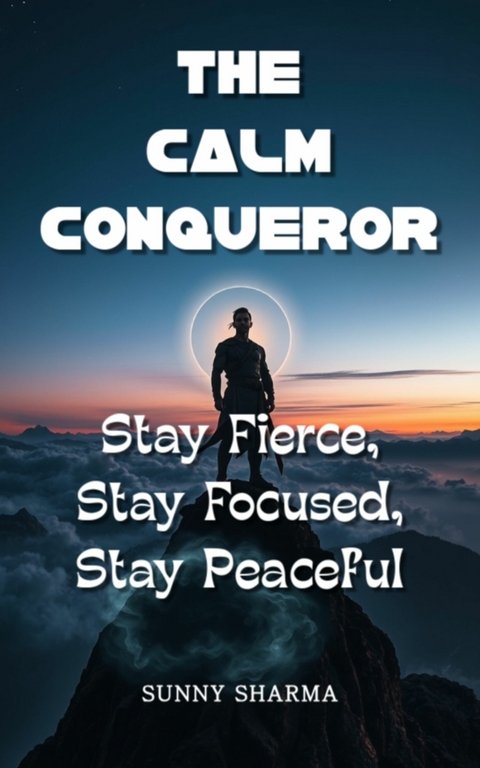
The Calm Conqueror: Stay Fierce, Stay Focused, Stay Peaceful by Sunny Sharma is your ultimate guide to mastering inner calm in a world that never stops spinning. Stress and anxiety don't mean weakness-they mean you've been strong for too long without the tools to protect your peace. This book empowers you to regulate your nervous system, calm the storm inside, and lead with clarity even under pressure. Through powerful, grounded chapters like 'The Nervous System Reset,' 'Anchoring in the Now,' and 'Making Peace with Pressure,' you'll learn to train your body and mind to respond with strength-not panic. Whether you're facing burnout, emotional overload, or daily overwhelm, The Calm Conqueror helps you rise with stillness, sharpen your focus, and turn stress into a signal-not a sentence. Calm is not the absence of power-it's the source of it. Reclaim your peace, protect your purpose, and walk forward like a warrior in control of their inner world.
The Calm Conqueror: Stay Fierce, Stay Focused, Stay Peaceful by Sunny Sharma is your ultimate guide to mastering inner calm in a world that never stops spinning. Stress and anxiety don't mean weakness-they mean you've been strong for too long without the tools to protect your peace. This book empowers you to regulate your nervous system, calm the storm inside, and lead with clarity even under pressure. Through powerful, grounded chapters like "e;The Nervous System Reset,"e; "e;Anchoring in the Now,"e; and "e;Making Peace with Pressure,"e; you'll learn to train your body and mind to respond with strength-not panic. Whether you're facing burnout, emotional overload, or daily overwhelm, The Calm Conqueror helps you rise with stillness, sharpen your focus, and turn stress into a signal-not a sentence. Calm is not the absence of power-it's the source of it. Reclaim your peace, protect your purpose, and walk forward like a warrior in control of their inner world.
Chapter 1: The Warrior’s Nervous System
Every warrior, whether on the battlefield or in the arena of life, carries within them a secret weapon—one that is often overlooked yet profoundly powerful. This weapon is not forged from steel or honed through physical training alone. It is the nervous system, the intricate network of cells and signals that governs how we respond to the world around us. It is the silent commander of our emotions, the unseen architect of our resilience, and the quiet custodian of our focus. To understand the nervous system is to unlock the potential for calm amidst chaos, clarity in confusion, and strength in moments of vulnerability. It is the foundation upon which every warrior’s mindset is built.
The nervous system is not just a biological system; it is a storyteller. It narrates the tale of how we perceive challenges, how we recover from setbacks, and how we rise to meet the demands of our lives. When faced with stress, it whispers to us—sometimes in the language of fight, flight, or freeze. But when understood and mastered, it can speak in the dialect of courage, adaptability, and inner peace. The warrior’s nervous system is not one that seeks to avoid discomfort; it is one that learns to dance with it, to harness its energy, and to transform it into purpose. This is not about suppressing fear or ignoring pain. It is about cultivating a relationship with your body’s responses, so they become allies rather than adversaries.
In this chapter, we will explore the science and the art of training the nervous system to serve you in the pursuit of your goals. We will delve into the mechanisms that govern stress and relaxation, the tools that can help you regulate your emotions, and the practices that can strengthen your mental fortitude. This is not just about surviving the storms of life; it is about thriving in them. By the end of this journey, you will have a deeper understanding of how to harness the power of your nervous system, not as a passive observer, but as an active participant in your own transformation. The warrior’s nervous system is not a fixed entity; it is a dynamic force, waiting to be shaped by intention, discipline, and awareness. Let us begin this exploration, and discover how to wield this inner weapon with wisdom and grace.
1.1 Calm in the Chaos: Mastering the Art of Stillness
The warrior’s nervous system thrives not in the absence of stress, but in the presence of calm amidst chaos. Picture a storm: winds howl, rain lashes, yet at its center lies the eye—a place of perfect stillness. This is your goal: to find that eye within yourself. Start by practicing micro-moments of stillness:
- Pause for three breaths before responding to a stressful email.
- Close your eyes and feel your feet on the ground during a tense conversation.
- Take a 60-second “reset” walk when overwhelmed.
These small acts are like anchors, grounding you in the present moment. Remember: “Stillness is not the absence of motion, but the presence of peace.” When you cultivate this inner calm, you become unshakable, like a mountain standing firm against the wind.
1.2 The Power of Breath: Your Nervous System’s Reset Button
Breath is the bridge between your body and mind, and it’s the most immediate tool you have to regulate your nervous system. Think of it as a dimmer switch for your stress response: inhale to energize, exhale to calm. Here’s a simple yet powerful breathing technique to try:
1. Inhale deeply for a count of four.
2. Hold the breath for a count of four.
3. Exhale slowly for a count of six.
4. Pause for a count of two before repeating.
This 4-4-6-2 rhythm activates your parasympathetic nervous system, signaling safety to your body. Use it before a big presentation, during a heated argument, or even when lying in bed unable to sleep. The beauty of breath is its accessibility: it’s always with you, ready to reset your system in seconds.
1.3 Building Resilience: Training Your Nervous System for Life’s Battles
Resilience isn’t something you’re born with; it’s something you build. Like a muscle, your nervous system grows stronger through intentional training. Start by exposing yourself to manageable stressors:
- Take cold showers to teach your body to adapt to discomfort.
- Practice public speaking to confront fear head-on.
- Set challenging fitness goals to push your limits safely.
Over time, these experiences rewire your brain, teaching it that stress is not a threat but an opportunity for growth. As the ancient samurai knew, “The blade that cuts through steel is forged in fire.” Your nervous system, too, becomes unbreakable through deliberate practice. Remember, resilience is not about avoiding stress; it’s about embracing it and emerging stronger on the other side.
By mastering stillness, harnessing your breath, and building resilience, you transform your nervous system into a warrior’s greatest ally. This is not just about survival—it’s about thriving in the face of life’s greatest challenges.
1.4 The Warrior’s Nervous System: Calm in the Storm
The warrior’s nervous system is not immune to chaos, but it is trained to find calm within it. Imagine a storm: winds howling, rain pelting, yet deep beneath the surface, the ocean remains steady. This is the essence of resilience—the ability to stay grounded when everything around you is in turmoil. Your nervous system is your anchor, and when you learn to regulate it, you become unshakable.
• Breathe like a warrior: Deep, intentional breaths signal to your body that it’s safe. Inhale for four counts, hold for four, exhale for six. Repeat. This simple practice can shift your state in moments.
• Anchor in the present: When overwhelm strikes, focus on your senses. What do you see, hear, feel? This pulls you out of spiraling thoughts and into the now.
• Move to release: Physical activity—whether it’s a brisk walk, yoga, or dancing—helps discharge excess energy and restores balance.
Remember, calm is not the absence of chaos; it’s the presence of control. Train your nervous system like a warrior, and you’ll find peace even in the fiercest storms.
1.5 The Power of the Pause: Mastering Response Over Reaction
In the heat of the moment, the warrior knows the power of the pause. Reaction is instinctual; response is intentional. When life throws a curveball, a moment of pause can transform chaos into clarity. Think of it as pressing the reset button on your nervous system.
Here’s how to harness the pause:
1. Stop: When tension rises, take a literal step back. This creates physical and mental space.
2. Observe: Notice what’s happening within you. Are you tense, angry, or fearful? Awareness is the first step to change.
3. Choose: Decide how you want to respond. This is where your power lies—not in the event, but in your reaction to it.
A real-life example: Imagine you’re in a heated argument. Instead of firing back, you pause, take a breath, and respond with, “I hear you. Let’s find a solution.” This simple shift can defuse tension and lead to resolution. The pause is your superpower—use it wisely.
1.6 Building Resilience: Strengthening Your Nervous System
Resilience is not something you’re born with; it’s something you build. Like a muscle, your nervous system grows stronger with practice. The more you train it to handle stress, the more resilient you become. Here’s how to fortify your inner warrior:
• Practice daily stress inoculation: Expose yourself to small, manageable stressors—like cold showers or challenging workouts. This trains your body to adapt and recover.
• Cultivate gratitude: Gratitude shifts your focus from what’s wrong to what’s right. Start or end your day by listing three things you’re thankful for.
• Connect with others: Strong relationships act as a buffer against stress. Reach out to a friend, share your struggles, and lean on your support system.
Think of your nervous system as a garden. Tend to it daily—water it with rest, nourish it with healthy habits, and protect it from toxic influences. Over time, it will flourish, and so will you. Resilience is not about avoiding pain; it’s about growing through it.
The warrior’s nervous system is a testament to the power of practice and presence. By mastering calm, embracing the pause, and building resilience, you can navigate life’s challenges with grace and strength. Remember, the storm doesn’t define you—your response does.
1.7 The Nervous System: Your Inner Command Center
The nervous system is the ultimate command center of your body, the invisible thread that connects every thought, emotion, and action. It’s the silent conductor of your life’s orchestra, ensuring harmony between your mind and body. When you understand its power, you unlock the ability to navigate life’s challenges with precision and grace.
Think of it like this: your nervous system is a vast network of highways, with signals zipping back and forth at lightning speed. These signals are the messengers of your intentions, carrying your decisions from brain to body and your experiences from body to brain. When this system is balanced, you feel calm, focused, and resilient. When it’s out of sync, stress, anxiety, or fatigue can take over.
Here’s the good news: you can train your nervous system just as you would train your muscles. Start with these...
| Erscheint lt. Verlag | 6.8.2025 |
|---|---|
| Sprache | englisch |
| Themenwelt | Sachbuch/Ratgeber ► Gesundheit / Leben / Psychologie ► Lebenshilfe / Lebensführung |
| Geisteswissenschaften ► Psychologie | |
| Schlagworte | burnout recovery • Emotional resilience • inner peace • mental clarity • Mindfulness • nervous system regulation • stress relief |
| ISBN-10 | 1-0671019-9-3 / 1067101993 |
| ISBN-13 | 978-1-0671019-9-2 / 9781067101992 |
| Informationen gemäß Produktsicherheitsverordnung (GPSR) | |
| Haben Sie eine Frage zum Produkt? |
 EPUB (Adobe DRM)
Größe: 371 KB
Kopierschutz: Adobe-DRM
Adobe-DRM ist ein Kopierschutz, der das eBook vor Mißbrauch schützen soll. Dabei wird das eBook bereits beim Download auf Ihre persönliche Adobe-ID autorisiert. Lesen können Sie das eBook dann nur auf den Geräten, welche ebenfalls auf Ihre Adobe-ID registriert sind.
Details zum Adobe-DRM
Dateiformat: EPUB (Electronic Publication)
EPUB ist ein offener Standard für eBooks und eignet sich besonders zur Darstellung von Belletristik und Sachbüchern. Der Fließtext wird dynamisch an die Display- und Schriftgröße angepasst. Auch für mobile Lesegeräte ist EPUB daher gut geeignet.
Systemvoraussetzungen:
PC/Mac: Mit einem PC oder Mac können Sie dieses eBook lesen. Sie benötigen eine
eReader: Dieses eBook kann mit (fast) allen eBook-Readern gelesen werden. Mit dem amazon-Kindle ist es aber nicht kompatibel.
Smartphone/Tablet: Egal ob Apple oder Android, dieses eBook können Sie lesen. Sie benötigen eine
Geräteliste und zusätzliche Hinweise
Buying eBooks from abroad
For tax law reasons we can sell eBooks just within Germany and Switzerland. Regrettably we cannot fulfill eBook-orders from other countries.
EPUB (Ohne DRM)Digital Rights Management: ohne DRM
Dieses eBook enthält kein DRM oder Kopierschutz. Eine Weitergabe an Dritte ist jedoch rechtlich nicht zulässig, weil Sie beim Kauf nur die Rechte an der persönlichen Nutzung erwerben.
Dateiformat: EPUB (Electronic Publication)
EPUB ist ein offener Standard für eBooks und eignet sich besonders zur Darstellung von Belletristik und Sachbüchern. Der Fließtext wird dynamisch an die Display- und Schriftgröße angepasst. Auch für mobile Lesegeräte ist EPUB daher gut geeignet.
Systemvoraussetzungen:
PC/Mac: Mit einem PC oder Mac können Sie dieses eBook lesen. Sie benötigen dafür die kostenlose Software Adobe Digital Editions.
eReader: Dieses eBook kann mit (fast) allen eBook-Readern gelesen werden. Mit dem amazon-Kindle ist es aber nicht kompatibel.
Smartphone/Tablet: Egal ob Apple oder Android, dieses eBook können Sie lesen. Sie benötigen dafür eine kostenlose App.
Geräteliste und zusätzliche Hinweise
Buying eBooks from abroad
For tax law reasons we can sell eBooks just within Germany and Switzerland. Regrettably we cannot fulfill eBook-orders from other countries.
aus dem Bereich