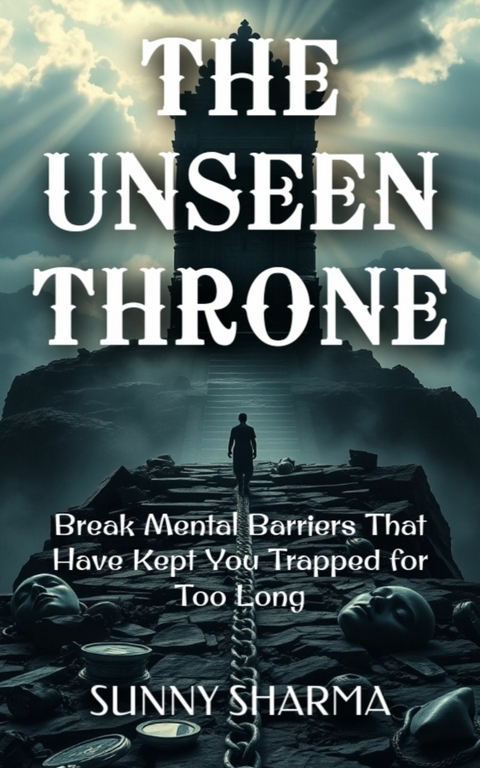
The Unseen Throne (eBook)
109 Seiten
Publishdrive (Verlag)
978-1-0671019-5-4 (ISBN)
The Unseen Throne: Break Mental Barriers That Have Kept You Trapped for Too Long by Sunny Sharma is a mind-expanding journey into the hidden beliefs and patterns that silently rule your life. Your mindset is your true throne-whether you choose to sit on it or let limiting thoughts take the crown. This book is your battle plan for breaking through mental cages, rewiring your inner dialogue, and stepping into the authority of your highest self. From chapters like 'The Invisible Chains,' 'Rise of the Inner Ruler,' to 'Rewriting the Mental Script,' you'll uncover how to defeat self-doubt, escape fear-based thinking, and unlock the unstoppable clarity buried beneath your conditioning. If you've ever felt stuck despite your efforts, this book will show you how to shift not just your actions-but the lens through which you see yourself and the world. The throne has always been yours. It's time to rise, reclaim it, and rule your life with clarity, belief, and courage.
The Unseen Throne: Break Mental Barriers That Have Kept You Trapped for Too Long by Sunny Sharma is a mind-expanding journey into the hidden beliefs and patterns that silently rule your life. Your mindset is your true throne-whether you choose to sit on it or let limiting thoughts take the crown. This book is your battle plan for breaking through mental cages, rewiring your inner dialogue, and stepping into the authority of your highest self. From chapters like "e;The Invisible Chains,"e; "e;Rise of the Inner Ruler,"e; to "e;Rewriting the Mental Script,"e; you'll uncover how to defeat self-doubt, escape fear-based thinking, and unlock the unstoppable clarity buried beneath your conditioning. If you've ever felt stuck despite your efforts, this book will show you how to shift not just your actions-but the lens through which you see yourself and the world. The throne has always been yours. It's time to rise, reclaim it, and rule your life with clarity, belief, and courage.
Chapter 1: The Prison You Can't See
Imagine a prison with no walls, no bars, and no guards. You can’t see it, but you feel its weight every single day. It’s a place where the doors are unlocked, yet you feel trapped. This prison isn’t built of steel or concrete—it’s constructed from your thoughts, fears, and limiting beliefs. You might not even realize you’re in it, but its presence shapes your decisions, stifles your dreams, and keeps you from living the life you truly desire. The most insidious part? You hold the key to your freedom, but it’s buried beneath layers of self-doubt and conditioning.
This invisible prison is made up of the stories you’ve been telling yourself for years. Maybe it’s the voice that whispers, “You’re not good enough,” or the fear that says, “What if you fail?” Perhaps it’s the belief that you don’t deserve happiness or success. These narratives, often formed in childhood or through past experiences, become the bars that confine you. They shape your perception of the world and yourself, creating a cycle of self-sabotage and missed opportunities. The tragedy isn’t that the prison exists—it’s that so many people live their entire lives without ever realizing they can break free.
But here’s the truth: you are not defined by your past, your fears, or the limitations others have placed on you. The walls of this prison are not as solid as they seem. With awareness, courage, and the willingness to challenge your own beliefs, you can dismantle them piece by piece. This chapter is your invitation to step into that process. It’s a call to examine the stories you’ve been living by, to question their validity, and to reclaim the power that’s always been yours. The journey won’t always be easy, but it will be worth it. Because on the other side of this invisible prison lies a life of freedom, purpose, and limitless possibility. The question is: are you ready to unlock the door?
1.1 Breaking Free from the Invisible Chains
Imagine this: You’re standing in a room with no walls, no doors, and no visible barriers. Yet, you feel trapped—unable to move forward, held back by something you can’t quite see or touch. This is the essence of the invisible prison: a construct of your own mind, built from limiting beliefs, fear, and self-doubt. The first step to breaking free is recognizing that the prison exists. You are both the prisoner and the jailer, and the key to freedom lies within you.
• Recognize the bars: These are the thoughts that whisper, “You’re not good enough,” “You’ll never succeed,” or “It’s too late to change.” They are not facts; they are stories you’ve told yourself for so long that they feel real.
• Question the lock: Ask yourself, “Who told me this? Where did this belief come from?” Often, these chains were forged by others—parents, teachers, society—and you’ve carried them without questioning their weight.
• Find the key: The key is awareness. When you shine a light on these thoughts, they lose their power. You begin to see them for what they are: illusions, not truths.
Breaking free is not a one-time event; it’s a process. Think of it as chipping away at the walls, one thought at a time. You didn’t build this prison overnight, and you won’t dismantle it in a day. But every step you take, no matter how small, brings you closer to liberation. Here’s how to start:
1. Challenge your inner critic: When negative thoughts arise, don’t accept them at face value. Ask, “Is this really true? What evidence do I have?” Replace them with affirmations like, “I am capable,” “I am worthy,” or “I am enough.”
2. Take small, deliberate actions: Fear thrives in stagnation. Even the tiniest step forward—whether it’s sending that email, signing up for a class, or simply saying “no” to something you don’t want to do—weakens the chains.
3. Surround yourself with positivity: Your environment shapes your mindset. Seek out people who uplift you, books that inspire you, and spaces that make you feel alive.
Consider the story of Maya, a woman who spent years believing she wasn’t “smart enough” to pursue her dream of becoming a writer. She held herself back, convinced that her ideas weren’t valuable. One day, she decided to challenge this belief by writing just one paragraph. That paragraph turned into a page, then a chapter, and eventually a book. She realized that the only thing holding her back was her own fear.
Freedom is not the absence of fear; it’s the courage to move forward despite it. As Eleanor Roosevelt once said, “You gain strength, courage, and confidence by every experience in which you really stop to look fear in the face.”
Here’s the truth: Your invisible prison is not a life sentence. It’s a challenge, an invitation to grow, to evolve, to become the person you were always meant to be. The walls may feel solid, but they are made of air. The chains may feel heavy, but they are made of paper. You have the power to step through them, to walk into the light of your own potential.
So, take a deep breath. Look around. See the prison for what it is: a creation of your mind, not a reflection of your reality. And then, take that first step. Because the moment you do, the walls begin to crumble, the chains begin to fall, and the world begins to open up before you.
Remember, the greatest prison you’ll ever face is the one you can’t see. But the greatest freedom you’ll ever know is the one you create for yourself.
1.2 The Walls We Build Within
The prison you can’t see is often the one you’ve constructed yourself. Its walls are made of doubt, fear, and self-imposed limitations. These barriers don’t appear overnight; they’re bricked slowly, one thought at a time. “I’m not good enough,” “I’ll never succeed,” “What if I fail?”—these are the whispers that lay the foundation.
Consider this: a bird in a cage doesn’t realize the door is open. It’s not the bars that keep it trapped; it’s the belief that it can’t fly free. Similarly, your mind can become a cage if you let it. The first step to breaking free is recognizing the walls exist. Ask yourself:
• What beliefs are holding me back?
• Where did these thoughts originate?
• Are they truly mine, or were they handed to me?
Freedom begins with awareness. Once you see the walls, you can start dismantling them. Remember: the only thing stronger than fear is courage. And courage starts with a single step—one brick removed, one belief challenged, one step closer to liberation.
1.3 The Chains of Comfort
Comfort zones are deceptive. They feel safe, cozy, and familiar, but they’re also chains that keep you from growing. Think of a caterpillar in its cocoon: it’s warm and protected, but if it stays too long, it will never become a butterfly. Growth requires discomfort; transformation demands movement.
Here’s the paradox: the very thing you’re afraid of—change—is the key to your freedom. Staying in your comfort zone might feel like self-preservation, but it’s actually self-sabotage. Ask yourself:
1. What am I avoiding because it feels uncomfortable?
2. What would my life look like if I embraced change instead of fearing it?
3. What’s the cost of staying the same?
Real-life example: Sarah, a talented artist, spent years hiding her work from the world. She feared criticism, rejection, and failure. But the moment she decided to share her art, her life transformed. The fear didn’t disappear, but it no longer controlled her. Her courage became her compass, guiding her toward a life she once thought was impossible.
1.4 The Key to Your Freedom
The good news? You hold the key to your own prison. It’s not hidden or locked away; it’s within you. The key is your mindset, your choices, and your willingness to take action. Freedom isn’t about escaping external circumstances; it’s about reclaiming your inner power.
Here’s how to use that key:
• Shift your perspective: Instead of seeing obstacles as barriers, view them as opportunities. Every challenge is a chance to grow.
• Take small, consistent steps: Freedom doesn’t happen overnight. It’s built through daily choices that align with your values and goals.
• Surround yourself with support: Seek out people who inspire, challenge, and believe in you. Their energy can help you stay motivated and focused.
As the philosopher Epictetus once said, “It’s not what happens to you, but how you react to it that matters.” You can’t control everything in life, but you can control your response. Your reaction is your power. Use it wisely, and you’ll find that the prison you can’t see becomes the doorway to the life you’ve always dreamed of.
The journey to freedom isn’t easy, but it’s worth it. Every step you take, every wall you tear down, every chain you break brings you closer to the person you were meant to be. Remember: you are the architect of your own freedom. Build wisely, and the world will open before you.
1.5 The Walls You Build Yourself
Imagine standing in a room with no doors, no windows, and no way out. You can’t see the walls, but you feel them pressing in. This is the prison of your own making: the walls you’ve built with fear, doubt, and self-imposed limitations. These barriers aren’t made of stone or steel; they’re constructed from the thoughts you repeat, the beliefs you cling to, and the stories...
| Erscheint lt. Verlag | 6.8.2025 |
|---|---|
| Sprache | englisch |
| Themenwelt | Sachbuch/Ratgeber ► Gesundheit / Leben / Psychologie ► Lebenshilfe / Lebensführung |
| Schlagworte | breaking mental barriers • Empowered Mindset • Fearless living • mental clarity • mindset rewiring • Overcoming Limiting Beliefs • self-transformation |
| ISBN-10 | 1-0671019-5-0 / 1067101950 |
| ISBN-13 | 978-1-0671019-5-4 / 9781067101954 |
| Informationen gemäß Produktsicherheitsverordnung (GPSR) | |
| Haben Sie eine Frage zum Produkt? |
 EPUB (Adobe DRM)
Größe: 516 KB
Kopierschutz: Adobe-DRM
Adobe-DRM ist ein Kopierschutz, der das eBook vor Mißbrauch schützen soll. Dabei wird das eBook bereits beim Download auf Ihre persönliche Adobe-ID autorisiert. Lesen können Sie das eBook dann nur auf den Geräten, welche ebenfalls auf Ihre Adobe-ID registriert sind.
Details zum Adobe-DRM
Dateiformat: EPUB (Electronic Publication)
EPUB ist ein offener Standard für eBooks und eignet sich besonders zur Darstellung von Belletristik und Sachbüchern. Der Fließtext wird dynamisch an die Display- und Schriftgröße angepasst. Auch für mobile Lesegeräte ist EPUB daher gut geeignet.
Systemvoraussetzungen:
PC/Mac: Mit einem PC oder Mac können Sie dieses eBook lesen. Sie benötigen eine
eReader: Dieses eBook kann mit (fast) allen eBook-Readern gelesen werden. Mit dem amazon-Kindle ist es aber nicht kompatibel.
Smartphone/Tablet: Egal ob Apple oder Android, dieses eBook können Sie lesen. Sie benötigen eine
Geräteliste und zusätzliche Hinweise
Buying eBooks from abroad
For tax law reasons we can sell eBooks just within Germany and Switzerland. Regrettably we cannot fulfill eBook-orders from other countries.
EPUB (Ohne DRM)Digital Rights Management: ohne DRM
Dieses eBook enthält kein DRM oder Kopierschutz. Eine Weitergabe an Dritte ist jedoch rechtlich nicht zulässig, weil Sie beim Kauf nur die Rechte an der persönlichen Nutzung erwerben.
Dateiformat: EPUB (Electronic Publication)
EPUB ist ein offener Standard für eBooks und eignet sich besonders zur Darstellung von Belletristik und Sachbüchern. Der Fließtext wird dynamisch an die Display- und Schriftgröße angepasst. Auch für mobile Lesegeräte ist EPUB daher gut geeignet.
Systemvoraussetzungen:
PC/Mac: Mit einem PC oder Mac können Sie dieses eBook lesen. Sie benötigen dafür die kostenlose Software Adobe Digital Editions.
eReader: Dieses eBook kann mit (fast) allen eBook-Readern gelesen werden. Mit dem amazon-Kindle ist es aber nicht kompatibel.
Smartphone/Tablet: Egal ob Apple oder Android, dieses eBook können Sie lesen. Sie benötigen dafür eine kostenlose App.
Geräteliste und zusätzliche Hinweise
Buying eBooks from abroad
For tax law reasons we can sell eBooks just within Germany and Switzerland. Regrettably we cannot fulfill eBook-orders from other countries.
aus dem Bereich