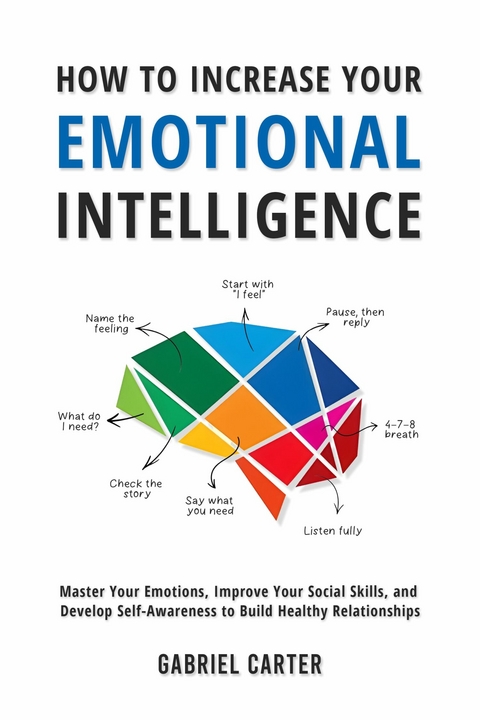
How to Increase Your Emotional Intelligence (eBook)
169 Seiten
Publishdrive (Verlag)
978-1-78793-867-0 (ISBN)
You keep your cool... until you don't.
One sarcastic comment, one unexpected email, one last-minute change-and suddenly your calm is gone.
You overthink, shut down, lash out, or freeze-then wonder what just happened.
The problem isn't that you're 'too emotional.'
It's that no one ever taught you how to work with your emotions-before they work against you.
This guide gives you the tools to finally do just that. No fluff. No theory overload. Just clear, practical skills to help you:
Stay composed during conflict-without going numb or exploding
Express what you really feel-without sounding weak or dramatic
Handle criticism with confidence-and stop spiraling after feedback
Set boundaries without guilt-even with difficult people
Protect your emotional energy-without shutting people out
You'll understand why you get triggered, how to reset your emotions fast, and how to communicate in ways that earn respect-not confusion or resentment.
Inside, you'll learn:
✅ The 4-step method to stay emotionally centered-even when someone pushes your buttons on purpose
✅ The 3 hidden emotional habits that quietly ruin relationships (and how to rewire them fast)
✅ A simple way to name exactly what you feel-so you stop saying 'I'm fine' when you're clearly not
✅ The exact scripts to say 'no' without guilt, set boundaries without drama, and ask for what you need without overexplaining
✅ The 6 verbal traps used by aggressive people-and how to shut them down with calm authority
✅ The real reason you absorb other people's moods-and how to protect your emotional energy
✅ How to respond to criticism without shrinking, overjustifying, or becoming passive-aggressive
✅ What to do when you're overwhelmed-but expected to stay 'professional'
✅ The 3 questions emotionally intelligent people ask before answering under pressure
✅ The difference between healthy empathy and emotional self-erasure-and how to stop losing yourself in others
✅ Why most people misunderstand emotional intelligence-and how changing just a few words can change everything
✅ How to stay emotionally available in your relationships without becoming everyone's emotional sponge
If you're tired of being caught off guard by your emotions...
If you want to stop overthinking, start communicating clearly, and feel more in control...
Then this is the emotional toolkit you've been missing.
You don't need more advice. You need emotional clarity.
Start building it-today.
You keep your cool... until you don't.One sarcastic comment, one unexpected email, one last-minute change and suddenly your calm is gone.You overthink, shut down, lash out, or freeze then wonder what just happened.The problem isn t that you're "e;too emotional."e;It s that no one ever taught you how to work with your emotions before they work against you.This guide gives you the tools to finally do just that. No fluff. No theory overload. Just clear, practical skills to help you:Stay composed during conflict without going numb or explodingExpress what you really feel without sounding weak or dramaticHandle criticism with confidence and stop spiraling after feedbackSet boundaries without guilt even with difficult peopleProtect your emotional energy without shutting people outYou ll understand why you get triggered, how to reset your emotions fast, and how to communicate in ways that earn respect not confusion or resentment.Inside, you ll learn:? The 4-step method to stay emotionally centered even when someone pushes your buttons on purpose? The 3 hidden emotional habits that quietly ruin relationships (and how to rewire them fast)? A simple way to name exactly what you feel so you stop saying I m fine when you're clearly not? The exact scripts to say no without guilt, set boundaries without drama, and ask for what you need without overexplaining? The 6 verbal traps used by aggressive people and how to shut them down with calm authority? The real reason you absorb other people s moods and how to protect your emotional energy? How to respond to criticism without shrinking, overjustifying, or becoming passive-aggressive? What to do when you're overwhelmed but expected to stay professional ? The 3 questions emotionally intelligent people ask before answering under pressure? The difference between healthy empathy and emotional self-erasure and how to stop losing yourself in others? Why most people misunderstand emotional intelligence and how changing just a few words can change everything? How to stay emotionally available in your relationships without becoming everyone s emotional spongeIf you re tired of being caught off guard by your emotions If you want to stop overthinking, start communicating clearly, and feel more in control Then this is the emotional toolkit you ve been missing.You don t need more advice. You need emotional clarity.Start building it today.
Chapter 1:
Why Emotional Intelligence Matters More Than IQ
"In a very real sense we have two minds, one that thinks and one that feels." — Daniel Goleman
You've probably worked alongside someone who was exceptionally bright but challenging to collaborate with. Maybe you've seen them handle complex problems with ease, but struggle in everyday interactions—snapping at minor setbacks, misunderstanding colleagues, or becoming frustrated during team discussions.
Research consistently shows that raw intelligence alone doesn’t guarantee success. In fact, studies reveal that people with average IQ often outperform their more academically gifted peers, not because they’re smarter, but because they handle emotions more effectively. Emotional intelligence, your ability to manage emotions—both your own and those around you—is what sets truly successful people apart.
It helps you remain calm when things get stressful, understand what's really happening in a tense conversation, and respond thoughtfully instead of impulsively. When someone disagrees strongly in a meeting, emotional intelligence lets you understand why they might feel that way, rather than assuming hostility. It guides you through conflict, helping you resolve differences without unnecessary drama.
For years, society emphasized IQ, grades, and test scores as the key to success. But your own experience probably shows otherwise. Real-world outcomes depend heavily on your emotional skills: your capacity to handle disagreements, empathize with coworkers, and stay composed under pressure.
This is why emotional intelligence matters so much—not as a replacement for cognitive intelligence, but as the essential complement to it.
The Real Power Behind Emotional Intelligence
Emotional intelligence shapes your daily life more profoundly than you might realize. It influences family interactions, workplace relationships, and how you handle stress. But emotional intelligence goes deeper than just understanding emotions—it’s about actively using that awareness to improve your interactions and outcomes.
Think about the people you've worked with who handle difficult situations with remarkable composure. When deadlines tighten or tension rises, they don't react impulsively or let emotions escalate conflicts. Instead, they remain calm, address concerns clearly, and move conversations toward solutions. These qualities earn trust and respect—not just because they're pleasant, but because they genuinely improve collaboration and problem-solving.
The opposite happens when emotional intelligence is low: disagreements turn into arguments, misunderstandings multiply, and teams struggle to communicate effectively. Even if you excel technically, a lack of emotional awareness can hold back your career by damaging your relationships and limiting your influence.
That's because emotions often act faster than logic. When faced with sudden criticism or unexpected change, your emotional reaction typically kicks in before your rational thinking can catch up. You might feel irritation or defensiveness right away, even if logically you know you shouldn't take it personally. Recognizing and managing these quick emotional reactions allows you to make better decisions in real-time, rather than reacting impulsively and regretting it later.
For example, when a colleague interrupts your presentation, instead of becoming flustered or defensive, you can calmly acknowledge their input and redirect the discussion: "That's an important question—let me finish this point and then I'll address it."
But what exactly makes someone emotionally intelligent? In the next section, we'll look at what the research tells us about these skills and why they matter so much for success.
What Science Says About EQ and Success
Beyond the anecdotes and personal hunches, science has put hard numbers to the importance of emotional intelligence. In study after study, emotional intelligence turns out to be a strong predictor of success in work and life. For example, research published in Harvard Business Review found that emotional intelligence is often the distinguishing factor between average performers and star performers. In fact, one extensive analysis showed that EQ alone accounts for about 58% of performance in all types of jobs. That means many high achievers aren’t just slightly more emotionally intelligent than others — they’re way ahead in this area. It’s no wonder that the same research revealed 90% of top performers have high EQ, whereas most low performers do not. The data paints a clear picture: being smart is useful, but being emotionally savvy can elevate you to a whole different level.
This holds especially true for leadership and teamwork. Technical skills and IQ might get you hired, but emotional intelligence is what makes you thrive once you’re in the role. Leaders with high EQ tend to inspire trust, communicate effectively, and handle crises without flying off the handle. Think about the best bosses or mentors you’ve encountered — chances are, what set them apart wasn’t their IQ but how they made you feel supported and understood. That’s emotional intelligence at work, and studies confirm that it correlates with effective leadership. As psychologist Daniel Goleman famously noted, IQ and technical skills matter, but emotional intelligence is the sine qua non of great leadership. Teams led by emotionally intelligent people perform better: they have less internal conflict, more innovation, and higher morale, because the leader can navigate the human elements of the job as well as the technical ones.
Emotional intelligence also contributes to your personal well-being and resilience. Research indicates that people with higher EQ experience lower stress levels and better mental health overall. When you can understand your own emotions, you’re less likely to be overwhelmed by them — you recover faster from setbacks and feel more in control. For example, instead of panicking when faced with a sudden change at work, high-EQ individuals can manage their anxiety, adapt, and find solutions. Similarly, in relationships, being tuned in to emotional cues helps you build stronger connections and bounce back from disagreements more quickly. Put simply, a high EQ makes you more resilient in the face of life’s ups and downs. You make clearer decisions because you’re not clouded by unmanaged emotions, and you maintain confidence because you understand your emotional strengths and weaknesses. Over time, these advantages compound. People with strong emotional intelligence often find they can handle challenges that would derail others, leading to greater success not just at work but in all areas of life.
It’s important to note that none of this means IQ is useless — raw intelligence and expertise have their place. But science is telling us that EQ is the secret sauce that turbocharges how you apply your intelligence. Without emotional intelligence, you might have all the knowledge in the world and still struggle to reach your goals. With it, you leverage your talents to the fullest. This is why companies today increasingly hire and promote based on emotional intelligence alongside traditional skills. They’ve learned that an investment in EQ is an investment in better teamwork, stronger leadership, and a healthier workplace climate.
EQ vs IQ: The Big Misconception
You grew up hearing that intelligence—measured by grades and test scores—is your best predictor of success. Yet you've probably met plenty of highly intelligent people who struggle with everyday interactions or face obstacles despite their academic achievements. There's a reason for this disconnect: IQ and emotional intelligence (EQ) aren't just different—they serve entirely different purposes in your life.
Picture two individuals stepping into a challenging professional situation. One person quickly analyzes data, solves technical problems effortlessly, and always scores high on standardized tests. But faced with uncertainty, they become stressed, struggle to collaborate, and find it difficult to adapt to unexpected changes. The other person might not have exceptional analytical skills but adapts easily to new situations, understands people's motivations, and communicates clearly under pressure. This person may never top the academic charts but tends to thrive professionally and personally because they're skilled at managing emotions and relationships.
IQ generally stays stable throughout adulthood. Your cognitive abilities—like logical thinking and memory—won't change dramatically from year to year. EQ, however, is entirely different. It's a collection of emotional and social skills you can intentionally develop through practice and experience. If you struggle with patience or empathy today, you can learn to improve those qualities over time by actively working on them.
Consider relationships you've had—perhaps a friend, a parent, or a coach—who significantly impacted your life. Often, their influence wasn't tied to their intellectual abilities, but rather their emotional insight and support. They understood your feelings, encouraged you during setbacks, and communicated in ways that motivated and inspired you. Their strength wasn't academic—it was emotional.
Understanding the difference between IQ and EQ helps you see where your real opportunities for growth lie. While IQ provides the foundation to process information, emotional intelligence helps you put that information to use effectively in your relationships, your career, and your life overall.
Can Emotional Intelligence Be Learned?
Emotional intelligence isn't...
| Erscheint lt. Verlag | 7.8.2025 |
|---|---|
| Sprache | englisch |
| Themenwelt | Sachbuch/Ratgeber ► Gesundheit / Leben / Psychologie ► Lebenshilfe / Lebensführung |
| Schlagworte | communication strategies for conflict and stress • deal with criticism anxiety and toxic people • develop resilience compassion and assertiveness • emotional regulation for adults and professionals • mental clarity mindfulness self control habits • overcome emotional reactivity and self sabotage • personal boundaries and emotional burnout recovery |
| ISBN-10 | 1-78793-867-0 / 1787938670 |
| ISBN-13 | 978-1-78793-867-0 / 9781787938670 |
| Informationen gemäß Produktsicherheitsverordnung (GPSR) | |
| Haben Sie eine Frage zum Produkt? |
 EPUB (Ohne DRM)
Digital Rights Management: ohne DRM
Dieses eBook enthält kein DRM oder Kopierschutz. Eine Weitergabe an Dritte ist jedoch rechtlich nicht zulässig, weil Sie beim Kauf nur die Rechte an der persönlichen Nutzung erwerben.
Dateiformat: EPUB (Electronic Publication)
EPUB ist ein offener Standard für eBooks und eignet sich besonders zur Darstellung von Belletristik und Sachbüchern. Der Fließtext wird dynamisch an die Display- und Schriftgröße angepasst. Auch für mobile Lesegeräte ist EPUB daher gut geeignet.
Systemvoraussetzungen:
PC/Mac: Mit einem PC oder Mac können Sie dieses eBook lesen. Sie benötigen dafür die kostenlose Software Adobe Digital Editions.
eReader: Dieses eBook kann mit (fast) allen eBook-Readern gelesen werden. Mit dem amazon-Kindle ist es aber nicht kompatibel.
Smartphone/Tablet: Egal ob Apple oder Android, dieses eBook können Sie lesen. Sie benötigen dafür eine kostenlose App.
Geräteliste und zusätzliche Hinweise
Buying eBooks from abroad
For tax law reasons we can sell eBooks just within Germany and Switzerland. Regrettably we cannot fulfill eBook-orders from other countries.
aus dem Bereich