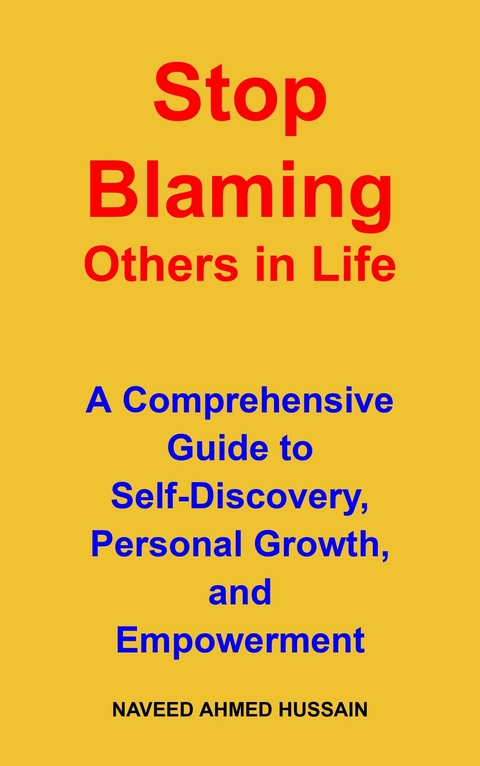
Stop Blaming Others in Life (eBook)
132 Seiten
Publishdrive (Verlag)
978-0-00-080273-6 (ISBN)
'Stop Blaming Others in Life' isn't just about stopping a bad habit; it's about starting a journey of self-discovery and growth. By embracing the principles outlined in this book, you'll be better equipped to handle life's challenges, rebuild trust in your relationships, and cultivate a mindset that fosters continuous improvement and fulfillment.
Take the first step toward a more empowered and responsible life. Let this book be your guide to overcoming blame and unlocking your true potential.
Blaming others can feel like a quick fix when things go wrong, but it's a habit that can hold you back from true personal growth and happiness. 'Stop Blaming Others in Life' is your comprehensive guide to breaking free from the blame game and taking control of your life. In this book, you'll explore the deep-seated reasons behind blaming behavior, understand its impact on your relationships and mental well-being, and discover how to replace it with a mindset of personal responsibility and empowerment.
Real-Life and Scenario Case Studies
Throughout the book, we'll present real-life case studies and scenario-based exercises that illustrate the impact of blame and the power of responsibility. These examples provide practical insights into how individuals and organizations have successfully overcome blame and embraced accountability.
Practical Exercises and Activities
Finally, we'll offer a range of practical exercises and activities to reinforce the concepts and strategies discussed in the book. These hands-on exercises will help you apply what you've learned in your daily life, encouraging reflection, growth, and the development of new habits.
Don't Wait Another Day to Start Changing Your Life
The power to change is within you. This book will help you unlock it. You don't have to stay stuck in the same patterns of thinking and behaving. You can create a life that reflects your true potential and desires.
Start your transformation today. Embrace the journey of becoming the best version of yourself. Get your copy of ' Stop Blaming Others in Life ' now and take the first step toward a more empowered, fulfilling, and purposeful life!
This is more than just a book-it's a roadmap to your best self. Ready to make the shift? Your journey to freedom starts now!
Chapter Introduction
Welcome to the first step in your journey toward a more empowered life. In this chapter, we’ll dive into understanding the blame game, exploring what blaming is, why we do it, and how it impacts our lives. By gaining insight into these patterns, you’ll be better equipped to break free from them and take charge of your personal growth.
Blaming others is a behavior we all indulge in from time to time. It can feel like a natural reaction to things not going our way or when we experience conflict or disappointment. However, blame can quickly become a barrier to genuine progress and self-improvement. By the end of this chapter, you'll have a clear understanding of the dynamics of blame and how it can affect your relationships, mental health, and overall success.
What is Blaming?
Blame is the act of holding someone else responsible for a perceived fault or wrong. It involves pointing fingers and assigning accountability to others rather than accepting any role in the situation yourself. At its core, blame is about shifting responsibility to another person to avoid dealing with the discomfort of our own shortcomings or mistakes.
Definition and Explanation of Blaming Behavior
Blaming can manifest in various forms, from verbal accusations to more subtle forms of criticism or judgment. Here are some key characteristics of blaming behavior:
● Projection: Projecting your own faults or insecurities onto someone else. For example, if you're feeling inadequate at work, you might blame a colleague for your lack of success.
● Defensiveness: Using blame as a shield to protect your ego. When you feel threatened or criticized, you may blame others to deflect attention from your perceived weaknesses.
● Avoidance: Blaming others allows you to avoid facing difficult truths about yourself or your actions. It can be a way to sidestep personal accountability and the discomfort that comes with it.
Blame often feels like a convenient way to manage uncomfortable emotions, but it rarely leads to resolution or improvement. Instead, it can create a cycle of defensiveness and resentment, making it difficult to address the real issues at hand.
The Psychology Behind Why People Blame Others
Understanding why we blame others is essential for breaking free from this behavior. Several psychological factors contribute to our tendency to blame:
- Self-Preservation: Blame can be a defense mechanism to protect our self-esteem. By attributing failure or disappointment to external factors, we maintain a positive self-image and avoid feelings of guilt or shame.
- Cognitive Dissonance: When our actions don’t align with our beliefs or values, it creates cognitive dissonance—a state of mental discomfort. Blaming others helps resolve this dissonance by shifting responsibility away from ourselves, allowing us to maintain internal consistency.
- Locus of Control: People with an external locus of control are more likely to blame external factors for their problems, believing that their lives are influenced by forces outside their control. Conversely, those with an internal locus of control take more responsibility for their actions and outcomes.
- Cultural and Social Influences: Our upbringing and societal norms can shape our tendency to blame. In cultures where accountability is not emphasized, blaming others may become a learned behavior.
The Difference Between Constructive and Destructive Blame
Not all blame is inherently negative. Understanding the difference between constructive and destructive blame can help you navigate situations more effectively:
● Constructive Blame: This involves acknowledging someone’s role in a situation while focusing on solutions and improvement. It’s about holding others accountable in a way that encourages growth and change. For example, providing feedback to a team member about a mistake they made, along with guidance on how to avoid it in the future.
● Destructive Blame: This is when blame is used to criticize, belittle, or punish others without offering any solutions. It focuses on assigning fault rather than addressing the underlying issues. Destructive blame often leads to resentment and conflict.
Understanding the nature of your blaming behavior can help you transition from destructive patterns to more constructive approaches, fostering healthier interactions and relationships.
The Consequences of Blaming Others
Blaming others may seem like a quick fix, but it often has far-reaching consequences that can negatively impact various aspects of our lives. Let’s explore how blame affects personal relationships, mental health, and long-term success.
The Impact on Personal Relationships
Blame is a toxic force in relationships, whether they’re personal or professional. Here’s how it can damage these connections:
- Erodes Trust: Constant blaming creates an environment of mistrust and defensiveness. When people feel blamed, they’re less likely to open up and communicate honestly, leading to strained relationships.
- Creates Conflict: Blame often escalates conflicts rather than resolving them. Instead of addressing the root causes of a problem, it focuses on assigning fault, making it harder to find common ground.
- Stifles Communication: When blame is present, open and constructive communication becomes challenging. People may avoid discussing issues for fear of being blamed, leading to misunderstandings and unresolved tensions.
- Fosters Resentment: Blame breeds resentment, as individuals feel unfairly targeted or criticized. Over time, this resentment can build up, damaging the emotional connection and leading to relationship breakdowns.
To foster healthy relationships, it’s crucial to replace blame with empathy and understanding. By focusing on solutions and shared accountability, you can create an environment of trust and collaboration.
How Blame Affects Mental Health
Blaming others not only impacts your relationships but also takes a toll on your mental well-being:
- Increases Stress and Anxiety: The act of blaming creates tension and stress, as you’re constantly on the lookout for scapegoats. This heightened state of alertness can contribute to anxiety and emotional exhaustion.
- Hinders Self-Esteem: While blame initially protects self-esteem by deflecting responsibility, it ultimately undermines your self-worth. When you avoid accountability, you miss out on opportunities for self-improvement and growth, leading to feelings of inadequacy.
- Promotes a Victim Mentality: Consistent blaming can lead to a victim mentality, where you perceive yourself as powerless and controlled by external circumstances. This mindset can hinder your ability to take initiative and make positive changes in your life.
- Prevents Emotional Healing: Blame keeps you stuck in a cycle of negativity, preventing you from processing emotions and moving forward. It acts as a barrier to healing and self-compassion.
Recognizing the impact of blame on your mental health is a crucial step toward cultivating a more positive and resilient mindset. By taking responsibility and practicing self-compassion, you can enhance your emotional well-being.
The Long-Term Consequences on Personal Growth and Success
Blame doesn’t just have immediate effects; it can also have long-term consequences on your personal growth and success:
- Limits Learning and Growth: Blaming others prevents you from reflecting on your actions and learning from your experiences. Without self-reflection and accountability, personal growth is stunted.
- Inhibits Problem-Solving: A blame-focused mindset hinders your ability to think creatively and find solutions. When you’re busy assigning fault, you’re less likely to identify and address the root causes of problems.
- Stagnates Career Progression: In professional settings, blame can impede your career progression. It creates a negative reputation and hinders your ability to build collaborative relationships, reducing opportunities for advancement.
- Undermines Leadership Qualities: Effective leaders take responsibility for their actions and decisions. By blaming others, you undermine your leadership potential and lose the respect and trust of those around you.
To achieve long-term success, it’s essential to cultivate a mindset of accountability and growth. By embracing challenges as opportunities for learning, you can unlock your full potential and create a more fulfilling and successful life.
Practical Exercises and Activities
Now that we’ve explored the dynamics of blame and its consequences, it’s time to put this knowledge into practice. The following exercises and activities are designed to help you break free from blame and cultivate a mindset of responsibility and growth.
Exercise 1: Blame Reflection Journal
1. Objective: To identify patterns of blaming behavior and reflect on moments...
| Erscheint lt. Verlag | 17.5.2025 |
|---|---|
| Sprache | englisch |
| Themenwelt | Sachbuch/Ratgeber ► Gesundheit / Leben / Psychologie ► Lebenshilfe / Lebensführung |
| ISBN-10 | 0-00-080273-5 / 0000802735 |
| ISBN-13 | 978-0-00-080273-6 / 9780000802736 |
| Informationen gemäß Produktsicherheitsverordnung (GPSR) | |
| Haben Sie eine Frage zum Produkt? |
 EPUB (Adobe DRM)
Größe: 132 KB
Kopierschutz: Adobe-DRM
Adobe-DRM ist ein Kopierschutz, der das eBook vor Mißbrauch schützen soll. Dabei wird das eBook bereits beim Download auf Ihre persönliche Adobe-ID autorisiert. Lesen können Sie das eBook dann nur auf den Geräten, welche ebenfalls auf Ihre Adobe-ID registriert sind.
Details zum Adobe-DRM
Dateiformat: EPUB (Electronic Publication)
EPUB ist ein offener Standard für eBooks und eignet sich besonders zur Darstellung von Belletristik und Sachbüchern. Der Fließtext wird dynamisch an die Display- und Schriftgröße angepasst. Auch für mobile Lesegeräte ist EPUB daher gut geeignet.
Systemvoraussetzungen:
PC/Mac: Mit einem PC oder Mac können Sie dieses eBook lesen. Sie benötigen eine
eReader: Dieses eBook kann mit (fast) allen eBook-Readern gelesen werden. Mit dem amazon-Kindle ist es aber nicht kompatibel.
Smartphone/Tablet: Egal ob Apple oder Android, dieses eBook können Sie lesen. Sie benötigen eine
Geräteliste und zusätzliche Hinweise
Buying eBooks from abroad
For tax law reasons we can sell eBooks just within Germany and Switzerland. Regrettably we cannot fulfill eBook-orders from other countries.
aus dem Bereich