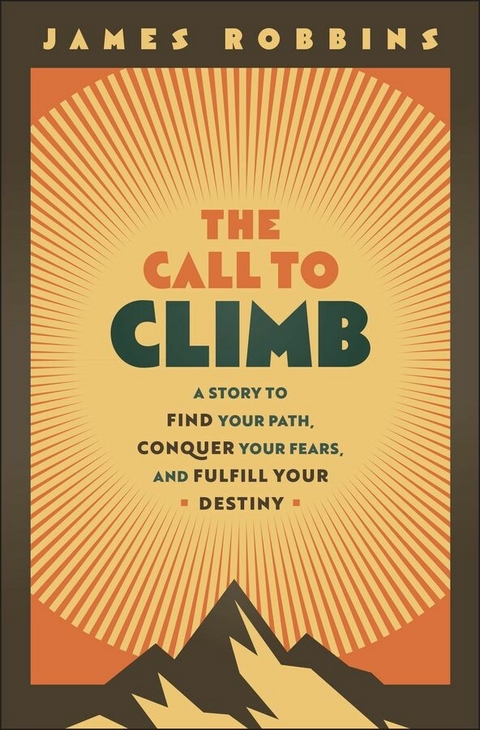
The Call to Climb (eBook)
239 Seiten
Wiley (Verlag)
978-1-394-31843-8 (ISBN)
Captivating fable to help you grow, discover yourself, succeed, and lead a more fulfilling life
The Call to Climb is a transformative fable about self-discovery and personal growth that gives readers all of the tools they need to navigate their own challenges, embrace stillness, and rediscover the joy and meaning in their lives.
We step into Riley's journey stranded in a remote Bolivian village in the Andes, a moment before a life-changing journey up a mystical mountain begins. Guided by Santiago, a man of the mountains, Riley embarks on a climb that challenges more than just physical endurance. Every step upward is a step inward, confronting fears, unraveling long-held beliefs, and awakening a connection to a forgotten self.
This book empowers readers to:
- Recognize the signs of misalignment with their inner selves and understand the importance of addressing them
- Foster a Growth Mindset, enabling them to venture outside their comfort zone where their true potential lies
- Implement strategies to minimize distractions and gain clarity to live a more purposeful life
The Call to Climb is a fable for anyone who has ever felt lost or out of alignment with their true path. It's a story of courage, self-discovery, and the transformative power of embracing the journey, no matter how daunting it may seem.
JAMES ROBBINS is a dad of three, who grew up on a small cattle ranch in the foothills of the Rocky Mountains. He is an author, leadership strategist, and expert in personal growth. James is a sought-after speaker who inspires audiences worldwide through timeless truths wrapped in captivating stories. He is also the host of the inspirational podcast, Born to Climb, which explores strategies on how we can all step into the best versions of ourselves.
JAMESROBBINS.COM
Chapter 1
Lost
Bolivia, elevation 11,237 feet
I was lost.
I should have reached the highway two hours ago, but here I was, bouncing down some abandoned road in the Bolivian foothills. The map on my phone was insisting this was the way, but each mile made it clearer I was heading deeper into nowhere. I hadn't seen another car—or a house for that matter—in a couple of hours, and with the sun sinking fast, it would soon be dark.
I gripped the steering wheel tighter. If I couldn't find my way out of here soon, I would miss my flight back home. Worse yet, I was running out of gas and the last thing I wanted to do was spend the night in my rental car, in the absolute middle of nowhere.
What a fitting way to cap off what might be the worst day of my career.
I'd been in Bolivia for two weeks, along with our team from work, negotiating a land‐rights deal with a remote Aymaran village. Nestled in the foothills of the Andes Mountains, these people had carved out a simple life for themselves, untouched by the modern world beyond their valley. Our biggest challenge had been the altitude. The entire team suffered from splitting headaches and nausea when we first arrived, but after a week our bodies eventually acclimatized.
Our client—a giant energy conglomerate—had located a large natural gas pocket on the edge of their village, and we were sent to convince the elders to let our client extract the gas. Pressure was always high in these negotiations, with millions of dollars on the line. The hardest part was convincing an untrusting group of elders to accept the deal. We'd sell them on the dream of prosperity, then gloss over the potential damage to their land and culture. It wasn't personal, just business. And if we ran into resistance, there were always bribes. I never actually saw that happen, but some of the team confirmed my suspicion when they told me that Rick, our boss, had done it several times.
I'd only worked for Rick for about a year. He was talented, driven, and arrogant. While he wasn't the most fun to work for, at least he was clear. Do things his way and you get rewarded. Oppose him, or underperform, and your life was going to be hell.
When we did close deals, which was often, there was a nice cash bonus in it for the team. The money was great, but deep down I could feel this job chipping away at my soul. In my quiet moments, I didn't feel proud of what we were doing.
And that's what ultimately led me here, driving alone in this crappy little car, without a clue of where I was.
Earlier today we were in a dimly lit community hall for our final meeting with the village elders. Rick made his closing pitch, reminding them of how good this opportunity would be for the village. That was the part that always turned my stomach. It was a half‐truth at best. The translator passed on Rick’s final words to the elders who were seated at the head table. Then the five of them pulled their chairs together in a small circle to make a final decision.
As I sat, waiting, I felt a pang of guilt in the pit of my stomach. It wasn't the first time, but I'd learned to ignore it. After all, this wasn't my company, I just work there. But today, for some reason, I couldn't shake it. It began to rise into my chest, climbing like a fire up a spindle, searching for a way out of my body. I wanted to say something, but it wasn't my place. We're not telling them the whole truth! I thought to myself. This is wrong!
It was a fact that some of our previous deals had caused great harm to villages just like this one. The team pretended it never happened, but it had. “How can I sit here and be okay with this?” I asked myself. As the elders continued their discussion, time was running out.
I tried to swallow it, to ride out the emotion. “It's not my problem,” I said to myself. But my conscience, now pounding on the door of my heart like an angry ogre, wasn't letting it go. I felt ashamed as it laid bare my cowardice. “Speak!” it cried.
I can't …
Then, without thinking, I blurted out, “There's one thing you need to know before you sign.” The elders turned, surprised by my interruption. “This deal will make you a lot of money, but it can also do your village harm. I'm not saying it isn't the right move, but don't underestimate the impact to your way of life.” I sat back in my chair, my breath shallow.
You could have heard a pin drop as all eyes were locked on me.
The elders then looked at the translator, who was still staring at me in disbelief. Out of the corner of my eye I saw Rick, his fist clenched around the tablecloth. It felt like time itself had stopped, and I immediately regretted what I'd done.
The translator turned and passed my message on to the elders. They returned to their huddle, speaking quieter now. Wanting to avoid eye contact with my team, I glanced down at my notebook and noticed my hand was trembling. I'd just detonated the deal, and probably my job along with it.
After what seemed like an eternity, the elders stopped talking. Then one of them stood up, walked over to Rick, and extended his hand with a big smile. “Vamos!” he said.
The team let out an audible sigh. Rick leapt to his feet and shook hands with all the elders. I was shocked but relieved I hadn't ruined everything.
After some paperwork and a group photo, we said goodbye to the elders and then headed outside. Rick's mood visibly changed as he marched past our SUV and to the compact rental car—the one nobody wanted to drive.
“Riley!” he yelled before getting in the passenger side.
I swallowed and walked toward the car. The team watched as I grabbed the door handle, braced myself, and got in.
Rick was six‐foot‐five, and inside the tiny car he seemed like a giant—an angry one. His face was hot, and a vein on his forehead pulsed with rage.
“What the hell was that?” he spat. “Millions of dollars on the line and you almost blew it with your moral bullshit!”
Rick clenched both his fists and for a moment I was afraid he might hit me. “You almost screwed over the whole team!” he fumed. “Was that your plan?”
“No,” I said, my voice barely audible.
“If you're so goddamn concerned about the plight of the villagers, then maybe you should work for a charity. We just did them a favor Riley … a favor!” Rick yelled.
He looked away and took a deep breath, trying to calm himself down. “I don't even want to talk to you for the rest of the trip, and when we get home, we're going to sit down and have a chat. You better believe it.”
I didn't say a word. There was nothing I could say.
“Until then,” Rick continued, “you can drive this junker back to the airport by yourself. The rest of the team will ride with me. It'll give you some time to think about what you really want to do with your life.”
Rick got out and slammed the door behind him. The rest of the team followed as they clambered like puppies into the SUV. A moment later, they sped off, leaving me in a cloud of reddish dust.
That was six hours earlier. Now I was here, lost in the Bolivian wilderness. My phone was telling me to keep going, but the weird thing was I no longer had service. I couldn't even text the team. And I couldn't shake the feeling that I was heading farther from civilization rather than back to it. I bit my lip and scanned the horizon. Mile after mile of sand, rocks, and sagebrush reminded me I was a long way from home. Jagged, unforgiving hills rose on either side, and it looked like this place hadn't seen rain in months. My car was coated in dust—inside and out. It clung to everything, like regret, refusing to be shaken off.
I took a deep breath and focused my eyes on the road, but my thoughts kept returning to the meeting in the hall. As I replayed what happened, I heard a voice inside me. “What are you doing with your life, Riley?”
But I shook it away. Not now.
The sun finally disappeared behind the hills, taking with it the last rays of comfort. As darkness descended, the temperature plummeted fast, so I turned on the heater. At least something works, I thought. The road had now deteriorated so much that I had to slow the car to a crawl. Even then, the potholes and rocks that littered the road were unavoidable.
I didn’t want to admit it, but I was scared. Scared of a lot of things. My job, my future, the team hating me, and the obvious: what might be waiting for me out there in the dark. Even the headlights of my car seem powerless to fend off the night.
Suddenly, out of nowhere, a violent crack sounded from underneath, as the nose of the car slammed into the earth. The impact made me bite my tongue.
“No, no, no …”
It felt like I’d just driven into a large hole, with the car’s nose now pointed down on an angle. Confused, I stepped out into the night. The frigid air attacked my face as I walked to the front of the car. The flashlight beam danced across the dirt as I lowered myself to my knees. There was only a six‐inch gap between the bumper and the road, but it was enough to have a look. Pressing one cheek onto the frozen dirt, I peered under...
| Erscheint lt. Verlag | 29.7.2025 |
|---|---|
| Sprache | englisch |
| Themenwelt | Sachbuch/Ratgeber ► Gesundheit / Leben / Psychologie ► Lebenshilfe / Lebensführung |
| Schlagworte | achievement • Burnout • comfort zone • Fulfilling Life • Goal Setting • growth mindset • inner self • Journey of life • minimize distractions • overcome challenges • Personal Reflection • self discovery • set intention • soul connection |
| ISBN-10 | 1-394-31843-X / 139431843X |
| ISBN-13 | 978-1-394-31843-8 / 9781394318438 |
| Informationen gemäß Produktsicherheitsverordnung (GPSR) | |
| Haben Sie eine Frage zum Produkt? |
 EPUB (Adobe DRM)
Kopierschutz: Adobe-DRM
Adobe-DRM ist ein Kopierschutz, der das eBook vor Mißbrauch schützen soll. Dabei wird das eBook bereits beim Download auf Ihre persönliche Adobe-ID autorisiert. Lesen können Sie das eBook dann nur auf den Geräten, welche ebenfalls auf Ihre Adobe-ID registriert sind.
Details zum Adobe-DRM
Dateiformat: EPUB (Electronic Publication)
EPUB ist ein offener Standard für eBooks und eignet sich besonders zur Darstellung von Belletristik und Sachbüchern. Der Fließtext wird dynamisch an die Display- und Schriftgröße angepasst. Auch für mobile Lesegeräte ist EPUB daher gut geeignet.
Systemvoraussetzungen:
PC/Mac: Mit einem PC oder Mac können Sie dieses eBook lesen. Sie benötigen eine
eReader: Dieses eBook kann mit (fast) allen eBook-Readern gelesen werden. Mit dem amazon-Kindle ist es aber nicht kompatibel.
Smartphone/Tablet: Egal ob Apple oder Android, dieses eBook können Sie lesen. Sie benötigen eine
Geräteliste und zusätzliche Hinweise
Buying eBooks from abroad
For tax law reasons we can sell eBooks just within Germany and Switzerland. Regrettably we cannot fulfill eBook-orders from other countries.
aus dem Bereich