Pure Bliss in La Boca (eBook)
222 Seiten
Publishdrive (Verlag)
978-0-00-096007-8 (ISBN)
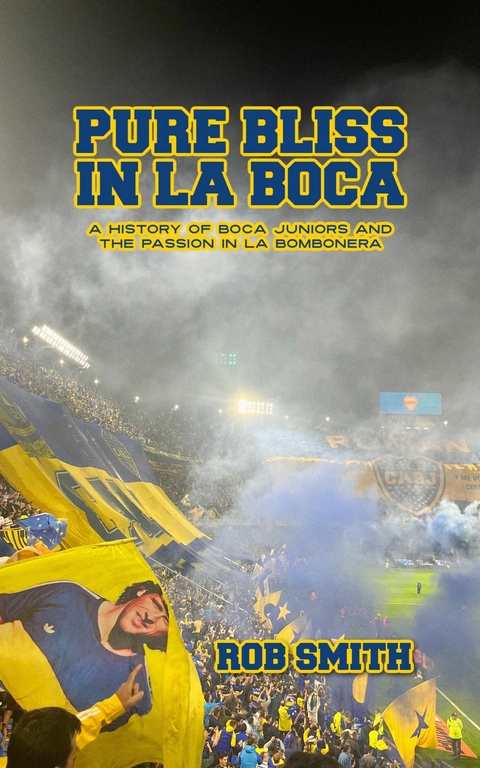
In the throbbing heart of Buenos Aires lies La Bombonera, a stadium that has become a symbol of undying devotion and fierce identity. Pure Bliss in La Boca is the ultimate journey through the rich history of Boca Juniors, from its humble beginnings in a vibrant immigrant neighborhood to its iconic status as one of world football's greatest institutions.
Author Rob Smith masterfully captures the pulse of La Boca, weaving together the stories of legends like Diego Maradona and Juan Román Riquelme, whose dazzling brilliance on the pitch electrified generations. He chronicles the masterstrokes of coaching genius Carlos Bianchi and the vision of president Alberto Armando, whose ambition shaped the club's destiny.
With vivid detail and captivating storytelling, this book brings to life epic Superclásicos against bitter rivals River Plate, unforgettable Libertadores triumphs, and the unbreakable bond between Boca and its ultra-loyal fans. From the mythical beginnings in Plaza Solís to the towering stands of La Bombonera, this is more than a history of football-it's a celebration of a club that became a way of life.
Pure Bliss in La Boca is essential reading for football lovers and anyone intrigued by the powerful intersection of sport, community, and culture.
CHAPTER ONE
At the turn of the 20th century, Buenos Aires was a rapidly growing metropolis, an enormous melting pot fueled by waves of European immigration. Many of these immigrants, particularly Italians and Spaniards, settled in the port district, or barrío, of La Boca. It was a bustling working-class neighbourhood known for its vibrant culture, maritime industry, and strong community bonds. Football, introduced by British expatriates in the late 19th century, quickly became a popular pastime among locals. Numerous informal teams formed across the city, particularly in working-class districts where the sport provided an accessible source of entertainment and community identity.
Between the decade of 1900 and 1910, around three hundred football clubs were created in Argentina. An important one occurred on April 3, 1905. Some young men, the sons of Italian immigrants (specifically from Genoa) and La Boca residents, Esteban Baglietto, Alfredo Scarpati, Santiago Sana, and the brothers Teodoro and Juan Antonio Farenga had all gathered in Plaza Solís, a small square in the La Boca neighbourhood, to create a football club that would represent their community.
Baglietto, Scarpati and Sana were classmates in the Higher School of Commerce (now known as the Carlos Pellegrini High School of Commerce since 1908), then located on Bartolomé Mitre Street in central Buenos Aires. There they had, as a physical education teacher, an Irishman named Paddy MacCarthy, who was an ex-sailor from Cashel, Tipperary. He had also been a football player who instilled in his students the value of sport, while teaching them the techniques of boxing and, more pertinently, his beloved football.
On Monday, April 3rd, 1905, after their classes had finished, the young men had met in the home of Baglietto, on Ministro Brin Street in La Boca with the aim of creating a club dedicated to football. The boys, obviously excited at the prospect of creating such a club while the Bagliettos had visitors, caused such a commotion that Baglietto senior dismissed the boys from the modest house and from there they crossed the street and sat on a bench in Plaza Solís, a small park in the eastern end of the barrío. It was here that Club Atlético Boca Juniors was formed.
One of the most crucial early decisions was the club's name. Some names were considered such as Sons Of Italy, Defenders of La Boca and Stars of Italy, before the founders settled on “Boca Juniors,” a name that paid homage to their neighbourhood while also adding the English term “Juniors,” reflecting the influence of British football culture which for many encapsulated prestige, commonplace at the time. They agreed that Baglietto, then just 18 years old, would serve as the club’s first president. However, it was because of his young age that he was succeeded some days later by the Uruguayan Luis Cerezo as the club’s president.
The newly formed Boca Juniors faced immediate challenges. They lacked a permanent playing ground, funding, and proper kits. In their early days, the team played friendly matches in various open fields around La Boca and the nearby Dársena Sud, sometimes using makeshift goalposts. However, their dedication and fighting spirit soon gained them recognition among local football enthusiasts.
Boca Juniors' inaugural football match took place on April 21, 1905, at Dársena Sud. In this historic encounter, Boca faced local side Mariano Moreno and secured a decisive 4–0 victory. The goals were scored by Juan Farenga with two goals, as well as José Farenga, and Santiago Sana. They wore black and white striped shirts for the game. Boca would wear a few shirts before adopting the final one, the famous blue with a wide horizontal yellow band.
On its official website, the club reports that there is an unverified version that states that the first shirt was pink and that it was used only in the first two games. However, it’s generally agreed by most historians that, from day one, the team adopted a white shirt with black vertical stripes, which was made by the sister of the Farenga brothers, Manuela. They also briefly wore a light blue shirt before changing to a thinly striped dark navy and white shirt.
The colours of the club would become hugely important. Club president Juan Rafael Bricchetto proposed the now-famous colours at an assembly. He would later say that the colours were inspired from the flag of a ship at the city’s port, where he worked. There are many myths as to which ship exactly gave Bricchetto the inspiration. The Swedish ship Drottning Sophia is often credited with this but, strictly speaking, it is impossible to know exactly which ship sailed into port that caught the club president’s eye. Between the last days of 1906 and March 1907, several ships arrived in Buenos Aires sporting the flag of Sweden. The likeliest candidate, according to renowned Boca historian Sergio Lodise, is actually a ship called the Oscar II.
There is another lesser-known myth that the founders’ physical education teacher, the Irishman, Paddy MacCarthy, had inspired them to use the colours of his native county of Tipperary GAA, an amateur sporting association in Ireland who play primarily gaelic football and hurling, whose shirts are, even to this day, identical to Boca’s famous shirt. This myth most definitely isn’t true.
Once Boca Juniors officially adopted their now-famous blue and yellow colours, the yellow band was initially diagonal before adopting a thick horizontal stripe. With their new identity, Boca Juniors began to gain recognition across Buenos Aires. Their reputation as a fierce, determined, and hardworking team increased with each match. They started competing more seriously in amateur leagues and tournaments, quickly climbing the ranks of Argentine football. The team’s aggressive and passionate style of play resonated with their working-class supporters, fostering something of an immediate and deep connection between the club and its fans.
In 1913, Boca Juniors achieved their first major milestone by earning promotion to the Argentine First Division. This was a defining moment in the club’s history, proving that they were ready to compete at the highest level. The blue and yellow colours became synonymous with success, passion, and the fighting spirit of La Boca.
Boca’s rise was not without challenges. The club struggled to find a permanent home ground, often playing in different locations. However, their growing fan base and increasing influence in Argentine football motivated them to continue pushing forward. Boca was not just another team; it had become a symbol of pride for its supporters.
Boca had quickly found its rival in River Plate. Both teams had originated in La Boca. There are disputed dates with previous meetings between the two sides in unofficial matches going back to 1908, but the first league game between the rivals occurred in Racing Club’s stadium, known then as Estadio Alsina y Colón in Avellaneda on August 24, 1913. River won the game 2-1. This fixture would later become one of the most intense and spectacular derbies in world football, known as the Superclásico.
Boca Juniors won their first league title in 1919, a landmark achievement that established them as a dominant force in Argentine football. The Argentine football league at the time was undergoing structural changes, with divisions between amateur and professional clubs creating a turbulent footballing landscape. The championship was organized by Asociación Argentina de Football (AAF). That year there was a split and another association was created, the Asociación Amateurs de Football, an unofficial dissident league which was for eight years without affiliation to FIFA. Boca always remained loyal to the official entity (AAF). Key players in the squad included Pedro Calomino, a highly skilled winger known for his dribbling and technical ability, and Alfredo Garasini, a dependable player who controlled the team’s tempo on the field.
At this time, Boca had their own stadium at Ministro Brin y Senguel in La Boca. The stadium was constructed with a modest wooden structure, typical of the era, and had a limited capacity. However, it provided the club with a more stable home ground after years of playing in various fields around Buenos Aires.
The club had previously played at multiple locations, including Isla Demarchi in relatively nearby Puerto Madero and Wilde, a district named after Dr. José Wilde (a distant relative of one Irish writer named Oscar Wilde) which is several kilometres south of La Boca. The distance from the old neighbourhood meant that club membership dropped from 1,500 down to 300. The move to Wilde was supposed to be a temporary move, but the club knew that because of the membership drop, they would have to do what it takes to return to the old barrío. They finally returned to La Boca and settled at Ministro Brin y Senguel.
Following their triumph in 1919, Boca continued their dominance by winning their second league title in 1920. Once again competing in the league, the club finished the season at the top, showcasing consistency and strength. This back-to-back title run solidified Boca's place among Argentina’s elite clubs.
By 1923, Boca secured their third league championship, further cementing their status as a powerhouse in Argentine football. This championship, followed by their unbeaten run the following year continued to enhance Boca’s reputation, increasing their fanbase and solidifying their identity as a club that represented the working-class spirit combined with Italian traditions in La...
| Erscheint lt. Verlag | 28.7.2025 |
|---|---|
| Sprache | englisch |
| Themenwelt | Sachbuch/Ratgeber ► Sport |
| ISBN-10 | 0-00-096007-1 / 0000960071 |
| ISBN-13 | 978-0-00-096007-8 / 9780000960078 |
| Informationen gemäß Produktsicherheitsverordnung (GPSR) | |
| Haben Sie eine Frage zum Produkt? |
 EPUB (Adobe DRM)
Kopierschutz: Adobe-DRM
Adobe-DRM ist ein Kopierschutz, der das eBook vor Mißbrauch schützen soll. Dabei wird das eBook bereits beim Download auf Ihre persönliche Adobe-ID autorisiert. Lesen können Sie das eBook dann nur auf den Geräten, welche ebenfalls auf Ihre Adobe-ID registriert sind.
Details zum Adobe-DRM
Dateiformat: EPUB (Electronic Publication)
EPUB ist ein offener Standard für eBooks und eignet sich besonders zur Darstellung von Belletristik und Sachbüchern. Der Fließtext wird dynamisch an die Display- und Schriftgröße angepasst. Auch für mobile Lesegeräte ist EPUB daher gut geeignet.
Systemvoraussetzungen:
PC/Mac: Mit einem PC oder Mac können Sie dieses eBook lesen. Sie benötigen eine
eReader: Dieses eBook kann mit (fast) allen eBook-Readern gelesen werden. Mit dem amazon-Kindle ist es aber nicht kompatibel.
Smartphone/Tablet: Egal ob Apple oder Android, dieses eBook können Sie lesen. Sie benötigen eine
Geräteliste und zusätzliche Hinweise
Buying eBooks from abroad
For tax law reasons we can sell eBooks just within Germany and Switzerland. Regrettably we cannot fulfill eBook-orders from other countries.
aus dem Bereich