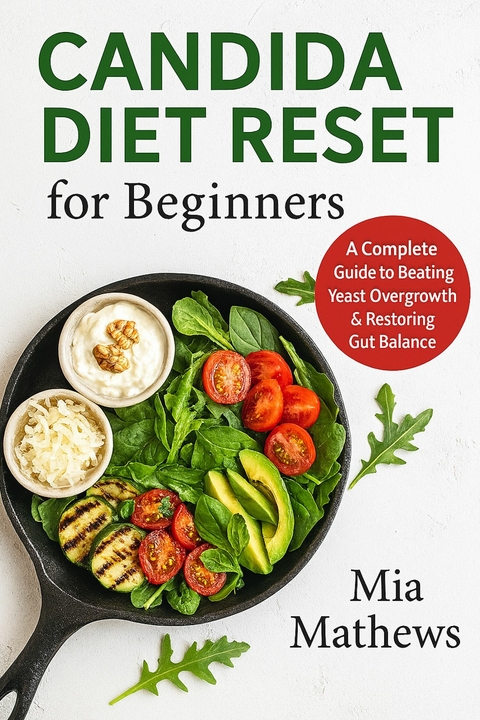
Candida Diet Reset for Beginners (eBook)
123 Seiten
Mega-Mind Publishing (Verlag)
978-0-00-097373-3 (ISBN)
Are you tired of feeling sick, tired, and bloated every single day?
If brain fog makes you feel confused, stomach pain won't go away, and you're always craving sugar, you might have candida overgrowth. This sneaky yeast infection lives in your gut and makes you feel awful.
Here's your problem: Bad bacteria took over your good bacteria. You feel sick, your tummy hurts, and you can't think clearly. Regular doctors don't always know how to fix this.
Here's your solution: The Candida Diet Reset gives you a simple plan to beat yeast overgrowth and feel amazing again. You'll learn which foods heal your gut and which ones feed the bad yeast. No confusing rules or hard recipes - just easy steps that work.
Inside this book, you'll discover how to shop for the right foods, make your kitchen candida-proof, and track your progress. You'll also learn about supplements that help and how to handle eating out with friends.
Stop suffering in silence. Thousands of people already used this proven system to get their energy back, clear their brain fog, and feel healthy again.
Get your copy today and start feeling better in just 7 days!
Chapter 1
The Science of Your Gut Microbiome
Key Players: Bacteria, Yeast, and Other Microbes
Imagine waking up every day feeling drained. Your head throbs, your stomach swells like a balloon, and no matter how many hours you sleep, you still feel like you've been hit by a truck. You chalk it up to stress or maybe aging. You try cutting carbs, going dairy-free, taking vitamins, but nothing sticks. That was me. I was a mom, a wife, a full-time worker who loved baking sourdough bread on the weekends. I thought I was doing everything right. But my body disagreed. It whispered at first. Then it screamed.
I spent years bouncing between doctors. One said it was IBS. Another called it hormonal imbalance. I tried elimination diets, meditation, even acupuncture. Some days were better. Most weren’t. At one point, I remember staring at my reflection, wondering how I became a stranger to myself. Puffy eyes. Bloated belly. Brain fog so thick I couldn’t remember my own phone number.
What finally gave me a clue wasn’t a lab test or a specialist. It was a friend, someone who saw me in the grocery store and said, "You look tired. Have you ever looked into your gut health?"
Gut health. Two words that would change everything.
I started reading. And for the first time, something clicked. I learned that trillions of tiny creatures live inside us. Some keep us healthy. Others don’t. I realized I’d spent years feeding the wrong ones.
So what exactly are these creatures? Let me tell you what I learned the hard way.
Inside your gut is an entire ecosystem. It’s wild, busy, and unbelievably powerful. Picture a bustling city. Bacteria are the citizens. Yeast are the mischief-makers. Viruses, parasites, and other microbes move in and out like tourists. Some help build homes. Others spread graffiti and break windows. The balance of these residents affects how you digest food, how your brain functions, even how your immune system reacts.
Most people hear "bacteria" and think of sickness. We blame bacteria when we get food poisoning or a sinus infection. But not all bacteria are bad. In fact, you need them to survive. The good ones help break down food, absorb nutrients, and protect you from the bad ones. They make vitamins, regulate hormones, and send signals to your brain. They even help keep your mood stable.
Lactobacillus and Bifidobacterium are two examples of friendly bacteria. These guys are like friendly neighbors who share their tools and help you shovel snow. They work hard and ask for little. They live mostly in your small and large intestines, and they thrive when you eat fiber, fermented foods, and vegetables.
Then there are the troublemakers. Think of bacteria like Clostridium difficile or Escherichia coli. They cause trouble when they grow out of control. Usually, the good bacteria keep them in check. But if the balance shifts, chaos follows. You get bloated. You feel sick. You may develop skin issues, allergies, or mental fog.
But bacteria aren’t the only players. Yeast lives in your gut, too. The most well-known is Candida. Everyone has it. In small amounts, it’s harmless. But when it grows unchecked, it turns into a tyrant. It steals energy. It causes sugar cravings. It damages your gut lining. That’s when you get what doctors call Candida overgrowth. What it feels like is fatigue, mood swings, gas, bloating, joint pain, skin rashes, and a mind that refuses to think clearly.
Candida is sneaky. It feeds on sugar. It grows when you’re stressed, when you take antibiotics, when you eat processed food. It doesn’t care how hard you work or how much you love your kids. It just wants to spread.
The scary part is that most doctors don’t test for it. They treat the symptoms, not the cause. So you get pills for your headaches, creams for your rashes, diets for your bloating. But the yeast keeps growing.
Other microbes join the party too. Parasites. Viruses. Archaea. Each with its own agenda. Some are harmless. Some help you. Others make things worse. But when the good bacteria are strong, they usually keep the peace. When they’re weak, things fall apart.
Your gut microbiome is like a garden. If you water it, feed it right, and remove the weeds, it flourishes. If you ignore it, overfeed it junk, and dump chemicals on it, it rots. It gets overrun by invaders.
I learned this by watching what happened to my own body. After I started changing what I ate, things shifted. I cut sugar, dropped processed foods, and added probiotics. The fog began to lift. My energy returned. The bloating faded. I felt like myself again.
Understanding the key players in your gut is step one. Knowing who lives there helps you make better choices. You wouldn’t invite a thief into your home. So why feed the yeast that makes you sick?
There’s still a lot science doesn’t know about the gut. But we know enough to take action. We know balance matters. We know that what you eat feeds your microbes. We know that antibiotics, stress, and sugar tip the scales in the wrong direction.
This isn’t about fear. It’s about awareness. Your symptoms aren’t random. Your body is speaking to you. That acne, fatigue, brain fog, joint pain, they all point back to your gut. To the invisible city living inside you.
Maybe you’ve been where I was. Sick, confused, desperate for answers. Maybe you’ve heard your body whispering, too. Or maybe it’s already screaming. Either way, you’re not alone.
The first step is knowing who the players are. The next is learning how to give the good ones the upper hand.
You don’t need to be a scientist to understand your gut. You just need to pay attention. Your body remembers every antibiotic, every stress-filled week, every sugary binge. But it also remembers every good meal, every deep breath, every act of care.
The microbes in your gut are listening. The question is, what are you telling them?
When I finally understood that I wasn’t broken, that I wasn’t imagining things, something shifted. I got curious instead of frustrated. I started asking better questions. And I found answers in the most unexpected places.
Inside you is a community. Bacteria, yeast, and other microbes. Each one with a role to play. The more you learn about them, the more power you have to feel better, live better, and show up in your own life again.
Start with that. Start with knowing who lives inside you. Then start feeding the ones who want you to thrive.
HOW MICROBIAL IMBALANCE OCCURS
You wake up feeling heavy. Your joints ache, your brain feels like it's moving through fog, and your stomach is tight with discomfort. You’re tired even after a full night’s sleep. You try to focus at work, but your mind keeps drifting. You snack on something sweet to give yourself a boost. For a few minutes, it works. Then you crash again.
You chalk it up to stress. Or getting older. Or maybe just poor sleep. You think it’s probably nothing serious, something that’ll go away on its own. But deep inside your body, something else may be happening. Something most people never think about. Something most doctors barely mention unless you push hard for answers. Your gut might be out of balance.
Inside your belly, there are trillions of bacteria, fungi, viruses, and other microorganisms. These tiny living things are supposed to live together in harmony, like members of a bustling community. When they’re balanced, you feel healthy. You think clearly, digest food easily, sleep deeply, and wake up with energy and focus. But when that harmony gets disturbed, your body starts sending distress signals. Most people just don’t recognize them as such.
Gut imbalance doesn’t usually arrive like a thunderstorm. It doesn’t scream. It whispers. It tiptoes in, one symptom at a time. A few bloating episodes that come out of nowhere. A rash that flares up and won’t settle down. Intense cravings for sugar that seem impossible to resist. Stubborn weight gain. Constipation. Diarrhea. Brain fog. Mood swings. These things don’t always seem connected. Until one day, they all are.
This imbalance has a name. It’s called dysbiosis. That’s when the beneficial microbes in your gut lose their ground and the harmful ones start to grow in number. Imagine a garden overrun with weeds. The flowers can’t bloom because the weeds are hogging the sunlight and nutrients. The soil starts to suffer. The roots weaken. In your gut, this looks like inflammation, fatigue, bloating, food sensitivities, and a weakened immune response.
There isn’t a single reason for dysbiosis. It usually happens slowly. Quietly. Layer by layer. But there are common triggers.
Antibiotics are a major one. These powerful medications save lives when used properly. But they don’t just target the bad bacteria making you sick. They wipe out the good ones too. Picture a wildfire sweeping through a forest. The trees, the wildflowers, the grasses, all gone. When the fire is out, invasive plants and pests rush in. That’s your gut after antibiotics. If you don’t rebuild the ecosystem afterward, the wrong microbes take over.
Diet is a major influence. A modern diet filled with sugar, processed carbs, refined grains, preservatives, and unhealthy oils sets the stage for imbalance. These foods don’t feed your good bacteria. They feed the bad ones. Candida, a yeast that naturally lives in the gut, thrives on sugar. The more sugar and refined carbs you eat, the more it grows. Over time, it can crowd out beneficial bacteria, disrupt your digestion, and cause symptoms from your head to your toes.
And it’s not just the obvious sugar. It’s in your bread,...
| Erscheint lt. Verlag | 16.7.2025 |
|---|---|
| Sprache | englisch |
| Themenwelt | Sachbuch/Ratgeber ► Essen / Trinken |
| ISBN-10 | 0-00-097373-4 / 0000973734 |
| ISBN-13 | 978-0-00-097373-3 / 9780000973733 |
| Informationen gemäß Produktsicherheitsverordnung (GPSR) | |
| Haben Sie eine Frage zum Produkt? |
 EPUB (Adobe DRM)
Größe: 4,4 MB
Kopierschutz: Adobe-DRM
Adobe-DRM ist ein Kopierschutz, der das eBook vor Mißbrauch schützen soll. Dabei wird das eBook bereits beim Download auf Ihre persönliche Adobe-ID autorisiert. Lesen können Sie das eBook dann nur auf den Geräten, welche ebenfalls auf Ihre Adobe-ID registriert sind.
Details zum Adobe-DRM
Dateiformat: EPUB (Electronic Publication)
EPUB ist ein offener Standard für eBooks und eignet sich besonders zur Darstellung von Belletristik und Sachbüchern. Der Fließtext wird dynamisch an die Display- und Schriftgröße angepasst. Auch für mobile Lesegeräte ist EPUB daher gut geeignet.
Systemvoraussetzungen:
PC/Mac: Mit einem PC oder Mac können Sie dieses eBook lesen. Sie benötigen eine
eReader: Dieses eBook kann mit (fast) allen eBook-Readern gelesen werden. Mit dem amazon-Kindle ist es aber nicht kompatibel.
Smartphone/Tablet: Egal ob Apple oder Android, dieses eBook können Sie lesen. Sie benötigen eine
Geräteliste und zusätzliche Hinweise
Buying eBooks from abroad
For tax law reasons we can sell eBooks just within Germany and Switzerland. Regrettably we cannot fulfill eBook-orders from other countries.
aus dem Bereich