


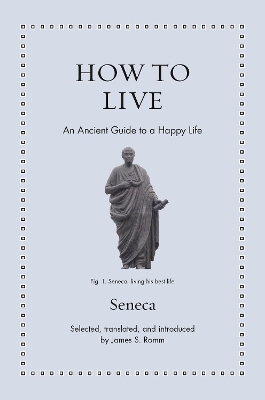
How to Live
An Ancient Guide to a Happy Life
Seiten
2026
Princeton University Press (Verlag)
978-0-691-25522-4 (ISBN)
Princeton University Press (Verlag)
978-0-691-25522-4 (ISBN)
- Noch nicht erschienen (ca. Mai 2026)
- Portofrei ab CHF 40
- Auch auf Rechnung
- Artikel merken
A vivid new translation in which the Stoic philosopher argues that virtue is the only path to contentment
Why are so many people unhappy when happiness can be attained by anyone who simply lives virtuously? That question prompted Seneca, the great Stoic philosopher of the early Roman Empire, to write On the Happy Life, and he continued to seek answers in his Moral Epistles. In How to Live, Seneca biographer and translator James Romm presents vivid new versions of passages from both works, distilling Seneca’s passionate and inspiring argument for a path to perfect contentment, no matter what befalls us.
As a Stoic, Seneca believed that only ethical virtue leads to happiness; all other goals, including wealth and success, are neutral in their effects—or, if they torment us with what we haven’t achieved, sources of unhappiness. For role models, Seneca looks to Socrates, who embodied virtue and reason, and to a hypothetical sage who is always in tune with the divine mind that governs the cosmos. Extolling these paragons with nearly messianic fervor, Seneca urges us to imitate their example.
Featuring an inviting introduction and the original Latin on facing pages, How to Live captures the persuasive power of Seneca’s argument that the universe wants us to be virtuous—and happy.
Why are so many people unhappy when happiness can be attained by anyone who simply lives virtuously? That question prompted Seneca, the great Stoic philosopher of the early Roman Empire, to write On the Happy Life, and he continued to seek answers in his Moral Epistles. In How to Live, Seneca biographer and translator James Romm presents vivid new versions of passages from both works, distilling Seneca’s passionate and inspiring argument for a path to perfect contentment, no matter what befalls us.
As a Stoic, Seneca believed that only ethical virtue leads to happiness; all other goals, including wealth and success, are neutral in their effects—or, if they torment us with what we haven’t achieved, sources of unhappiness. For role models, Seneca looks to Socrates, who embodied virtue and reason, and to a hypothetical sage who is always in tune with the divine mind that governs the cosmos. Extolling these paragons with nearly messianic fervor, Seneca urges us to imitate their example.
Featuring an inviting introduction and the original Latin on facing pages, How to Live captures the persuasive power of Seneca’s argument that the universe wants us to be virtuous—and happy.
Seneca (ca. 4 BCE–65 CE) was a Stoic philosopher and Roman statesman. His writings explore a wide range of ethical topics and preach the Stoic doctrine that virtuous action is the highest good. James S. Romm is the James H. Ottaway Jr. Professor of Classics at Bard College. He is the author of many books, including Plato and the Tyrant, and is the editor and translator of Seneca’s How to Die, How to Give, and How to Keep Your Cool (all Princeton). He writes frequently for The New York Review of Books and The Wall Street Journal.
| Erscheint lt. Verlag | 5.5.2026 |
|---|---|
| Reihe/Serie | Ancient Wisdom for Modern Readers |
| Übersetzer | James S. Romm |
| Verlagsort | New Jersey |
| Sprache | englisch |
| Maße | 114 x 171 mm |
| Themenwelt | Sachbuch/Ratgeber |
| Geisteswissenschaften ► Philosophie ► Philosophie Altertum / Antike | |
| ISBN-10 | 0-691-25522-9 / 0691255229 |
| ISBN-13 | 978-0-691-25522-4 / 9780691255224 |
| Zustand | Neuware |
| Informationen gemäß Produktsicherheitsverordnung (GPSR) | |
| Haben Sie eine Frage zum Produkt? |
Mehr entdecken
aus dem Bereich
aus dem Bereich
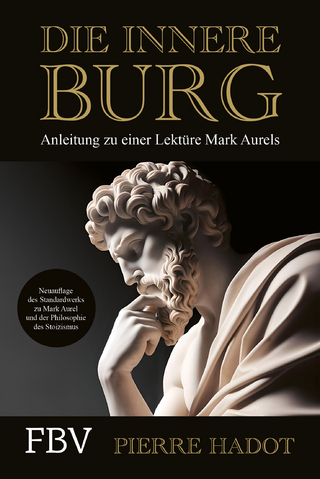
Anleitung zu einer Lektüre Mark Aurels
Buch | Hardcover (2025)
FinanzBuch Verlag
CHF 27,95


