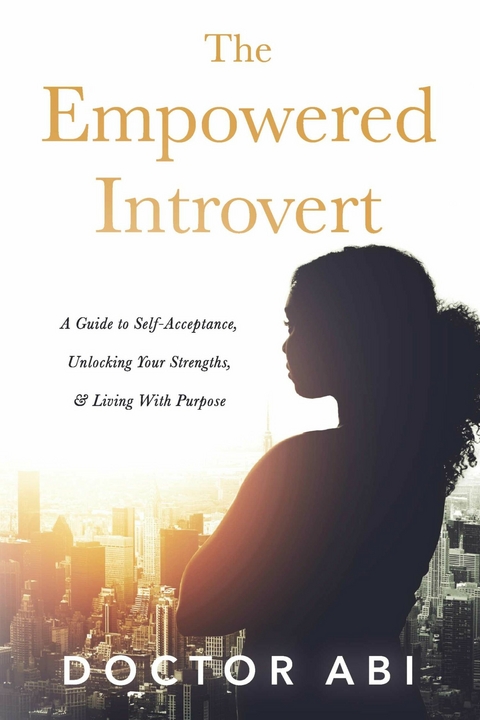
Empowered Introvert (eBook)
228 Seiten
Bookbaby (Verlag)
979-8-3178-0616-3 (ISBN)
Dr. Abimbola Odukoya Oguntoye, affectionately known as Doctor Abi, is a board-certified pediatrician, entrepreneur, author, certified life coach, and wellness advocate who brings a unique blend of clinical expertise, faith, and holistic care to every aspect of her work. She began her medical journey at the College of Medicine, University of Ibadan, Nigeria, and completed her internship at the University College Hospital, Ibadan. She later moved to the United States, where she completed her pediatric residency at the Bronx-Lebanon Hospital Center/Children's Hospital at Montefiore in New York, a major teaching affiliate of the Albert Einstein College of Medicine. Since completing her training in 2006, Dr. Odukoya has practiced pediatrics in both outpatient and inpatient settings in New York and Indiana. She is a Fellow of the American Academy of Pediatrics (FAAP). Dr. Odukoya is the co-founder and CEO of Healthy Horizons Pediatrics, with offices in Lafayette and Kokomo, Indiana, where she leads a team of clinicians dedicated to delivering comprehensive, compassionate, and culturally responsive pediatric care. Beyond her clinical practice, she holds dual master's degrees-an MBA in health system management from Morehead State University and an MPH from Indiana Wesleyan University-which have strengthened her commitment to improving community health systems and education. In her academic role, she serves as an Adjunct Clinical Assistant Professor of Pediatrics at the Indiana University School of Medicine-West Lafayette, where she mentors and teaches the next generation of physicians. As a certified health coach and group fitness instructor through the American Council on Exercise (ACE) and a master life coach, Doctor Abi is passionate about empowering others to live with intention and well-being. Through her wellness workshops, speaking engagements, and coaching programs, she inspires individuals and communities to take charge of their health and personal growth. Her writing reflects the same passion. At DoctorAbiHealthAndFitness.com, she blogs regularly on topics such as preventive health, wellness, personal development, purpose, and faith. Her debut book, 'The Empowered Introvert: A Guide to Self-Acceptance, Unlocking Your Strengths, and Living with Purpose,' is a heartfelt guide for introverts seeking to embrace their quiet power, thrive in an extroverted world, and live fully without changing who they are. Dr. Odukoya's voice is one of warmth, clarity, and quiet strength. Whether in clinical settings, classrooms, or written pages, she remains committed to uplifting others, especially those who feel unseen, unheard, or misunderstood. Currently, Doctor Abi lives in Indiana with her husband, Dr. Oguntoye, and their two sons.
"e;The Empowered Introvert: A Guide to Self-Acceptance, Unlocking Your Strengths, and Living with Purpose"e; is a powerful companion for anyone who has ever felt the pressure to be louder, more social, or more outgoing to succeed. In a culture that often celebrates extroversion, introverts are frequently misunderstood and underestimated. However, being quiet does not mean being weak-and solitude, reflection, and depth are not limitations. They are strengths. This book invites you to stop trying to fit into a world that wasn't built with your temperament in mind-and to start living fully, confidently, and authentically as the introvert you are. Written by Dr. Abimbola Odukoya Oguntoye, a board-certified pediatrician, wellness advocate, and life coach, this book draws on her journey as a deeply introspective introvert navigating demanding roles in medicine, business, leadership, and motherhood. Through vulnerable storytelling, faith-rooted encouragement, and evidence-informed strategies, Dr. Abi guides you through a transformational journey of inner empowerment. Across eleven relatable chapters, you will explore how to: Cultivate deep self-acceptance and stop apologizing for your quiet nature. Identify, develop, and celebrate your unique introverted strengths. Set healthy boundaries and manage your energy without guilt. Build meaningful relationships without compromising authenticity. Communicate effectively and assertively without changing who you are. Embrace solitude as a powerful tool for creativity and growth. Find your voice and speak up with clarity and confidence. Succeed in your career by leaning into your strengths, not working against them. Live with purpose, intention, and spiritual grounding. Empower others by living as your true, unapologetic self. This is not a guide to "e;overcoming"e; introversion. It's a call to own it. With warmth, wisdom, and a touch of humor, "e;The Empowered Introvert"e; will help you step into your identity, harness your inner strengths, and live with clarity and purpose on your terms. If you've ever felt like your quiet voice didn't matter or that you had to change to thrive, this book is your permission slip to stop shrinking and start shining. You are not too quiet. You are not too sensitive. You are enough, and "e;The Empowered Introvert"e; will help you believe that with every page.
2
From Surviving to Thriving - The Introvert’s Path to Success
“In a gentle way, you can shake the world.”
— Mahatma Gandhi, lawyer and political ethicist
Do you often feel like the world is designed for extroverts? Have you ever felt like you need to push yourself to be more outgoing, more social, or more vocal just to be seen and heard? If so, you’re not alone. Many introverts struggle with feeling out of place in a world that rewards constant networking, group collaboration, and social energy. But what if I told you that you don’t need to change who you are to succeed? What if, instead, you could learn to thrive by embracing your introversion and leveraging its strengths?
That’s exactly what we’ll explore in this chapter.
I. The Challenge of Being an Introvert in an Extroverted World
The Societal Preference for Extroversion
I have a wall painting in my house with the quote, “Though she be but little, she is fierce.” This quote is from Shakespeare’s A Midsummer Night’s Dream. In this scene, two friends, Hermia and Helena, are quarreling. Hermia is petite, and Helena is tall. After going back and forth, Helena finally recognizes her friend’s strength and determination and concedes. I like to see Hermia as the introvert in our society, although her character may not be an introvert in the play.
Like Hermia, introverts can be as fierce, strong, and determined as they need to be. However, introverts may feel little because there’s a noticeable inclination toward extroversion, which is evident in our society, educational institutions, and professional environments. Our society, schools, and workplaces praise and reward people for extroverted behaviors. No wonder the introvert often feels little, undervalued, and unnoticed.
From a young age, many of us are subtly (or not so subtly) taught that being outgoing, outspoken, and socially energetic is the ideal way to be. Schools reward students who eagerly participate in class discussions, workplaces value employees who speak up in meetings and network effortlessly, and social norms often favor those who can easily engage in small talk or command a room with their presence. In many ways, society is built with an extroverted mold in mind, making it seem like introversion is a disadvantage rather than just a different way of being.
Let’s take a closer look at how this societal preference for extroversion shows up in different areas of life.
In the Classroom: The “Speak Up” Mentality
From early education, students are encouraged to be vocal and active in group settings. Participation grades often favor those who readily raise their hands and contribute to discussions. But what about the students who prefer to process their thoughts before speaking? Many introverted students are made to feel that their quiet nature is a weakness rather than a strength. Instead of being recognized for their deep thinking, they are sometimes labeled as “shy” or “disengaged.”
This subtle pressure to conform can chip away at a child’s confidence. It teaches them early on that speaking up — even when they have nothing meaningful to say — is more valuable than thinking deeply and offering insights when they’re ready. As a result, many introverts grow up doubting their intelligence or value, even though their quiet reflections often lead to profound insights. In truth, we need all types of minds in a classroom — those who process out loud and those who process internally. The challenge is in making space for both.
In the Workplace: The Loudest Voice Wins
Fast forward to adulthood, and the same expectations persist. Many workplaces emphasize collaboration, open office layouts, and brainstorming sessions, often making it challenging for introverts to thrive in environments that require constant interaction. Networking events and office politics tend to favor those who can effortlessly strike up conversations, while introverts may find themselves overlooked, despite their skills and contributions.
Promotions often go to those who are visible and outspoken, leaving quieter individuals feeling like they must adapt to extroverted norms to advance their careers. This can create a sense of internal conflict — the feeling that you have to become someone you’re not just to succeed.
But just as in the classroom, the real issue isn’t the introvert’s ability to contribute — it’s how contribution is measured. Quiet thinkers bring insight, deep focus, and calm leadership to the table. Yet, in a world where charisma often trumps substance, these qualities are frequently underestimated. The good news is that more organizations are beginning to understand the value of diverse personalities and are making space for introverts to shine — not by being louder, but by being authentically themselves.
In Social Settings: The Pressure to Be “Fun”
Even outside of school and work, societal norms push the idea that being social means being surrounded by people, attending large gatherings, and enjoying small talk. Popular culture tends to associate fun with being outgoing, spontaneous, and constantly on the move. If you prefer quiet nights in, deep one-on-one conversations, or simply need time to recharge after a social event, you might be told to “come out of your shell” or “loosen up.”
This kind of pressure creates the false assumption that social confidence equates to extroversion — that the more visible and gregarious you are, the more socially successful you must be. For introverts, this can be discouraging. We often enjoy socializing in our own ways — by connecting deeply with a few people, contributing thoughtfully in conversations, or observing and processing before jumping in.
Unfortunately, because we don’t fit the traditional mold of what’s considered “fun,” we may feel left out or inadequate. But the reality is that fun looks different for everyone. For some, it’s dancing in a crowded room. For others, it’s sharing meaningful conversation over coffee. One is not better than the other — just different. The key is to embrace your version of fun and seek out social settings that align with your energy, not drain it.
The Unspoken Message: Extroversion Equals Success
Because extroverted qualities are often associated with leadership, confidence, and influence, many introverts feel pressure to “fix” their natural tendencies. From a young age, we learn that those who are outspoken, socially bold, and highly visible are the ones who get noticed — and rewarded.
Job promotions, leadership positions, and even social opportunities often go to those who are perceived as dynamic and outgoing. We see charismatic speakers on stage, energetic networkers rising in the ranks, and assertive classmates winning praise — all reinforcing a silent message: to succeed, you must be extroverted.
This perception is not only inaccurate, but also damaging. It causes many introverts to second-guess their capabilities or feel like they must perform in ways that don’t align with who they are. But success does not belong exclusively to the extroverted. It belongs to those who understand and utilize their strengths — introverted or extroverted.
The truth is, some of the most impactful leaders, creatives, and innovators throughout history have been introverts. Their strength came not from dominating the room but from listening deeply, thinking critically, and acting with quiet conviction.
Introversion isn’t a flaw to be corrected — it’s a trait to be embraced. And once we reject the myth that extroversion equals success, we open the door to redefining what success can truly look like for us.
Reframing the Narrative
It’s easy to internalize the belief that we must change who we are in order to succeed — to speak louder, show up more, or somehow be more “exciting.” But what if, instead of adapting to a world that doesn’t understand introversion, we built a life that works for us?
Reframing the narrative begins with recognizing that being introverted is not a problem to solve — it’s a strength to leverage. Rather than forcing ourselves to fit into extroverted molds, we can choose to define success in a way that reflects our values, energy, and style of communication.
This shift in mindset allows us to stop asking, “How can I be more like them?” and start asking, “How can I be the best version of myself?” When we lead from this place, we don’t just survive — we thrive. We show up as deeply reflective thinkers, empathetic listeners, thoughtful collaborators, and steady leaders.
You don’t need to be the loudest voice in the room to be heard. You don’t have to be the life of the party to be liked. And you certainly don’t need to pretend to be someone else to make an impact. The moment you stop striving to change who you are and instead begin to celebrate it — that’s when transformation begins.
Common Challenges Introverts Face
Before we can overcome the obstacles in our way, we need to name them. Through interviews, conversations, and personal reflection, I’ve identified several recurring challenges that many introverts face in their daily lives. While these...
| Erscheint lt. Verlag | 19.8.2025 |
|---|---|
| Sprache | englisch |
| Themenwelt | Sachbuch/Ratgeber ► Gesundheit / Leben / Psychologie ► Lebenshilfe / Lebensführung |
| ISBN-13 | 979-8-3178-0616-3 / 9798317806163 |
| Informationen gemäß Produktsicherheitsverordnung (GPSR) | |
| Haben Sie eine Frage zum Produkt? |
 EPUB (Ohne DRM)
Größe: 444 KB
Digital Rights Management: ohne DRM
Dieses eBook enthält kein DRM oder Kopierschutz. Eine Weitergabe an Dritte ist jedoch rechtlich nicht zulässig, weil Sie beim Kauf nur die Rechte an der persönlichen Nutzung erwerben.
Dateiformat: EPUB (Electronic Publication)
EPUB ist ein offener Standard für eBooks und eignet sich besonders zur Darstellung von Belletristik und Sachbüchern. Der Fließtext wird dynamisch an die Display- und Schriftgröße angepasst. Auch für mobile Lesegeräte ist EPUB daher gut geeignet.
Systemvoraussetzungen:
PC/Mac: Mit einem PC oder Mac können Sie dieses eBook lesen. Sie benötigen dafür die kostenlose Software Adobe Digital Editions.
eReader: Dieses eBook kann mit (fast) allen eBook-Readern gelesen werden. Mit dem amazon-Kindle ist es aber nicht kompatibel.
Smartphone/Tablet: Egal ob Apple oder Android, dieses eBook können Sie lesen. Sie benötigen dafür eine kostenlose App.
Geräteliste und zusätzliche Hinweise
Buying eBooks from abroad
For tax law reasons we can sell eBooks just within Germany and Switzerland. Regrettably we cannot fulfill eBook-orders from other countries.
aus dem Bereich