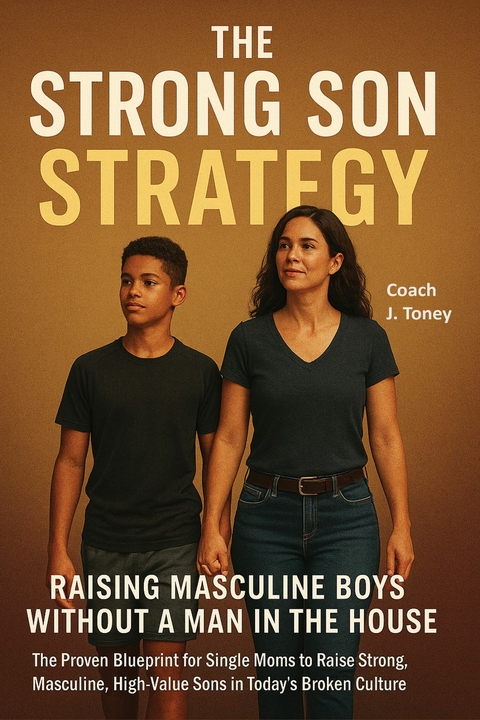
The Strong Son Strategy (eBook)
127 Seiten
Publishdrive (Verlag)
978-0-00-096192-1 (ISBN)
The Strong Son Strategy 'Raising Masculine Boys Without A Man In The House'.
(The proven blueprint for single moms to raise strong, masculine, high-value sons in today's broken culture)
Is an unflinching, empowering guide for women determined to raise strong, masculine, high-value sons-despite the absence of a father figure. In a culture where modern masculinity is under attack and many boys are growing up emotionally confused, aimless, and feminized, this book offers a strategic plan for single mothers who refuse to let their sons become another statistic.
Backed by data and real-life examples, The Blueprint dives deep into the risks facing fatherless boys-from identity struggles to emotional instability and social vulnerability. But it doesn't stop at naming the problem. This book gives mothers a playbook: how to establish authority and respect, how to define true masculinity without toxicity, and how to build their son's mind, body, and character with intention.
Each chapter is both a wake-up call and a roadmap. You'll learn how to guard your son from damaging influences, cultivate positive male mentorship, and instill the traits every man needs: discipline, leadership, emotional control, and a sense of duty. You'll also discover how to uphold your feminine presence while raising a masculine son-a balance that reinforces, rather than replaces, his need for strength and structure.
Whether your son is three or thirteen, this book equips you with tools, routines, and principles to shape him into a man the world respects. It's not easy-but it's possible. With the right blueprint, you don't just raise a boy-you build a legacy.
You can't be his father. But you can be the reason he becomes a man.
Chapter 2: Establishing Authority—Be the Law and the Love
Introduction: The Double Role You Must Master
Being a single mother raising a son is already a monumental task. But raising a strong, masculine son in the absence of a father figure? That’s a double-duty mission—one that demands incredible emotional stamina, unwavering commitment, and a strategic mindset. You must become both the law and the love: the reliable backbone of discipline and structure, and the soft landing of emotional security and connection. This dual role may feel overwhelming at times, but when executed with intention, it becomes one of the most powerful forces in a boy’s life.
Too many single mothers fall into extremes—either overly lenient and afraid to enforce rules, or hyper-authoritarian, demanding obedience without emotional connection. But masculinity isn’t bred in fear or freedom alone—it thrives in environments where expectations are clear, support is consistent, and love undergirds every lesson. The secret is in the balance: firm boundaries delivered with unwavering warmth and genuine connection.
This chapter is your blueprint for establishing lasting authority in a way that cultivates deep respect, unshakeable trust, and a lifelong sense of masculine identity in your son. You’ll learn how to set up the home as a sanctuary of discipline and growth, how to enforce rules without crushing spirit, and how to raise a young man who honors you not just as a parent, but as the very model of wisdom and strength.
1. Boys Need Boundaries More Than Comfort
Let’s start with the hard truth: boys will test you. They will push limits, challenge authority, and defy expectations—not because they dislike you or want to be defiant, but because they’re wired to explore power dynamics. Testing boundaries is how boys define their own strength. In the absence of consistent authority, they search for it elsewhere—often falling into the hands of dangerous influences such as gangs, hyper- masculine social media figures, or peer groups that glorify recklessness.
Stat Alert: According to a study from the National Fatherhood Initiative, boys raised without consistent male discipline are twice as likely to drop out of school, four times more likely to be involved in crime, and 70% more likely to spend time in juvenile detention. These aren’t just numbers—they’re roadmaps to preventable futures.
Your job: Be the authority. Not a tyrant. Not a friend. The authority. That means clearly defined rules, predictable expectations, and unwavering consequences. That means consistency in your tone, demeanor, and follow-through, even when it’s inconvenient.
Boys admire a woman who holds the line, especially when they know she does it out of love.
If you don’t give him structure, he will perceive it as emotional neglect. Even if he doesn’t articulate it, he craves the firm hand that says, “I care enough to correct you.” Boundaries are not barriers—they’re love, translated into action.
2. Authority Doesn’t Mean Aggression
True authority isn’t measured by the volume of your voice or the size of your punishments. It’s defined by your calm, consistency, and courage to lead without intimidation. When you parent through threats and fear, you’re not raising a confident man—you’re teaching him to obey power blindly or to mimic it destructively.
Real-Life Example: Tasha, a single mom in Atlanta, raised her son Marcus without yelling. She developed a reputation in her neighborhood as the mother whose discipline didn’t require shouting matches. When Marcus broke curfew, she didn’t erupt—she simply grounded him and said, “Men have to keep their word. If you can’t be on time, you’ll lose trust.”
Today, Marcus is a 23-year-old Army officer. He credits his mother’s firm but calm discipline with shaping his integrity and emotional resilience. He often says her steady tone was more influential than any punishment could have been.
Your son is observing not just what you say, but how you say it. When he sees power used wisely, without panic or drama, he learns to lead by presence, not force.
3. Balancing Love and Discipline
It’s tempting to try to overcompensate for the absent father figure by becoming overly affectionate or protective. You may find yourself shielding him from every challenge, spoiling him, or making excuses for bad behavior. But overprotection weakens a boy’s spirit. It tells him that the world must adjust to him, rather than preparing him to face the world.
Your son doesn’t need a best friend—he needs a leader. He needs someone who corrects him when he strays, praises him when he excels, and holds him accountable to a higher standard. A son raised without discipline is like a ship without a rudder—no matter how loved he feels, he will drift aimlessly.
The Golden Ratio: Child psychologists recommend a 5:1 ratio: five positive reinforcements (compliments, affirmations, hugs, encouragements) for every one correction. This doesn’t mean letting bad behavior slide—it means ensuring that your discipline is grounded in deep, visible love.
Pro Tip: Criticize the action, not the boy. Say, “Skipping your homework is irresponsible,” instead of, “You’re lazy.” That small shift protects his identity while still addressing behavior.
Love is the soil from which discipline grows. When he knows correction comes from care—not contempt—he will listen, even when it stings.
4. The Power of Routine and Structure
Boys thrive on routine, even if they act like they hate it. Predictability creates psychological safety. It signals that life is under control, that there are expectations, and that the adult in the house is steering the ship. Chaos breeds anxiety and rebellion.
Structure breeds confidence and discipline.
Build Masculine Routines:
- Wake-up and bedtimes (with discipline, not debate)
- Chore responsibilities with clear ownership
- Physical activity (sports, gym, martial arts)
- Homework rituals with accountability
Bonus Tip: Assign powerful names to routines: “Warrior Wake-Up,” “Victory Chores,” or “Discipline Hour.” It frames discipline as a mission, not a punishment.
Structure teaches internal order. Over time, your son won’t just follow rules—he’ll build his own. That’s how manhood is forged.
5. What to Do When He Challenges You
Brace yourself—because he will. Challenge is a natural part of male development. Boys push against authority to see what it’s made of. They test the walls, not to destroy them, but to make sure they’re strong.
Don’t take it personally. He’s not trying to reject you—he’s trying to discover himself.
Strategic Response Framework:
- Stay calm: Emotional control models leadership.
- Hold the line: Inconsistency trains manipulation.
- Validate emotion, not disobedience: “I know you’re frustrated, and I still expect you to follow through.”
- Protect your standards: Flexibility is for preferences—not principles.
Real-Life Example: Monica, a single mom in Detroit, handled her son Ray’s chore rebellion with quiet power. She didn’t beg or argue. She removed his phone, his PlayStation, and his outing privileges. Her message? “No work, no reward.” Two days of resistance later, Ray caved. Years later, he credits her with teaching him that responsibility and reward are inseparable.
When he pushes, stay planted. He doesn’t need a storm—he needs a lighthouse.
6. Create Consequences with Purpose
Random punishment breeds resentment. Purposeful consequences create men. Don’t just scold—educate. Connect discipline to masculine values: honesty, accountability, perseverance.
Masculine Correction Formula:
- Identify the wrongdoing: Be specific and neutral.
- Tie to a value: Link it to integrity, trust, or maturity.
- Deliver the consequence: Swiftly and consistently.
- Offer restoration: Let him earn back trust.
Example: “You lied about your grades. That damages trust, and a man’s word is sacred. You’ll lose your privileges for one week. We’ll review your grades every Friday. I still believe in your ability to do better.”
Every consequence should strengthen—not shame—his identity.
7. Speak the Language of Respect
As your son grows, his need for respect will eclipse his need for cuddles. Masculine identity is reinforced through tone, language, and status. How you talk to him becomes how he talks to himself.
- Speak to his potential, not his failures
- Use aspirational language: “Leadership,” “Honor,” “Excellence”
- Ask for input when appropriate, but remain the final authority
- Avoid sarcasm and name-calling—it wounds pride more than you know
You’re not just managing behavior—you’re shaping identity. Speak like it.
8. Create Leadership Roles at Home
Leadership starts with responsibility. Even small tasks prepare boys to think like men. Give him duties that challenge him and then praise his initiative—not just his obedience.
Leadership Assignments:
- Plan and execute a meal
- Manage a weekly budget
- Help siblings with homework
- Organize a family game night
- Present a book report to the family
Then discuss it: What did he learn? What would he improve? These are small...
| Erscheint lt. Verlag | 7.7.2025 |
|---|---|
| Sprache | englisch |
| Themenwelt | Sachbuch/Ratgeber ► Gesundheit / Leben / Psychologie ► Familie / Erziehung |
| ISBN-10 | 0-00-096192-2 / 0000961922 |
| ISBN-13 | 978-0-00-096192-1 / 9780000961921 |
| Informationen gemäß Produktsicherheitsverordnung (GPSR) | |
| Haben Sie eine Frage zum Produkt? |
 EPUB (Adobe DRM)
Größe: 899 KB
Kopierschutz: Adobe-DRM
Adobe-DRM ist ein Kopierschutz, der das eBook vor Mißbrauch schützen soll. Dabei wird das eBook bereits beim Download auf Ihre persönliche Adobe-ID autorisiert. Lesen können Sie das eBook dann nur auf den Geräten, welche ebenfalls auf Ihre Adobe-ID registriert sind.
Details zum Adobe-DRM
Dateiformat: EPUB (Electronic Publication)
EPUB ist ein offener Standard für eBooks und eignet sich besonders zur Darstellung von Belletristik und Sachbüchern. Der Fließtext wird dynamisch an die Display- und Schriftgröße angepasst. Auch für mobile Lesegeräte ist EPUB daher gut geeignet.
Systemvoraussetzungen:
PC/Mac: Mit einem PC oder Mac können Sie dieses eBook lesen. Sie benötigen eine
eReader: Dieses eBook kann mit (fast) allen eBook-Readern gelesen werden. Mit dem amazon-Kindle ist es aber nicht kompatibel.
Smartphone/Tablet: Egal ob Apple oder Android, dieses eBook können Sie lesen. Sie benötigen eine
Geräteliste und zusätzliche Hinweise
Buying eBooks from abroad
For tax law reasons we can sell eBooks just within Germany and Switzerland. Regrettably we cannot fulfill eBook-orders from other countries.
aus dem Bereich