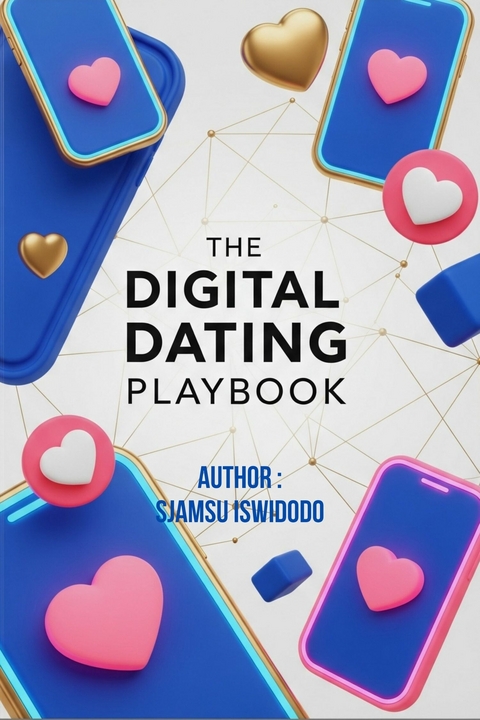
The Digital Dating Playbook (eBook)
124 Seiten
Publishdrive (Verlag)
978-0-00-096148-8 (ISBN)
A practical guide for those who want to succeed in the digital dating world. This book discusses how to choose the right apps, create a compelling profile, and have effective conversations without getting caught up in 'ghosting' or 'breadcrumbing.'
This chapter will trace the fascinating evolution of courtship, from age-old traditions to the ubiquitous swipe, illuminating why dating apps are far more than a passing fad. By examining their transformative impact, dispelling common misconceptions, and highlighting their undeniable convenience and reach, we can gain a comprehensive perspective on why these platforms are an indispensable feature of 21st-century connection.
This foundational insight is crucial for anyone seeking to navigate the modern dating landscape with confidence and effectiveness.
- From Traditional Courtship to Swiping Right: A Historical Perspective
The methods by which individuals have sought and found romantic partners have undergone a perpetual metamorphosis throughout history, reflecting the prevailing social norms, technological advancements, and economic structures of each era.
Understanding this long arc of change provides critical context for appreciating the revolutionary, yet often misunderstood, shift towards digital dating. For centuries, courtship was largely a communal affair, dictated by geographic proximity and rigid social structures. In agrarian societies, potential partners were often found within the immediate village or neighboring farms, with families playing a central, often decisive, role in arranging marriages or overseeing interactions. Social gatherings, religious services, and local markets served as the primary venues for meeting, where reputation and family lineage held immense sway. As societies industrialized and populations moved to urban centers, the sphere of potential partners expanded slightly to include workplaces, public parks, and nascent social clubs.
However, even then, introductions were frequently facilitated by mutual acquaintances, strict social etiquette governed interactions, and the concept of "dating" as a recreational activity pursued by young people for pleasure, rather than solely for the purpose of marriage, was still embryonic. The early 20th century saw the rise of more independent dating, influenced by factors like increased female participation in the workforce and the advent of automobiles, allowing couples greater privacy and mobility.
Yet, even in the mid-20th century, the expectation of meeting someone "organically" through friends, school, or shared hobbies remained the dominant paradigm.
The idea of actively seeking a partner outside of these pre-established networks was often seen as a last resort, if considered at all.
The true paradigm shift began subtly in the late 20th century with the advent of personal computers and the nascent internet.
The launch of Match.com in 1995 marked a pivotal moment, pioneering the concept of algorithm-based matchmaking and providing a digital directory of eligible singles. These early online platforms were, however, often seen as a niche solution for those who struggled to meet people traditionally or who had very specific criteria. They required lengthy profiles, detailed questionnaires, and relied heavily on desktop computers, making the process somewhat cumbersome and deliberate.
The stigma associated with "internet dating" was significant, often implying desperation or social awkwardness. Yet, these pioneers laid the essential groundwork, slowly chipping away at societal resistance and demonstrating the potential of technology to connect people beyond conventional means. The real acceleration came with the mobile revolution of the late 2000s. The ubiquity of smartphones, coupled with advancements in app development, transformed online dating from a desktop chore into a portable, instantaneous, and highly visual experience. Tinder, launched in 2012, is often credited with irrevocably changing the game. Its revolutionary "swipe left or right" interface democratized online dating, making it accessible, gamified, and appealing to a much broader, younger demographic. This simple gesture reduced the barrier to entry, accelerated decision-making, and normalized the act of digitally "filtering" through potential partners.
From this point onward, digital dating ceased to be a niche alternative and swiftly became a mainstream, integral component of
contemporary courtship, profoundly altering how individuals perceive and pursue romantic connections. This rapid historical progression underscores that the "swipe right" is not an isolated phenomenon, but the latest, most accessible iteration of humanity's enduring quest for connection, constantly adapting to the tools and contexts of its time.
- The Societal Impact of Dating Apps
The widespread adoption of dating apps has not merely provided a new method for meeting partners; it has exerted a profound and multifaceted societal impact, reshaping norms, expectations, and even the very demographics of relationships. This transformative influence extends far beyond individual experiences, affecting social structures, cultural attitudes, and the dynamics of modern coupling.
One of the most significant impacts is the diversification of relationships. Historically, individuals were often limited to partners within their immediate social, economic, or geographical spheres. Dating apps have shattered these limitations, connecting people across vast distances, different socioeconomic backgrounds, and diverse cultural origins. This has led to an increase in interracial, inter-ethnic, and inter-religious relationships, fostering greater social integration and challenging traditional homophily in mate selection. For marginalized communities, particularly LGBTQ+ individuals, dating apps have been revolutionary, providing safe and accessible spaces to connect with others who share their identities, often in environments where such connections might be difficult or dangerous to form in person. This broad reach contributes to a more diverse and inclusive romantic landscape.
Furthermore, dating apps have arguably led to a more intentional approach to dating for many users. By requiring individuals to articulate their preferences, interests, and relationship goals upfront in profiles, apps encourage self-reflection and clarity. This can lead to more efficient matchmaking, as individuals are better able to filter for compatibility beyond just physical attraction.
For those seeking serious long-term relationships, apps can serve as highly effective tools for identifying partners who share core values and life aspirations, bypassing the often-tedious process of discovering these through prolonged traditional dating. This intentionality, while sometimes leading to a more "transactional" feeling, can also result in more aligned and fulfilling partnerships.
However, the societal impact is not without its complexities. The sheer volume of choice and the gamified interface of some apps can contribute to a culture of disposability, where individuals are quicker to discard potential partners, fostering a sense of "always a better option." This can lead to increased emotional frustration, as phenomena like "ghosting" become normalized.
There's also a concern about the potential for superficiality, with initial judgments often based solely on appearance, potentially overshadowing deeper compatibility. The constant exposure to a curated parade of potential partners can also exacerbate feelings of inadequacy or "dating app fatigue," where users feel overwhelmed and burnt out by the continuous effort required.
Despite these challenges, the undeniable power of dating apps to facilitate connections that might otherwise never occur, coupled with their increasing integration into social norms, means their societal impact is deep-seated and likely to continue evolving rather than
diminishing. They are now an indispensable part of the societal fabric of how people find love and companionship.
- Debunking the Myths: Why Digital Dating Isn't Just for Hookups.
Despite their widespread acceptance, dating apps still labor under several persistent misconceptions, perhaps the most pervasive being the notion that they are exclusively, or even primarily, platforms for hookups and casual encounters. This myth often deters individuals genuinely seeking long-term relationships from exploring online avenues, or it colors their perceptions with an unnecessary cynicism. However, extensive research and countless success stories unequivocally debunk this narrow view, revealing a much richer and more diverse reality.
One of the strongest pieces of evidence against the "hookup only" myth comes from empirical data and user surveys. Numerous studies, including those by reputable research institutions and even dating app companies themselves, consistently show that a significant, often majority, percentage of users are indeed looking for serious relationships, long-term partners, or even marriage. While some apps may cater more to casual connections (e.g., certain features on Tinder), even these platforms host a vast number of users with committed intentions. The sheer volume of marriages and long-term partnerships that originate from online meetings further solidifies this point.
The narrative of apps solely facilitating fleeting encounters ignores the millions of couples who have found profound, lasting love through them. Furthermore, the diversification of dating apps...
| Erscheint lt. Verlag | 27.6.2025 |
|---|---|
| Sprache | englisch |
| Themenwelt | Sachbuch/Ratgeber ► Gesundheit / Leben / Psychologie ► Familie / Erziehung |
| ISBN-10 | 0-00-096148-5 / 0000961485 |
| ISBN-13 | 978-0-00-096148-8 / 9780000961488 |
| Informationen gemäß Produktsicherheitsverordnung (GPSR) | |
| Haben Sie eine Frage zum Produkt? |
 EPUB (Adobe DRM)
Größe: 3,6 MB
Kopierschutz: Adobe-DRM
Adobe-DRM ist ein Kopierschutz, der das eBook vor Mißbrauch schützen soll. Dabei wird das eBook bereits beim Download auf Ihre persönliche Adobe-ID autorisiert. Lesen können Sie das eBook dann nur auf den Geräten, welche ebenfalls auf Ihre Adobe-ID registriert sind.
Details zum Adobe-DRM
Dateiformat: EPUB (Electronic Publication)
EPUB ist ein offener Standard für eBooks und eignet sich besonders zur Darstellung von Belletristik und Sachbüchern. Der Fließtext wird dynamisch an die Display- und Schriftgröße angepasst. Auch für mobile Lesegeräte ist EPUB daher gut geeignet.
Systemvoraussetzungen:
PC/Mac: Mit einem PC oder Mac können Sie dieses eBook lesen. Sie benötigen eine
eReader: Dieses eBook kann mit (fast) allen eBook-Readern gelesen werden. Mit dem amazon-Kindle ist es aber nicht kompatibel.
Smartphone/Tablet: Egal ob Apple oder Android, dieses eBook können Sie lesen. Sie benötigen eine
Geräteliste und zusätzliche Hinweise
Buying eBooks from abroad
For tax law reasons we can sell eBooks just within Germany and Switzerland. Regrettably we cannot fulfill eBook-orders from other countries.
aus dem Bereich