Zum Hauptinhalt springen
Nicht aus der Schweiz? Besuchen Sie lehmanns.de
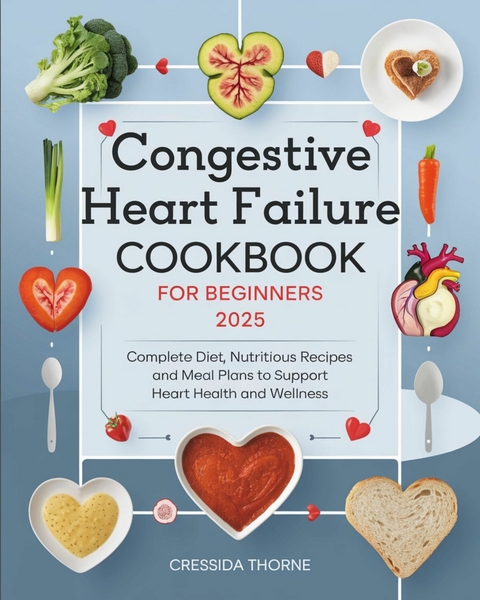
Congestive Heart Failure Cookbook for Beginners -  Cressida Thorne

Congestive Heart Failure Cookbook for Beginners (eBook)

Complete Diet, Nutritious Recipes and Meal Plans to Support Heart Health and Wellness
eBook Download: EPUB
2025 | 1. Auflage
204 Seiten
Cressida Thorne (Verlag)
978-0-00-082088-4 (ISBN)
Systemvoraussetzungen
8,99 inkl. MwSt
(CHF 8,75)
Der eBook-Verkauf erfolgt durch die Lehmanns Media GmbH (Berlin) zum Preis in Euro inkl. MwSt.
  • Download sofort lieferbar
  • Zahlungsarten anzeigen

Take Control of Your Heart Health: A Beginner's Guide to Cooking for Congestive Heart Failure


Are you or a loved one navigating the challenges of a congestive heart failure (CHF) diagnosis? Do you often feel overwhelmed when trying to make healthy food choices? You're not alone, and we're here to help you tackle this journey with confidence, hope, and, most importantly, delicious food.


This Congestive Heart Failure Cookbook for Beginners is designed to make heart-healthy living easy and enjoyable. Packed with simple, flavorful recipes, this cookbook focuses on low-sodium and salt-free options that support your heart health without sacrificing taste.


What's Inside:


• Breakfasts: Start your day with heart-healthy meals that energize and satisfy.
• Lunches: Enjoy heart-pleasing dishes full of vibrant flavors.
• Dinners: End your day with comforting, nutritious meals that keep your heart strong.
• Snacks & Appetizers: Satisfy cravings with tasty, low-sodium snacks that are quick and easy to prepare.
• Soups & Stews: Warm up with comforting, healthy soups and stews perfect for any season.
• Side Dishes: Compliment your main meals with a variety of flavorful sides.
• Smoothies: Indulge in vibrant, nourishing smoothies that support heart health.
• Desserts: Savor guilt-free, heart-healthy treats that are sure to satisfy your sweet tooth.


Here's What You'll Learn:


✓ A Beginner's Overview of CHF: Understand the causes, symptoms, stages, and treatments of congestive heart failure.
✓ The Role of Diet in Managing CHF: Learn why diet is crucial for controlling CHF symptoms and improving heart health.
✓ Guidelines for Safe Cooking: Discover cooking tips and techniques that align with heart failure management.
✓ Heart-Healthy Foods: Find out which foods to limit and which to embrace for better heart health.
✓ Portion Control & Mindful Eating: Master the art of portion control and mindful eating for optimal heart health.
✓ Weekly Meal Plans: Use our weekly meal plans to make heart-healthy eating effortless.
✓ Healthy Substitutes for Common Ingredients: Learn how to swap out high-sodium or fatty ingredients for healthier alternatives.
✓ Managing Stress & Hydration: Practical advice on managing stress and staying hydrated, both essential for heart health.
✓ Exercise & Wellness: Incorporating movement into your life for better health and well-being.
✓ Support & Resources: Connect with support groups, wellness apps, and books that help you stay on track with your heart health.


With easy-to-follow instructions, professional tips, and heart-healthy recipes, this cookbook is your ultimate resource for living well with congestive heart failure.


Take Action Today!


Don't wait to take control of your heart health. Grab your copy now and start making delicious, heart-healthy meals that nourish your body and mind!

CHAPTER TWO
NUTRITIONAL GUIDELINES FOR CHF
The nutritional guidelines or principles for CHF are designed to reduce the heart's workload by maintaining fluid balance, blood pressure, and body weight.  Fluid intake might also be restricted, depending on individual needs, to prevent overload. Emphasis should be on fresh fruits, vegetables, whole grains, lean proteins, and healthy fats, including omega-3 fatty acids, which are believed to support heart health. Foods to avoid would include a high intake of alcohol, processed foods, and a balance of nutrients to manage symptoms of CHF.
General Dietary Recommendations
  1. Low sodium diet (what is low sodium, daily recommended intake).
The low-sodium diet is a nutritional strategy based on a reduction of the amount of sodium ingested. This normally helps in managing or preventing cardiovascular diseases, high blood pressure, and kidney problems. The nutrient sodium is one of those used commonly to add flavor and as a preservative in many food products; it is usually processed into sodium chloride or salt. While sodium is an essential nutrient, overconsumption damages health in many ways. Fortunately, healthy people tend to have a high tolerance for excess sodium intake. On the other hand, it is not an unreasonable request to occasionally make for healthy individuals to prepare sodium-free food. Overall, the United States Dietary Guidelines recommend no more than 2,300 milligrams as the maximum daily intake of sodium from all dietary sources. That is about one teaspoon of salt per day. Yet, health organizations propose different amounts as the daily recommended intake of sodium. In general, it is common to advise a reduction to about 1,500 milligrams per day for anyone who has high blood pressure or other risk factors. Most people consume many times this recommended amount, and this is primarily due to processed and packaged foods, restaurant meals, and condiments adding much salt to the diet.
Meanwhile, following a diet low in sodium is quite easy to implement, because much of that involves some limitations on the intake of processed foods, canned products, and salty snacks. While caution in the intake of sodium is avoided, there will always be greater intake of fresh, whole foods-fruits, vegetables, lean proteins, and more whole grains. It may also incorporate herbs and spices as a replacement for salt to improve the flavor of the food being prepared. Two of the most important tactics involve reading food labels for their sodium contents and preparing meals at home to stay within prescribed limits of salt and promote better overall health. With that said, by minimizing the amount of sodium intake, a person who has congestive heart failure will be able to minimize fluid overload, reduce strain on his heart, and decrease the risk of hospitalization from the worsening of symptoms.
  1. Fluid restrictions for some CHF patients
Many patients with CHF have to adhere to strict and often very rigid fluid allowances to prevent further fluid retention with possible complications of pulmonary edema (fluid in the lungs) or congestive episodes. A doctor will frequently advise the patient to limit his or her intake to approximately 1.5 to 2 liters per day. This is usually indicated based on the degree of heart failure and the general state of the patient's health. Another common approach besides fluid intake limitation is the limitation of sodium intake since too much salt exacerbates fluid retention. Because there is a sudden gain may be a sign of fluid accumulation, weight is often closely monitored. However, fluid intake must be individualized because strict limitations may result in dehydration, hypotension, and impairment of renal function. The patient with CHF must work closely with the health care team to maintain fluid intake consistent with the body's needs. Others will require modifications due to medications like diuretics, which help rid the body of excess fluids. Other clients will require instruction on thirst management and optimal fluid intake within the restriction protocol. Along with other therapies, fluid handled suitably is an important component in the stability and betterment of a patient's quality of life who suffers from CHF.
  1. A balanced intake of macronutrients: protein, healthy fats, and carbohydrates
One of the crucial points that could be used to manage congestive heart failure is that there should be an adequate level of macronutrients, including carbohydrates, healthy fats, and protein. Protein can help maintain or build up body tissues in support of muscle mass; it also helps in the repair of organs and tissues. This is very important because CHF can lead to fat and muscle loss. Adequate intake of protein maintains heart muscles and helps improve physical strength. However, congestive heart failure may have to limit food sources containing protein that is rich in sodium and saturated fats. Hence, lean proteins should be chosen, like fish, and chicken, and vegetable-based choices like lentils, and tofu.
The consumption of healthy fats, especially unsaturated fat, can be identified through the use of olive oil, avocados, and fatty fish full of omega-3 fatty acids. These may contribute to heart health by reducing inflammation and improving cholesterol levels. Moreover, these fats protect the structure of cell membranes, promote the absorption of fat-soluble vitamins, and are important for maintaining overall heart health. On the other hand, saturated and trans fats must be taken in moderation portions only because their consumption allows plaque to build up in the arteries, which further deteriorates CHF by increasing the risk of atherosclerosis.
Carbohydrates, and more importantly complex carbohydrates from whole grains, vegetables, and legumes, are a dependable source of energy for the body and the heart. Consuming such foods, heavy in fiber, will provide normal digestion and slow the absorption of sugar into the blood. That way, at least, the danger of peaks in blood sugar known to worsen CHF symptoms is minimized. That is because simple carbohydrates, including those in sugary snacks and refined grains, favor weight gain and insulin resistance, and is likely to give the heart a double workload; hence, they have to be limited. Careful balancing of dietary macronutrient intake may improve heart function and energy levels in a diet suitable for a patient with CHF, which can overall improve one's quality of life.
  1. Importance of high fiber intake for heart health
The following explains the importance of high fiber intake for heart health;
  • Efforts to Reduce Cholesterol Levels
LDL cholesterol levels can be reduced by the consumption of soluble fiber present in food items such as oats, beans, and fruits including apples and oranges. High levels of LDL cholesterol increase the chance of heart disease.
  • Manages Blood Pressure
Diets high in fiber have been associated with lower blood pressure, especially those containing vegetables, legumes, and whole grains. This is very important, as hypertension is a risk factor for heart disease.
  • Aids in Weight Management
Foods with higher amounts of fiber, for example, vegetables, fruits, and whole grains typically have less calorie density and more satiety. They contribute to lowering hunger and, therefore, weight management. This helps to decrease the risk of cardiovascular disease.
  • Reduces Inflammation
Long-term inflammation has been linked to various cardiac diseases. Foods containing fiber, especially insoluble fiber found in wheat bran and vegetables can help by reducing the inflammation indicators of the body.
  • Controls Blood Sugar Level
High-fiber food helps to decrease the absorption of sugar, hence preventing the fast spikes and falls in blood glucose. With this, insulin levels are stabilized, which therefore decreases the risk of developing diabetes well-known risk factor for cardiovascular disease. Encourages the development of a healthy gut microbiota. It also acts as a prebiotic, feeding the good bacteria in the gut. A healthy gut microbiome is associated with reduced inflammation and overall improved health, including heart health.
  • Improves your Digestive Health
Fiber has the beneficial property of giving bulk to the stool, hence facilitating the bowel movement. This helps the body prevent constipation and decreases the risk of diverticular disease among other ailments. A good digestive system indirectly supports heart health.
  • Optimizes the Lipid Profiles:
As a result of this adequate intake of fiber, there will be good changes in lipid profiles by the reduction of triglyceride levels. This then will help the heart have a healthier cardiovascular system.
  • Improves the Overall Health of the Heart
A high intake of fiber has great relevance to maintaining good heart health since it addresses several risk factors, including cholesterol levels, blood pressure, management of weight, and inflammation.
  • Sources of Varied Fiber:
Variations in fiber sources can hugely diversify a diet and will offer a broader health benefit. Examples of such sources...

Erscheint lt. Verlag 31.5.2025
Sprache englisch
Themenwelt Sachbuch/Ratgeber Essen / Trinken
ISBN-10 0-00-082088-1 / 0000820881
ISBN-13 978-0-00-082088-4 / 9780000820884
Informationen gemäß Produktsicherheitsverordnung (GPSR)
Haben Sie eine Frage zum Produkt?
EPUBEPUB (Adobe DRM)
Größe: 35,6 MB

Kopierschutz: Adobe-DRM
Adobe-DRM ist ein Kopierschutz, der das eBook vor Mißbrauch schützen soll. Dabei wird das eBook bereits beim Download auf Ihre persönliche Adobe-ID autorisiert. Lesen können Sie das eBook dann nur auf den Geräten, welche ebenfalls auf Ihre Adobe-ID registriert sind.
Details zum Adobe-DRM

Dateiformat: EPUB (Electronic Publication)
EPUB ist ein offener Standard für eBooks und eignet sich besonders zur Darstellung von Belle­tristik und Sach­büchern. Der Fließ­text wird dynamisch an die Display- und Schrift­größe ange­passt. Auch für mobile Lese­geräte ist EPUB daher gut geeignet.

Systemvoraussetzungen:
PC/Mac: Mit einem PC oder Mac können Sie dieses eBook lesen. Sie benötigen eine Adobe-ID und die Software Adobe Digital Editions (kostenlos). Von der Benutzung der OverDrive Media Console raten wir Ihnen ab. Erfahrungsgemäß treten hier gehäuft Probleme mit dem Adobe DRM auf.
eReader: Dieses eBook kann mit (fast) allen eBook-Readern gelesen werden. Mit dem amazon-Kindle ist es aber nicht kompatibel.
Smartphone/Tablet: Egal ob Apple oder Android, dieses eBook können Sie lesen. Sie benötigen eine Adobe-ID sowie eine kostenlose App.
Geräteliste und zusätzliche Hinweise

Buying eBooks from abroad
For tax law reasons we can sell eBooks just within Germany and Switzerland. Regrettably we cannot fulfill eBook-orders from other countries.

Mehr entdecken
aus dem Bereich

von Lisa McDonald; Jill Rheinheimer

eBook Download (2024)
Wiley-VCH (Verlag)
CHF 15,60