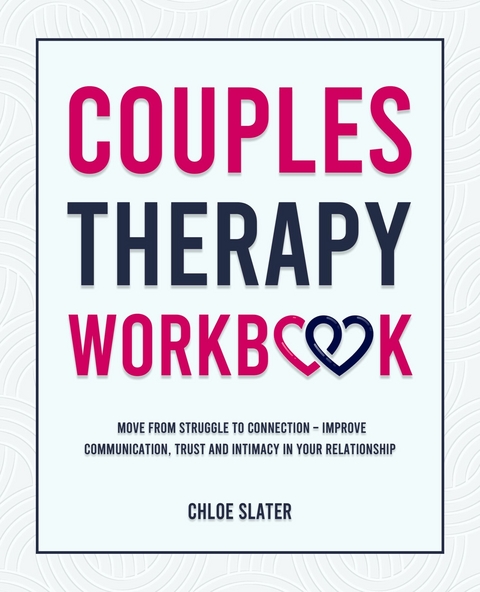
Couples Therapy Workbook (eBook)
173 Seiten
Publishdrive (Verlag)
978-1-78793-808-3 (ISBN)
Are you struggling in your romantic relationship?
Do you feel alone, hurt, angry, abandoned, rejected, stuck, depressed, or distant?
Do you have a hard time sharing your true feelings with your partner?
Do you or your partner feel lonely and misunderstood?
Are you stuck in a negative communication cycle?
Are you worried about your relationship status?
Are you tired of the same arguments?
Do you want love back ASAP?
I understand how complicated that can feel.
Be honest, you're here because you're frustrated with not getting the results you want in your relationship. I want you to know it's going to be okay. All is not lost!
The truth is that most relationship books teach you tactics that don't address the underlying issues... your fears, insecurities, and lack of relational skills.
It's time to stop settling for a mediocre or 'good enough' relationship.
Imagine ...
- Becoming one of those inspiring couples you've always admired - the ones who are best friends, do thoughtful things for each other, and exchange knowing smiles from across the room
- Finally sorting out long-standing issues with solutions that work for both of you
- Experiencing a sense of healing and closure for things from the past
- Having heartfelt conversations (even about the touchiest subjects)
- Getting to know yourself and your partner on a whole new level
- Building a solid foundation of trust, safety, and connection
- Reigniting the spark and falling in love all over again
- Feeling truly heard and valued by your partner
Here's a little sneak preview of what you'll get:
- 30 ways to effectively communicate with your partner (and how to better iron out disagreements in the process)
- Why reconnecting emotionally is just as important as reconnecting physically...and how you can do both at the same time
- What destroys relationship and how to fix it
- The #1 secret to strong and long-lasting relationships (spoiler alert, it's not as complicated as you think!)
- Why you need to heal your past relationship traumas before you can resolve your current issues with your partner
- Fun and engaging interactive activities that you can do with your partner - get to know each other better, know how to deal with your differences, and have fun together all at the same time
- How to identify and break unhealthy relationship patterns and cycles of negative behavior - address issues once and for all and don't fall back to dysfunctional traps
- The 5 most common problems that couples face today...and what you can do to fix them
If you're looking to reconnect emotionally and overcome relationship obstacles, The Couples Therapy Workbook can help.
Chapter 1:
What Is Love?
“Falling in love is more than infatuation. It is the need to feel whole, to feel safe, to be healed, to join together with someone, heart, and soul.”
— Michael R. French
Maintaining Healthy Relationships
Falling in love is easy (or so the romcoms would have us believe). Even that is quite difficult nowadays, between hookup culture and app-dating and ghosting, breadcrumbing, texting games, and so on. Once you have bagged a partner, you might think the job is done, and you can rest now. However, keeping a relationship alive, keeping your love aflame, and continuing to work successfully together can often feel more difficult than having ignited the spark in the first place.
Healthy and long-lasting relationships take a lot of consistent work and nurturing in all the following categories:
Communication: Communication is often the lifeline and the heart of a successful and healthy relationship. It also goes beyond talking to one another, but rather actively listening to what the other person is saying, trying to understand their point of view, and taking it on board. Healthy communication involves a large degree of openness, being able to speak candidly about what you are feeling, and not being afraid of your partner acting in a hostile manner in response or judging you. It also involves cohesion in being able to speak and plan things so you are both on the same page.
Trust: Another incredibly important aspect of healthy relationships is trusting your partner. Trusting their faithfulness, trusting their actions, trusting they mean what they say. It is difficult to continue loving and growing with someone whom you do not trust.
Honesty: Hand in hand with trust comes honesty, which often leads to greater trust between people. Being honest about your feelings and your actions creates a space in which both people feel comfortable sharing their mindsets and trust that their partner will respect them.
Independence: Even when head over heels for your partner, feeling like you want to spend every second glued to their ribs is not a healthy approach. Continuing to grow your interests and enjoy hobbies and other aspects of life on your own allows two people to come together, rather than rely so strongly on one another that issues begin to arise out of co-dependency.
Support: Your partner should be your biggest cheerleader, and you should be theirs. When it comes to career, life goals, and daily struggles, being able to confide and share these with your partner is incredibly important. This might mean praise and congratulating or providing a shoulder you can lean on when times are tough and an ear that will commiserate with your struggles and support you through them.
Healthy Boundaries: Respecting one another’s boundaries is also a large factor in successful and healthy relationships. This involves asking for your partner’s consent and respecting their wishes, knowing their limits, and respecting these boundaries.
Feeling Safe: Feeling safe with your partner is a vital element to being able to share your feelings openly and being able to trust that they have your best interests at heart.
Enjoyment: Even after years in a relationship, where you are both settled into a routine, you should still enjoy the time spent together and have fun in your interactions.
Building a healthy relationship that incorporates all of the above is often not easy. It also seems arduous after a peaceful and easy honeymoon period. Everything was rose-tinted and blissful after you first met, and then you are suddenly arguing over who has to unload the dishwasher. Long-lasting and successful relationships take time. Going through ups and downs with your partner is not uncommon, but a willingness to grow and learn, and to adapt and accommodate your partner is important. The key is after all in the word; partners, meaning that you have to work and grow together to find fulfilling and long-lasting happiness.
The key to tackling these goals together and remaining on the same page in your relationship is openness and willingness to learn. Conflict is bound to happen. Avoiding all arguments is often less productive than being able to bring up and discuss issues as they arise, as avoiding conflict can lead to deep-seated resentment. Maybe you are upset that your partner spends a lot of the weekends golfing when you are left home with all the housework, but you do not want to bring it up because you love them and you do not want to seem needy. But your frustration grows as the chores mount up, and you end up exploding at them for leaving a pair of socks in the kitchen. Approaching conflict calmly and securely and having the confidence to engage in respectful disagreement also teaches you how both you and your partner deal with conflict, and successful ways to mediate and resolve.
Keeping the Spark Alive
Falling in love is easy, staying in love, is not quite such a smooth ride. It is easy to let your romantic feelings for one another take a back seat when life gets in the way. Work, children, and other commitments compete for your attention, and you drift away from spending time together on an emotional level – only coming together when issues arise. However, keeping your ‘spark’ alive is key to the longevity of your relationship, and requires frequent attention to avoid running into bigger issues down the line.
To Do so, Spend Quality Time Together: Setting aside time away from distractions, putting your phone down and your work aside, and giving your partner your full attention will help to nurture your feelings for one another. This is often a step beyond watching television together or running to the grocery store. Engage in regular date nights when possible, and partake in hobbies or interests you both share. Try new things to bring something exciting and interesting to your life which you can discuss later, and work on building new positive memories together throughout your relationship.
Remember to Also Work on Your Communication: Your partner is not a mind reader. Do not be afraid of telling them how you feel, what you need, and how they could better support you. Practice active listening when they speak to you, always showing openness through body language and keeping any rash judgment to yourself. A relationship functions best when both parties can listen and share and then work through potential solutions together. If one person feels criticized or judged, they may refrain from sharing in the future, which can cause resentment and anger to grow.
Additionally, Keep Your Love Life Alive: Physical intimacy does not just have to mean sex, but be mindful that this can be forced onto the back burner of priorities in busy shared lives, so set time aside to keep your physical connection. Additionally, work on showing your affection through other physical gestures. Hand-holding, hugging, and kissing all work to solidify and reassure your partner of your affection.
Remember to Work Together, Not Apart: Relationships are rarely split 50/50. You might find yourself putting in more effort while your partner is preoccupied or vice versa. Be mindful of the other priorities you both have in life and allow flexibility to ensure that you both can focus on what is important as well as your love for one another. Relationships are not a case of winning either. When conflict arises, avoid approaching it with the mindset of having to win an argument and take down your partner. Conflict, while inevitable, needs to be approached with a mindset of working together to solve problems, so you can both function in the smoothest way possible. Avoid attacking your partner’s weak spots in the heat of the moment as hurtful things cannot be taken back, and instead learn to manage your stress and emotions to avoid letting them spill out into your love life.
Foster Your Interests While Being in a Relationship: Continuing to work on your interests, developing your hobbies, and otherwise spending time apart will mean you feel at ease with yourself and can bring self-confidence and self-love to your relationship with your partner. While you might enjoy one another’s company, not everything should be done together.
Finally, Relationships Come With a Lot of Ups and Downs: You might find that the downs last longer the longer you are together. You might also reflect on how idyllic the first year of your relationship was and wonder where it all went wrong. However, accept that all relationships go through highs and lows. Outside factors like work stress, grief, health issues, or plenty of others can affect your interactions with your partner. Avoid running for the hills as soon as it gets a little tough. Life is hard, as are relationships. Feeling like you have to work a little harder for some time is natural, and part of the grift of successful long-term relationships. Not everything will be happy and easy and carefree, but knowing how to communicate and support your partner when times are tough will ensure that you get through these tough times together.
Is My Relationship Healthy?
It is worth checking in on your relationship every so often to assess whether you and your partner are both satisfied and if you are both meeting the following needs for each other. These questions also apply in reverse; how might your partner respond to them considering how you treat them, and is there anything you could do differently to...
| Erscheint lt. Verlag | 26.5.2025 |
|---|---|
| Sprache | englisch |
| Themenwelt | Sachbuch/Ratgeber ► Gesundheit / Leben / Psychologie ► Familie / Erziehung |
| Sachbuch/Ratgeber ► Gesundheit / Leben / Psychologie ► Partnerschaft / Sexualität | |
| Schlagworte | Conflict resolution skills for married couples • Couples working through trust and betrayal • Emotional closeness and active listening tips • Improve communication with your partner • Rebuild intimacy after emotional distance • Strengthen relationship through healing talks • Therapy exercises to reconnect in relationships |
| ISBN-10 | 1-78793-808-5 / 1787938085 |
| ISBN-13 | 978-1-78793-808-3 / 9781787938083 |
| Informationen gemäß Produktsicherheitsverordnung (GPSR) | |
| Haben Sie eine Frage zum Produkt? |
 EPUB (Ohne DRM)
Digital Rights Management: ohne DRM
Dieses eBook enthält kein DRM oder Kopierschutz. Eine Weitergabe an Dritte ist jedoch rechtlich nicht zulässig, weil Sie beim Kauf nur die Rechte an der persönlichen Nutzung erwerben.
Dateiformat: EPUB (Electronic Publication)
EPUB ist ein offener Standard für eBooks und eignet sich besonders zur Darstellung von Belletristik und Sachbüchern. Der Fließtext wird dynamisch an die Display- und Schriftgröße angepasst. Auch für mobile Lesegeräte ist EPUB daher gut geeignet.
Systemvoraussetzungen:
PC/Mac: Mit einem PC oder Mac können Sie dieses eBook lesen. Sie benötigen dafür die kostenlose Software Adobe Digital Editions.
eReader: Dieses eBook kann mit (fast) allen eBook-Readern gelesen werden. Mit dem amazon-Kindle ist es aber nicht kompatibel.
Smartphone/Tablet: Egal ob Apple oder Android, dieses eBook können Sie lesen. Sie benötigen dafür eine kostenlose App.
Geräteliste und zusätzliche Hinweise
Buying eBooks from abroad
For tax law reasons we can sell eBooks just within Germany and Switzerland. Regrettably we cannot fulfill eBook-orders from other countries.
aus dem Bereich