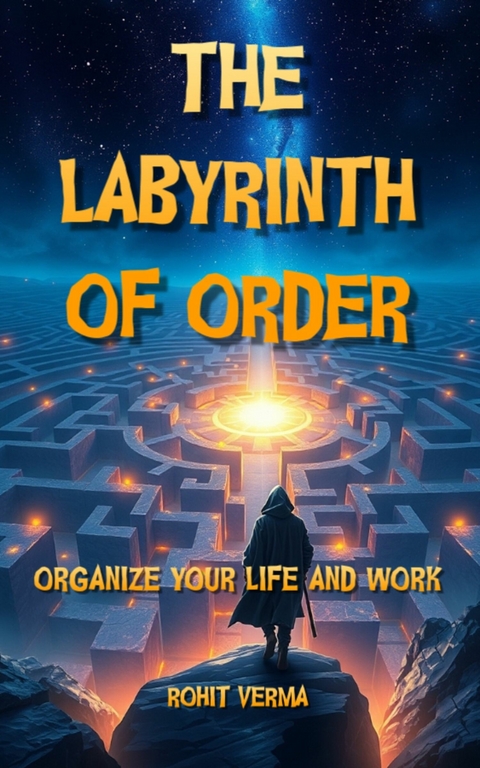
The Labyrinth of Order (eBook)
72 Seiten
Rohit Verma (Verlag)
978-1-0670818-8-1 (ISBN)
The Labyrinth of Order guides you through the clutter-mental, digital, and physical-to help you create a life of clarity and flow. In this practical and insightful book, you'll learn how to streamline your environment, structure your time, and align your routines with your goals. Organization isn't about perfection-it's about purpose. This book shows you how to cut through chaos, reduce overwhelm, and design systems that actually stick. From to-do lists to life systems, it's your key to turning disorder into direction. Streamline everything and move forward with intention.
Chapter 2: Decluttering the Mind: Clearing Mental Fog
In the pursuit of a more organized life, there’s one area that often remains ignored—our minds. The clutter that resides in our thoughts is often the root cause of many of the challenges we face in our daily lives. If your mind is constantly racing with worries, tasks, and endless thoughts, it becomes incredibly difficult to focus, make decisions, or take meaningful action. The fog of mental clutter clouds our ability to think clearly, and the resulting confusion leads to stress, procrastination, and, ultimately, inaction.
Mental clutter isn’t just an inconvenience—it’s a serious roadblock to your productivity, happiness, and well-being. Whether it’s a never-ending to-do list that demands your attention, intrusive worries about the future, or unresolved emotions weighing you down, the mental fog prevents you from living with clarity and purpose.
In this chapter, we will explore the root causes of mental clutter, how it affects your life, and most importantly, practical strategies to clear the fog and create mental space for focus, creativity, and peace. By learning how to declutter your mind, you will open the door to greater productivity, more meaningful work, and a deeper sense of calm.
What is Mental Clutter?
Mental clutter is the accumulation of unresolved thoughts, emotions, worries, and distractions that occupy your mind. It’s the constant stream of internal noise that diverts your attention away from what matters most. Like a cluttered room or an overflowing inbox, mental clutter keeps you from focusing on the task at hand and often leaves you feeling overwhelmed, stressed, and stuck.
At its core, mental clutter consists of:
- Unfinished tasks and obligations: The things you’ve promised to do or that are lingering in your mind, waiting for your attention.
- Unresolved emotions and worries: Feelings of guilt, fear, or anxiety that create mental roadblocks.
- Overthinking and indecision: The constant loop of analysis, trying to figure out the best option, but never actually making a decision.
- Too many ideas or goals: When your mind is full of creative thoughts or multiple goals, it can be difficult to figure out which one to focus on, leading to paralysis by analysis.
- External distractions: Information overload, constant media consumption, and social pressures also contribute to mental clutter.
Mental clutter is not just about being distracted or disorganized—it's a state of mind that disrupts your ability to focus, prioritize, and live in the present moment.
The Impact of Mental Clutter
Mental clutter affects every aspect of your life. Here’s how:
1. Decreased Focus and Productivity
When your mind is overwhelmed with thoughts, it becomes nearly impossible to concentrate on a single task. You may find yourself constantly switching between different tasks or struggling to finish what you start. This scattered attention leads to decreased productivity, as you’re not able to devote your full energy or attention to any one thing.
2. Increased Stress and Anxiety
The more cluttered your mind, the more anxious you become. Worries about future tasks, decisions, and unresolved issues create an ongoing sense of urgency and fear. The mental fog leaves you feeling like there’s always something you’re forgetting, or that you’re not doing enough, even when you’re already working hard. This can lead to feelings of burnout and overwhelm.
3. Indecision and Procrastination
When your mind is full of conflicting thoughts or possibilities, making decisions becomes difficult. The fear of making the wrong choice, or the inability to prioritize, can cause you to postpone decisions. Procrastination often follows, as the cluttered mind tries to avoid confronting the discomfort of making a choice.
4. Lack of Creativity and Innovation
Mental clutter blocks creativity. When you’re preoccupied with too many ideas, tasks, or worries, you don’t have the mental space to think outside the box or come up with fresh solutions. The more cluttered your mind, the less energy you have for creative thinking and innovation.
5. Poor Emotional Well-Being
Mental clutter doesn’t just affect your cognitive functions; it also impacts your emotional state. When your mind is preoccupied with worries, unresolved emotions, or past experiences, it’s hard to feel calm and at ease. You might feel irritable, restless, or disconnected from yourself and others. Emotional health becomes fragile when your mind is clouded with clutter.
6. Impaired Decision Making
A cluttered mind is an indecisive mind. You may feel paralyzed by options, unsure of which direction to take. The constant barrage of thoughts and ideas makes it hard to assess situations clearly, leading to poor decision-making or avoidance of important choices altogether.
How Mental Clutter Forms
To begin decluttering your mind, it’s important to understand where this clutter comes from. The sources of mental clutter are often a mix of external and internal factors:
1. External Sources of Clutter
- Overload of Information: In today’s digital age, we’re constantly bombarded with information—news, emails, social media, podcasts, and videos. This flood of data overwhelms our brain and makes it difficult to process what’s truly important.
- External Expectations: Societal pressures, expectations from work or family, and comparisons to others can also add to the mental load. The pressure to perform, to be perfect, or to meet certain standards can create a sense of anxiety and overwhelm.
- Constant Distractions: Our attention is constantly pulled in many directions. Every ping, notification, or alert adds another layer of distraction to our already overloaded minds.
2. Internal Sources of Clutter
- Unresolved Emotions: Emotions such as fear, guilt, shame, and anger can create mental baggage that stays with us. These emotions, if left unaddressed, create a fog in the mind that clouds judgment and creates ongoing internal conflict.
- Self-Doubt and Perfectionism: Thoughts of “I’m not good enough” or “I need to do more” create a sense of inadequacy. This constant self-criticism and the fear of making mistakes contribute to mental clutter, preventing you from taking action or moving forward.
- Overthinking: The tendency to overthink, analyze, or ruminate on situations creates a loop of endless thoughts. Instead of making decisions or taking action, you end up trapped in a cycle of indecision and doubt.
Understanding the sources of your mental clutter is the first step in clearing it away. Once you know what’s contributing to your mental fog, you can take targeted actions to declutter your mind.
Strategies to Declutter the Mind
Now that we understand the causes and effects of mental clutter, let's explore practical strategies to clear the fog and create mental space for clarity, focus, and peace.
1. Practice Mindfulness
Mindfulness is the practice of being present in the moment without judgment. By focusing on the present, you can reduce the constant mental chatter that distracts you from what’s truly important. When you practice mindfulness, you train your mind to focus on the task at hand rather than getting lost in worries about the future or regrets about the past.
How to Practice:
- Set aside time each day for mindfulness meditation.
- Focus on your breath, body sensations, or the sounds around you.
- Whenever your mind wanders, gently bring your attention back to the present moment.
Mindfulness helps break the cycle of overthinking and allows you to find stillness in a busy world.
2. Brain Dumping
One of the most effective ways to clear mental clutter is to get everything out of your head. This practice is called “brain dumping,” where you write down every thought, task, or worry that’s occupying your mind. By putting it all on paper, you can visually see what’s cluttering your thoughts and gain a sense of control over it.
How to Practice:
- Set a timer for 10-15 minutes.
- Write down everything that’s on your mind—tasks, worries, goals, or random thoughts.
- Once the brain dump is complete, prioritize or organize the items on the list.
Brain dumping helps you externalize your thoughts, reducing the mental load and creating clarity.
3. Prioritize and Break Tasks into Steps
The clutter in your mind often stems from feeling overwhelmed by the sheer number of tasks you need to complete. By breaking down your tasks into smaller, more manageable steps and prioritizing what needs attention first, you can regain a sense of control.
How to Practice:
- Make a list of all the tasks you need to complete.
- Rank them by priority (e.g., urgent, important, low-priority).
- Break down larger tasks into smaller steps to prevent feeling overwhelmed.
By focusing on one thing at a time, you can reduce mental clutter and increase productivity.
4. Practice Self-Compassion
Self-doubt, perfectionism, and negative self-talk contribute significantly to mental clutter. Practice self-compassion by being kind to yourself, accepting that you don’t need to be perfect, and acknowledging that mistakes are a part of growth.
How to Practice:
- Whenever you notice negative self-talk, reframe...
| Erscheint lt. Verlag | 9.5.2025 |
|---|---|
| Sprache | englisch |
| Themenwelt | Sachbuch/Ratgeber ► Gesundheit / Leben / Psychologie ► Lebenshilfe / Lebensführung |
| Schlagworte | Decluttering • life systems • organization • personal efficiency • Productivity • Structure • Workflow |
| ISBN-10 | 1-0670818-8-7 / 1067081887 |
| ISBN-13 | 978-1-0670818-8-1 / 9781067081881 |
| Informationen gemäß Produktsicherheitsverordnung (GPSR) | |
| Haben Sie eine Frage zum Produkt? |
 EPUB (Ohne DRM)
Digital Rights Management: ohne DRM
Dieses eBook enthält kein DRM oder Kopierschutz. Eine Weitergabe an Dritte ist jedoch rechtlich nicht zulässig, weil Sie beim Kauf nur die Rechte an der persönlichen Nutzung erwerben.
Dateiformat: EPUB (Electronic Publication)
EPUB ist ein offener Standard für eBooks und eignet sich besonders zur Darstellung von Belletristik und Sachbüchern. Der Fließtext wird dynamisch an die Display- und Schriftgröße angepasst. Auch für mobile Lesegeräte ist EPUB daher gut geeignet.
Systemvoraussetzungen:
PC/Mac: Mit einem PC oder Mac können Sie dieses eBook lesen. Sie benötigen dafür die kostenlose Software Adobe Digital Editions.
eReader: Dieses eBook kann mit (fast) allen eBook-Readern gelesen werden. Mit dem amazon-Kindle ist es aber nicht kompatibel.
Smartphone/Tablet: Egal ob Apple oder Android, dieses eBook können Sie lesen. Sie benötigen dafür eine kostenlose App.
Geräteliste und zusätzliche Hinweise
Buying eBooks from abroad
For tax law reasons we can sell eBooks just within Germany and Switzerland. Regrettably we cannot fulfill eBook-orders from other countries.
aus dem Bereich