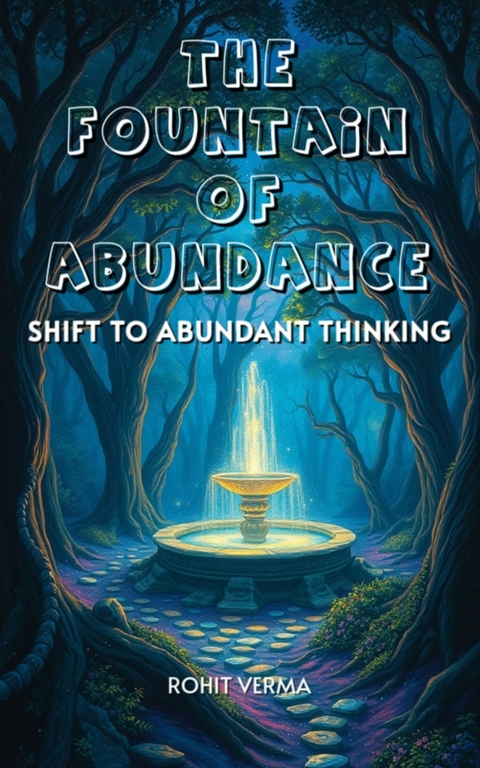
The Fountain of Abundance (eBook)
78 Seiten
Rohit Verma (Verlag)
978-1-0670817-6-8 (ISBN)
Abundance begins in the mind. This transformative guide helps you break free from scarcity thinking and step into a mindset of limitless possibility. By shifting your thoughts, beliefs, and habits, you'll open the door to opportunities, wealth, joy, and fulfillment in every area of life. Learn how to align with the energy of abundance, practice gratitude, and create space for prosperity to flow. When you think abundantly, you live abundantly-it's time to turn that internal fountain on full blast.
Chapter 2: The Scarcity Trap
We are not born thinking in lack. We are taught it.
From the time we are children, the narrative of “not enough” begins to weave its way into our worldview. We hear it in our homes, in schools, in media, and even in casual conversation. “Money doesn’t grow on trees.” “There’s only room for one winner.” “You have to fight for what you want.” Slowly, these messages shape a reality that feels limited, competitive, and exhausting.
Scarcity is a mindset. It is not a condition of the world—it is a condition of perception. When we are trapped in scarcity thinking, we perceive limitation where there is actually potential, we see competition where there could be collaboration, and we feel fear where there could be faith.
The scarcity trap is a prison of the mind—and one that many people live in without ever realizing it.
Understanding the Scarcity Mindset
At its core, the scarcity mindset is the belief that there is not enough—of anything. Not enough money. Not enough time. Not enough love, opportunities, resources, or recognition. It’s the inner narrative that says: “If someone else has more, I must have less.” It turns life into a zero-sum game.
People operating from a scarcity mindset often live in chronic stress. They are constantly worried about losing what they have or never getting what they want. Even when they do receive abundance, it doesn’t bring them lasting peace—because they’re always waiting for the other shoe to drop.
Scarcity doesn’t only affect your finances. It seeps into every area of life:
- Time: You feel like you're always behind, rushed, and overwhelmed.
- Relationships: You cling to people or push them away, afraid of abandonment or rejection.
- Work: You compete rather than collaborate, fearing someone else’s success will limit yours.
- Self-Worth: You never feel “good enough,” no matter how much you achieve.
This kind of thinking creates a lens through which you interpret reality—and, over time, it becomes a self-fulfilling prophecy.
The Origins of Scarcity Thinking
To break free from the scarcity trap, you must first understand where it came from.
Most scarcity beliefs are inherited. They are passed down from parents, caregivers, culture, and society. For example:
- If you grew up hearing your family stress about money, you may have internalized that wealth is unsafe or always at risk.
- If you were praised only when you achieved, you might have come to believe that love must be earned, not freely given.
- If you witnessed constant comparison or competition, you might struggle to celebrate others without feeling diminished.
These early experiences imprint powerful beliefs in your subconscious. The mind begins to filter every experience through those beliefs, scanning constantly for threats to your sense of “enoughness.”
But here’s the truth: Just because a belief was taught doesn’t mean it’s true. And just because it feels real doesn’t mean it’s right.
You have the power to unlearn scarcity. But first, you must see it clearly.
Scarcity’s Many Masks
The scarcity mindset is clever. It rarely shows up saying, “Hello, I’m scarcity!” Instead, it wears disguises—behaviors and patterns that seem normal, even virtuous. Here are a few common masks:
1. Perfectionism
At first glance, perfectionism may look like ambition or high standards. But underneath, it often hides a deep fear of not being good enough. You believe that only by being flawless can you earn success, love, or acceptance. This belief keeps you in constant anxiety, never feeling safe to rest, make mistakes, or just be.
2. People-Pleasing
When you fear that love is scarce or conditional, you may fall into the trap of people-pleasing—saying yes when you mean no, avoiding conflict, or sacrificing your needs to keep others happy. This often comes from a subconscious belief that love must be earned or maintained through constant effort.
3. Overworking
If you believe money or success is hard to come by, you may feel the need to work relentlessly to stay ahead. You push yourself to burnout, believing that slowing down would lead to loss. This stems from a fear that there’s never “enough” to feel secure.
4. Envy or Comparison
Scarcity tells you that someone else’s win is your loss. When you compare yourself to others—feeling less attractive, accomplished, or wealthy—it’s a sign that you’ve internalized the belief that there’s not enough success or joy to go around.
5. Hoarding or Withholding
Scarcity makes you feel like you have to hold tightly to what you have—whether it’s money, time, or energy. You may struggle to share, spend, or invest in yourself, always waiting for the “right time” or “emergency.” This keeps abundance from circulating in your life.
Recognizing these patterns is the first step toward release.
The Emotional Toll of Scarcity
Scarcity thinking doesn’t just affect your external life—it takes a deep emotional toll. Chronic scarcity creates:
- Anxiety: The constant fear that something will run out or go wrong.
- Shame: Feeling like you’re inherently “not enough” to deserve more.
- Resentment: Bitterness toward others who seem to have what you lack.
- Exhaustion: The endless striving to “get ahead” and prove your worth.
- Disconnection: Feeling isolated, unsupported, or like you’re doing life alone.
Left unchecked, these emotional patterns can erode your sense of joy, peace, and possibility. That’s why it’s not enough to just want abundance—you must heal the scarcity mindset that blocks it.
Breaking Free from the Scarcity Trap
Escaping the scarcity trap doesn’t require massive life changes overnight. It starts with awareness and intentionality. Here’s how to begin:
1. Identify Your Core Scarcity Beliefs
Take time to reflect on the specific beliefs that keep you in scarcity. Ask yourself:
- What do I believe about money? Time? Love?
- When did I first start believing that there’s not enough?
- Whose voice or example taught me this?
Write these beliefs down. Name them. Naming disempowers them.
2. Challenge the Beliefs
For each scarcity belief you’ve identified, ask:
- Is this belief absolutely true?
- What evidence do I have that contradicts it?
- What would I rather believe instead?
Example: “There’s never enough money.”
Reframe: “Money is a tool, and I’m learning to create and manage it with ease.”
3. Affirm Abundance Daily
The brain learns through repetition. Create a set of abundance affirmations and speak them aloud daily. Some examples:
- “There is always more than enough.”
- “I am open to receive all that life has for me.”
- “I trust the flow of abundance in my life.”
You’re not just saying words—you’re creating neural pathways that support a new reality.
4. Celebrate Abundance Where It Already Exists
Scarcity says, “You don’t have enough.” Abundance says, “Look at all you do have.” Practice noticing and celebrating existing abundance. It could be:
- A smile from a stranger
- A meal you enjoyed
- A moment of peace
- Support from a friend
The more you recognize abundance, the more you magnetize it.
5. Practice Generosity
One of the most radical ways to dismantle scarcity is to give. Give time. Give kindness. Give money—yes, even a little—without expectation. Generosity tells your subconscious: “I have more than enough to share.”
6. Visualize from Abundance
Each day, visualize your life as if scarcity didn’t exist. See yourself making decisions from trust, peace, and overflow. Feel how your body shifts. This isn’t escapism—it’s training your nervous system to recognize safety in abundance.
Scarcity in Society—and How to Opt Out
Our world often reinforces scarcity. From marketing that preys on your fears to workplace cultures that reward burnout, society is structured to keep you in survival mode.
But you don’t have to play by those rules.
You can:
- Choose rest over hustle
- Celebrate others’ success
- Trust your timing
- Value collaboration over competition
- Speak abundance into your daily conversations
These choices are rebellious acts in a scarcity-driven world. They are also deeply empowering.
The Shift from Fear to Faith
Ultimately, scarcity is rooted in fear: fear of not being enough, not having enough, or losing what we love. But here’s the good news: every fear-based thought can be replaced with a faith-based one.
You get to choose which voice you listen to.
When fear says, “You’ll never make it,”
Faith says, “You’re on the right path.”
When fear says, “You’re falling behind,”
Faith says, “You’re exactly where you need to be.”
When fear says, “There’s not enough,”
Faith says, “There’s always more.”
This shift—from fear to faith—is what begins to dissolve the scarcity trap.
The scarcity trap is real—but it’s not...
| Erscheint lt. Verlag | 8.5.2025 |
|---|---|
| Sprache | englisch |
| Themenwelt | Sachbuch/Ratgeber ► Beruf / Finanzen / Recht / Wirtschaft |
| Sachbuch/Ratgeber ► Gesundheit / Leben / Psychologie ► Lebenshilfe / Lebensführung | |
| Schlagworte | abundance mindset • abundance thinking • Personal Growth • positive thinking • Prosperity • Success • wealth attraction |
| ISBN-10 | 1-0670817-6-3 / 1067081763 |
| ISBN-13 | 978-1-0670817-6-8 / 9781067081768 |
| Informationen gemäß Produktsicherheitsverordnung (GPSR) | |
| Haben Sie eine Frage zum Produkt? |
 EPUB (Ohne DRM)
Digital Rights Management: ohne DRM
Dieses eBook enthält kein DRM oder Kopierschutz. Eine Weitergabe an Dritte ist jedoch rechtlich nicht zulässig, weil Sie beim Kauf nur die Rechte an der persönlichen Nutzung erwerben.
Dateiformat: EPUB (Electronic Publication)
EPUB ist ein offener Standard für eBooks und eignet sich besonders zur Darstellung von Belletristik und Sachbüchern. Der Fließtext wird dynamisch an die Display- und Schriftgröße angepasst. Auch für mobile Lesegeräte ist EPUB daher gut geeignet.
Systemvoraussetzungen:
PC/Mac: Mit einem PC oder Mac können Sie dieses eBook lesen. Sie benötigen dafür die kostenlose Software Adobe Digital Editions.
eReader: Dieses eBook kann mit (fast) allen eBook-Readern gelesen werden. Mit dem amazon-Kindle ist es aber nicht kompatibel.
Smartphone/Tablet: Egal ob Apple oder Android, dieses eBook können Sie lesen. Sie benötigen dafür eine kostenlose App.
Geräteliste und zusätzliche Hinweise
Buying eBooks from abroad
For tax law reasons we can sell eBooks just within Germany and Switzerland. Regrettably we cannot fulfill eBook-orders from other countries.
aus dem Bereich