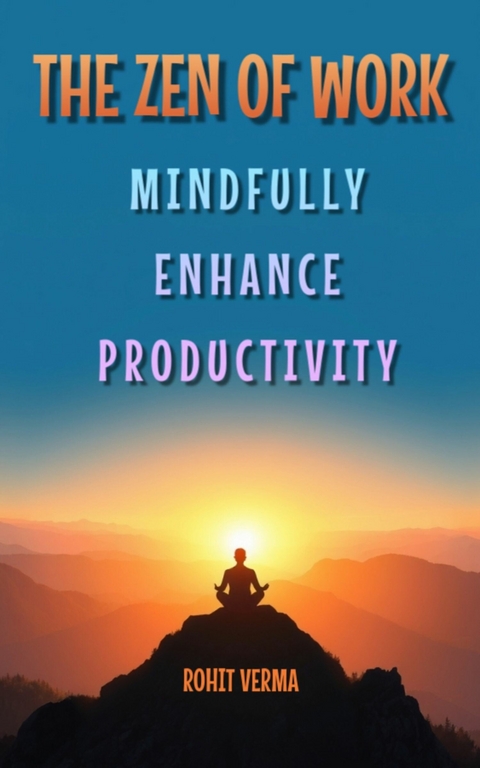
The Zen of Work (eBook)
61 Seiten
Rohit Verma (Verlag)
978-1-0670818-6-7 (ISBN)
The Zen of Work blends mindfulness with productivity, offering a calm, focused approach to achieving more without burning out. In a world of constant distraction and pressure, this guide shows you how to align your mental clarity with purposeful action. Learn to work with intention, find flow in everyday tasks, and bring peace into your professional life. Whether you're battling overwhelm or simply seeking a more balanced way to thrive, this book gives you practical tools to stay present and perform at your best. Focus with ease-and get more done with less stress.
Chapter 1: The Power of Presence: Embracing Mindfulness at Work
Mindfulness is the practice of being fully present and engaged in the moment, without distraction or judgment. In simple terms, it means paying attention to what is happening right now, whether that’s your breath, your surroundings, or the task at hand. While mindfulness has gained popularity through meditation and wellness practices, its power extends far beyond the traditional context. In the modern world, where distractions are constant and pressure to perform is high, mindfulness offers a pathway to clarity, focus, and calm.
At work, mindfulness can radically change how we approach our tasks. It helps to minimize distractions, enhances productivity, and most importantly, fosters a deeper sense of satisfaction and purpose in the work we do. When we’re truly present in our work, we experience greater levels of mental clarity, creativity, and connection. This chapter explores how embracing mindfulness in the workplace can transform your professional life, helping you to perform better while also staying grounded and at peace.
The Science Behind Mindfulness
Before diving into how mindfulness can enhance your work life, it's important to understand why it’s so effective. The science of mindfulness is rooted in neuroscience and psychology. Research has shown that mindfulness practices help to activate certain areas of the brain associated with focus, attention, and emotional regulation, such as the prefrontal cortex. By strengthening these areas, mindfulness improves cognitive abilities like decision-making, problem-solving, and memory.
Studies have also demonstrated that mindfulness can reduce the size of the amygdala, the part of the brain responsible for the fight-or-flight response. This means that practicing mindfulness can lower levels of stress, anxiety, and emotional reactivity, allowing you to approach challenges at work with a calm and composed mindset.
Moreover, mindfulness encourages a shift in perspective. Instead of being caught up in the whirlwind of tasks and deadlines, mindfulness allows you to step back, observe, and choose your responses more intentionally. This not only improves your emotional well-being but also enhances your ability to interact effectively with others, fostering better relationships with colleagues, clients, and supervisors.
Why Mindfulness Matters in the Workplace
In the workplace, distractions are everywhere. From the constant ping of email notifications to endless meetings, it’s easy to lose focus and feel overwhelmed. Yet, the ability to focus and remain present is essential for both high performance and mental well-being. Here are several reasons why mindfulness matters in the workplace:
- Increased Focus and Concentration
When we practice mindfulness, we train our minds to focus on the present moment. This heightened concentration leads to more effective problem-solving, greater creativity, and a higher quality of work. By staying fully engaged in what we’re doing, we can eliminate the distractions that prevent us from reaching our full potential. - Stress Reduction
Work can be stressful, and constant pressure can take a toll on our mental and physical health. Mindfulness offers a way to manage stress by cultivating awareness of our thoughts and emotions. Instead of reacting impulsively or being overwhelmed by anxiety, mindfulness helps us respond thoughtfully and with clarity, leading to reduced stress levels. - Better Decision-Making
Mindfulness improves decision-making by helping you become aware of biases, emotions, and external pressures that may cloud your judgment. By staying present, you can make more informed, rational choices rather than acting out of haste or panic. This results in more effective decisions, both big and small, at work. - Enhanced Emotional Intelligence
Mindfulness helps develop emotional intelligence by improving self-awareness and empathy. In the workplace, emotional intelligence is crucial for managing relationships, leading teams, and navigating complex social dynamics. By understanding your own emotional responses and the emotions of others, you can communicate more effectively and create a harmonious work environment. - Increased Resilience
Mindfulness fosters resilience by helping you stay grounded during times of adversity. In a fast-paced and high-pressure work environment, the ability to bounce back from setbacks is crucial. Through mindfulness practices, you can cultivate a mindset that views challenges as opportunities for growth rather than obstacles to success.
Practical Mindfulness Practices for the Workplace
Now that we understand the science and benefits of mindfulness, let’s explore some practical mindfulness practices you can implement in your workday. These techniques are designed to help you stay present, reduce stress, and enhance productivity—all without requiring you to take long breaks or disrupt your workflow.
- Mindful Breathing
One of the simplest yet most powerful mindfulness practices is mindful breathing. Taking a few moments to focus on your breath can help calm your mind and center your attention. To practice mindful breathing at work:
- Sit comfortably in your chair with your feet flat on the floor.
- Close your eyes (or soften your gaze) and take a deep breath in through your nose, filling your lungs completely.
- Exhale slowly and fully through your mouth.
- Continue this process for a few minutes, focusing solely on your breath.
Whenever you feel stressed or distracted, you can take a few minutes to breathe mindfully, returning your attention to the present moment.
- Mindful Listening
In a workplace full of meetings, emails, and phone calls, it’s easy to become distracted or tune out during conversations. Mindful listening is a practice that encourages full presence and attentiveness when interacting with others. To practice mindful listening:
- When someone speaks to you, focus entirely on their words, tone, and body language.
- Avoid interrupting or planning your response while the other person is speaking.
- After they’ve finished speaking, take a moment to reflect before responding thoughtfully.
This practice improves communication, enhances understanding, and fosters stronger relationships with colleagues.
- Mindful Task Management
Another way to bring mindfulness into your workday is by applying it to your tasks and to-do lists. Instead of rushing through tasks or multitasking, try to approach each task with full presence. Break down larger tasks into smaller, manageable steps, and focus on completing one step at a time.
- Prioritize your tasks based on importance, not urgency.
- Set clear intentions for what you want to accomplish.
- Eliminate distractions, such as checking your phone or email, while working on a specific task.
- Take breaks to reset your mind and avoid burnout.
By being mindful in how you approach your tasks, you’ll be able to work more efficiently and with greater focus.
- Body Awareness
Our bodies often give us signals when we’re stressed or distracted, but we frequently ignore them. Body awareness is a mindfulness practice that involves tuning into the physical sensations of your body. During your workday, take moments to check in with yourself and notice any tension, discomfort, or fatigue. To practice body awareness:
- Sit upright in your chair and take a deep breath.
- Scan your body from head to toe, noticing any areas of tension.
- Gently release any tightness you feel, either by adjusting your posture or taking a short stretch.
Regular body awareness practices help reduce physical stress and promote better posture, which can enhance both your comfort and productivity.
Overcoming Challenges to Mindfulness at Work
While mindfulness offers numerous benefits, it can be challenging to practice consistently in a busy work environment. Here are some common obstacles and how to overcome them:
- Time Constraints
Many people believe they don’t have time for mindfulness in their busy schedules. However, mindfulness doesn’t require long periods of time—just a few minutes of focused attention can make a significant difference. You can incorporate mindfulness into your daily routine by taking short breaks throughout the day to breathe, stretch, or simply check in with yourself. - Distractions
The modern workplace is filled with distractions, from emails to phone notifications. To stay present, it’s important to set boundaries and limit these distractions. Consider using tools like the "Do Not Disturb" feature on your phone or setting specific times to check emails. By being intentional about when and how you engage with distractions, you can maintain your focus. - Resistance to Change
Changing old habits can be difficult, and mindfulness is no exception. It’s natural to feel resistance when trying something new. Start small and gradually build your mindfulness practice. Remind yourself of the benefits and be patient with yourself as you cultivate this new way of working.
Mindfulness as a Pathway to Success and Well-Being
Embracing mindfulness at work isn’t just about increasing productivity—it’s about creating a more balanced, fulfilling work life. By being present, focused, and intentional, you can reduce stress,...
| Erscheint lt. Verlag | 9.5.2025 |
|---|---|
| Sprache | englisch |
| Themenwelt | Sachbuch/Ratgeber ► Beruf / Finanzen / Recht / Wirtschaft |
| Sachbuch/Ratgeber ► Gesundheit / Leben / Psychologie ► Lebenshilfe / Lebensführung | |
| Schlagworte | focus • intentional living • mental clarity • Mindfulness • Productivity • stress relief • work life balance |
| ISBN-10 | 1-0670818-6-0 / 1067081860 |
| ISBN-13 | 978-1-0670818-6-7 / 9781067081867 |
| Informationen gemäß Produktsicherheitsverordnung (GPSR) | |
| Haben Sie eine Frage zum Produkt? |
 EPUB (Ohne DRM)
Digital Rights Management: ohne DRM
Dieses eBook enthält kein DRM oder Kopierschutz. Eine Weitergabe an Dritte ist jedoch rechtlich nicht zulässig, weil Sie beim Kauf nur die Rechte an der persönlichen Nutzung erwerben.
Dateiformat: EPUB (Electronic Publication)
EPUB ist ein offener Standard für eBooks und eignet sich besonders zur Darstellung von Belletristik und Sachbüchern. Der Fließtext wird dynamisch an die Display- und Schriftgröße angepasst. Auch für mobile Lesegeräte ist EPUB daher gut geeignet.
Systemvoraussetzungen:
PC/Mac: Mit einem PC oder Mac können Sie dieses eBook lesen. Sie benötigen dafür die kostenlose Software Adobe Digital Editions.
eReader: Dieses eBook kann mit (fast) allen eBook-Readern gelesen werden. Mit dem amazon-Kindle ist es aber nicht kompatibel.
Smartphone/Tablet: Egal ob Apple oder Android, dieses eBook können Sie lesen. Sie benötigen dafür eine kostenlose App.
Geräteliste und zusätzliche Hinweise
Buying eBooks from abroad
For tax law reasons we can sell eBooks just within Germany and Switzerland. Regrettably we cannot fulfill eBook-orders from other countries.
aus dem Bereich