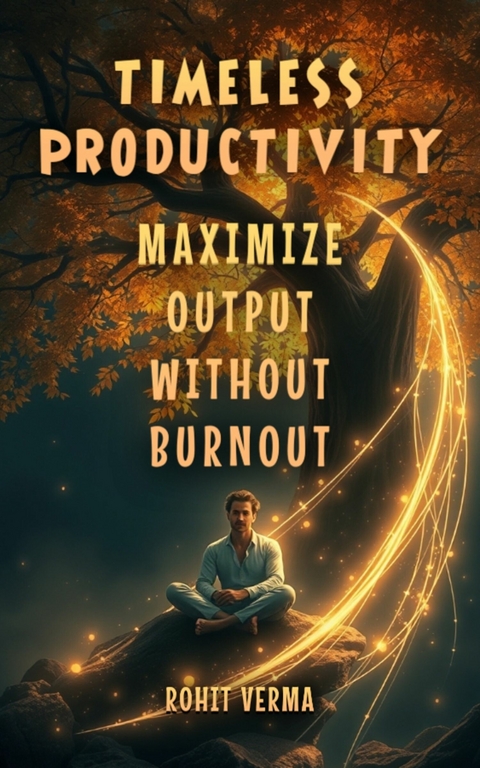
Timeless Productivity (eBook)
56 Seiten
Rohit Verma (Verlag)
978-1-0670818-4-3 (ISBN)
Productivity doesn't have to come at the cost of your well-being. This insightful guide teaches you how to achieve exceptional results while maintaining your health and energy. Learn strategies for sustainable productivity that prevent burnout, optimize your workflow, and help you stay focused without feeling overwhelmed. By implementing the right mindset and habits, you can work smarter, not harder, and find long-term success without sacrificing your personal life or peace of mind.
Chapter 1: The Productivity Paradox: Why Working Harder Isn’t Always the Answer
In our fast-paced world, the drive for success often leads us down a singular path: work harder, longer, and faster. We are taught from an early age that in order to achieve anything significant, we must sacrifice our time, energy, and sometimes even our health. This philosophy is ingrained in our culture through the glorification of "hustle" and "grind" as the ultimate routes to success. However, as many individuals have discovered the hard way, working harder doesn’t always lead to better results—in fact, it can often be counterproductive.
This concept is known as the productivity paradox: the more effort you put into work, the less efficient or productive you may become over time. In this chapter, we will explore why this paradox exists and how you can break free from the idea that "hard work equals success." Instead, we’ll uncover smarter, more effective strategies that align with maintaining your well-being while achieving exceptional results.
The Evolution of Productivity: From Hard Work to Smarter Work
Historically, the notion of productivity was simple: work harder, put in more hours, and you will achieve more. In the industrial age, productivity was closely tied to physical output. People worked long hours in factories or farms, and the more they worked, the more they produced. The key measurement of success was the sheer volume of work completed, and rest was often seen as a luxury, not a necessity.
However, the modern work environment has changed dramatically. We are no longer just producing physical goods—today, we are creators, managers, and knowledge workers. In this digital age, productivity isn’t just about working longer hours; it’s about working smarter, making better decisions, and using technology and cognitive skills efficiently. The complexity of modern work demands that we rethink our traditional approach to productivity.
Yet, despite this shift, the old mindset of "work harder" still dominates many workplaces and personal habits. Many people are trapped in a cycle of endless to-do lists, perpetual meetings, and constant connectivity, believing that more effort will inevitably lead to greater success. This mindset can quickly lead to burnout, decreased efficiency, and a growing sense of frustration.
The Law of Diminishing Returns
One of the core reasons why working harder doesn’t always produce better results is the concept of diminishing returns. Diminishing returns is an economic principle that applies when increasing effort leads to progressively smaller improvements in output. In simpler terms, the more you push yourself beyond a certain point, the less effective each additional unit of effort becomes.
For example, consider a person who works for 10 hours a day. In the first few hours, their productivity is high because they are fresh and focused. However, as they continue working without breaks or rest, their concentration begins to wane. After 6 or 7 hours, they might feel physically and mentally drained, leading to mistakes, missed details, and a significant drop in output. At this stage, working longer hours is likely to be counterproductive—what once took them an hour might now take two due to fatigue, distractions, and cognitive overload.
This principle extends to almost every area of work. When we are exhausted, our ability to think clearly, solve problems, and make decisions decreases. The body’s stress response is triggered, and the brain shifts its focus from higher-order cognitive functions to simply managing stress. In such states, creativity, innovation, and quality of work are compromised. Therefore, the more you push yourself beyond your limit, the less productive you become.
The Impact of Multitasking
Another major reason why working harder doesn’t always equate to being more productive is the myth of multitasking. We often believe that by juggling multiple tasks at once, we are being more efficient. The reality, however, is that multitasking is a productivity killer.
Research has shown that the human brain is not designed to focus on more than one complex task at a time. When we switch between tasks rapidly, our brains must refocus and readjust to each new activity, leading to a significant decrease in productivity. This "task-switching" cost results in lost time and decreased mental energy.
For example, consider a person who is trying to write a report while also answering emails and attending a conference call. While it may seem like they are accomplishing more, in reality, they are likely producing lower-quality work on all tasks due to constant interruptions and shifts in focus. Not only does this lead to errors, but it also results in a greater cognitive load, increasing stress levels and burnout.
Focusing on one task at a time, or adopting a method like time-blocking, where specific chunks of time are dedicated to focused, undistracted work, is far more effective. By eliminating distractions and dedicating your full attention to a single task, you can complete work more efficiently and with greater accuracy.
The Myth of "Busy Equals Productive"
Many people fall into the trap of equating busyness with productivity. If you’re constantly moving from one task to the next, it can feel like you’re accomplishing something. However, not all tasks are created equal, and not all of them contribute meaningfully to your long-term goals.
In fact, being busy can often be a sign that you’re not prioritizing your most important work. A busy schedule can be a result of poor time management, lack of boundaries, or simply reacting to external demands rather than proactively choosing your tasks. When we spend our days reacting to emails, meetings, and urgent requests, we often neglect deep, focused work that requires uninterrupted attention and thought.
A key to maximizing productivity is learning how to differentiate between busywork and high-value work. The most productive individuals are not those who work the longest hours or have the busiest schedules, but those who focus on the tasks that truly move the needle toward their objectives. This requires the ability to prioritize and say no to non-essential tasks that don’t contribute to your goals.
Burnout: The Hidden Cost of Overworking
One of the most significant dangers of the "work harder" mindset is burnout. Burnout is a state of chronic physical and emotional exhaustion caused by prolonged stress and overwork. It can result in a decrease in motivation, a sense of detachment from work, and a decline in overall performance. More than just feeling tired, burnout can lead to serious health issues, including depression, anxiety, and cardiovascular problems.
When we push ourselves too hard without adequate rest, recovery, or balance, our bodies and minds break down. Burnout not only hampers productivity but also negatively impacts our personal lives, relationships, and overall happiness. Ironically, the pursuit of success through hard work can end up sabotaging the very things we are striving for.
To prevent burnout, it’s crucial to embrace the idea of recovery and rest as essential components of a productive lifestyle. Taking breaks, practicing self-care, and setting boundaries are not signs of weakness; they are essential strategies for long-term success. Productivity is not a sprint but a marathon, and pacing yourself over time is key to sustaining high levels of output.
Shifting from Hard Work to Smart Work
So, if working harder isn’t the answer, what is? The key lies in working smarter, not harder. Smart work is about maximizing the effectiveness of the time and energy you invest, rather than simply increasing the volume of work. Here are a few strategies to help you make that shift:
- Time Management Techniques: Utilize time management strategies such as the Pomodoro Technique or time-blocking to structure your workday. These methods allow you to work in focused bursts with regular breaks, which helps maintain energy levels and reduces burnout.
- Prioritize High-Impact Tasks: Focus on the tasks that will have the greatest impact on your long-term goals. Use frameworks like the Eisenhower Matrix to prioritize urgent and important tasks while eliminating distractions.
- Delegate and Outsource: Recognize that you don’t have to do everything yourself. Delegate tasks that others can handle or outsource repetitive or non-essential work. This frees up your time for more meaningful, high-value activities.
- Practice Mindfulness and Focus: Cultivate habits that improve your focus and attention. Meditation, mindfulness exercises, and regular breaks can help reduce stress and increase your ability to concentrate on important tasks.
- Take Rest Seriously: Incorporate rest and recovery into your routine. This includes getting enough sleep, taking vacations, and making time for hobbies or activities that recharge you. Remember, your productivity is directly tied to your ability to rest and recover.
- Learn to Say No: One of the most powerful productivity tools is the ability to say no. Saying yes to everything spreads you thin and leads to burnout. Be selective about the commitments you take on, and protect your time for what truly matters.
The productivity paradox highlights the fallacy that working harder is always the key to achieving more. In reality, pushing yourself beyond your limits without considering the quality of your work, the importance of rest, and the impact on your mental and physical health often leads...
| Erscheint lt. Verlag | 9.5.2025 |
|---|---|
| Sprache | englisch |
| Themenwelt | Sachbuch/Ratgeber ► Gesundheit / Leben / Psychologie ► Lebenshilfe / Lebensführung |
| Schlagworte | burnout prevention • Efficiency • focus • Productivity • Sustainable Success • Time Management • work life balance |
| ISBN-10 | 1-0670818-4-4 / 1067081844 |
| ISBN-13 | 978-1-0670818-4-3 / 9781067081843 |
| Informationen gemäß Produktsicherheitsverordnung (GPSR) | |
| Haben Sie eine Frage zum Produkt? |
 EPUB (Ohne DRM)
Digital Rights Management: ohne DRM
Dieses eBook enthält kein DRM oder Kopierschutz. Eine Weitergabe an Dritte ist jedoch rechtlich nicht zulässig, weil Sie beim Kauf nur die Rechte an der persönlichen Nutzung erwerben.
Dateiformat: EPUB (Electronic Publication)
EPUB ist ein offener Standard für eBooks und eignet sich besonders zur Darstellung von Belletristik und Sachbüchern. Der Fließtext wird dynamisch an die Display- und Schriftgröße angepasst. Auch für mobile Lesegeräte ist EPUB daher gut geeignet.
Systemvoraussetzungen:
PC/Mac: Mit einem PC oder Mac können Sie dieses eBook lesen. Sie benötigen dafür die kostenlose Software Adobe Digital Editions.
eReader: Dieses eBook kann mit (fast) allen eBook-Readern gelesen werden. Mit dem amazon-Kindle ist es aber nicht kompatibel.
Smartphone/Tablet: Egal ob Apple oder Android, dieses eBook können Sie lesen. Sie benötigen dafür eine kostenlose App.
Geräteliste und zusätzliche Hinweise
Buying eBooks from abroad
For tax law reasons we can sell eBooks just within Germany and Switzerland. Regrettably we cannot fulfill eBook-orders from other countries.
aus dem Bereich