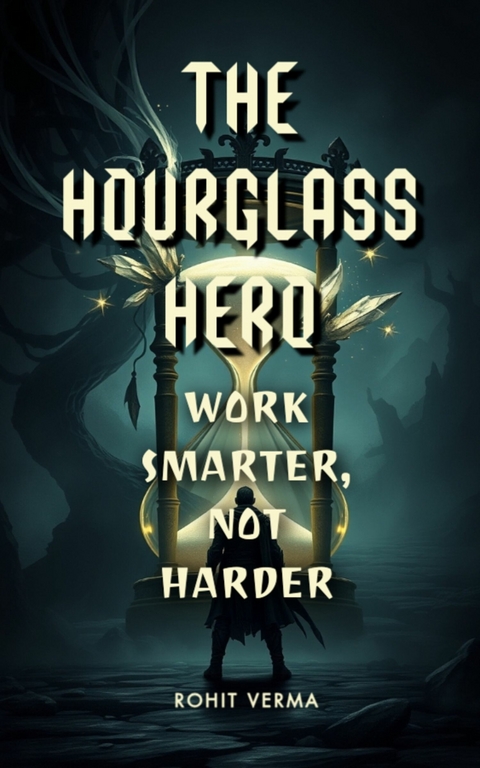
The Hourglass Hero (eBook)
53 Seiten
Rohit Verma (Verlag)
9781067081836 (ISBN)

Success isn't about working longer hours, but about working more efficiently. This practical guide reveals how to optimize your efforts and make the most of your time and energy. Learn to prioritize high-impact tasks, streamline your processes, and reduce unnecessary work. By mastering smart strategies for productivity, you'll achieve more while maintaining balance and avoiding burnout. The Hourglass Hero teaches you to become the master of your time, maximizing your results with less effort.
Chapter 2: The Hourglass Framework
Time is one of the most precious resources we have, yet it's often the one we misuse the most. We find ourselves overwhelmed by endless tasks, juggling multiple priorities, and still feeling like we’re not getting ahead. This frustration is common, but it doesn’t have to be the norm.
The key to achieving more in less time isn’t about working harder or longer—it’s about working smarter. And one of the most effective ways to do this is by adopting a new approach to time management. Enter The Hourglass Framework—a unique method that can help you structure your day, your week, and even your year in a way that maximizes focus, energy, and output while maintaining balance and avoiding burnout.
The hourglass is a simple yet powerful symbol for how we can manage our time more effectively. Just like an hourglass, your day and your work can be divided into two phases: a narrow focus at the top and a wide, expansive impact at the bottom. By understanding and applying the principles of the Hourglass Framework, you’ll learn how to focus on high-priority tasks, eliminate distractions, and leverage your energy for the greatest return.
In this chapter, we’ll break down this framework and how you can use it to transform your approach to work, time, and productivity. It’s time to stop drowning in an endless to-do list and start being intentional with your time.
The Hourglass Framework: An Overview
The Hourglass Framework is built on the idea that effective time management is not about squeezing more tasks into your day, but about creating a flow where your most important work happens during focused, intentional bursts of energy, followed by spacious periods for reflection, rest, and strategy. This framework is divided into two main phases:
- The Narrow Top (Focus)
- The top of the hourglass represents your concentrated effort on high-priority tasks. This is where you focus your energy and time on the most important, impactful actions that drive your goals forward. This phase is about quality, not quantity.
- The Wide Bottom (Impact)
- The bottom of the hourglass is where your work expands and multiplies in impact. After deep focus and strategic work, you spend time reflecting, planning, and building systems that allow your efforts to create ripple effects across your projects, teams, and personal life.
By balancing these two phases, you ensure that your work is purposeful and sustainable. The goal is to avoid the trap of constantly pushing yourself to “do more” and instead prioritize doing the right things with intention and focus.
The Narrow Top: Where Focused Action Happens
The first part of the Hourglass Framework, the narrow top, is about concentrated work. This is where you put your energy into the tasks that matter the most—the ones that will have the greatest impact on your goals and success. In our hyper-connected world, distractions are everywhere. Social media, emails, meetings, and endless to-do lists can scatter our focus. But real progress comes from dedicating specific blocks of time to focus solely on high-priority tasks.
1. Identifying Your Most Important Tasks
To make the most of the narrow top, you first need to identify your most important tasks (MITs). These are the tasks that directly contribute to your long-term goals, growth, and success. The MITs are not the tasks that fill up your calendar or your to-do list, but those that actually move the needle in your life and work. Here’s how to identify them:
- Clarify Your Goals: Start by getting clear on your short- and long-term goals. What do you want to accomplish in the next six months? The next year? Break these down into tangible, actionable steps.
- Use the 80/20 Rule (Pareto Principle): Focus on the 20% of tasks that will generate 80% of your desired results. This might mean focusing on client relationships, product development, or strategic partnerships rather than spending time on menial administrative tasks.
- Apply the Eisenhower Matrix: Prioritize your tasks by urgency and importance. Focus on tasks that are both urgent and important, while eliminating or delegating those that are neither.
Once you’ve identified your MITs, you’re ready to dedicate focused blocks of time to these tasks, free from distractions.
2. Creating Time Blocks for Deep Work
The key to the narrow top is deep work—the practice of working on a task with full concentration and no interruptions. Deep work is when you are fully immersed in a task and operating at your highest level of productivity. To cultivate this, you’ll need to set aside time blocks in your schedule where you can work without distractions.
Here are some tips for creating productive time blocks:
- Time Block Your Day: Divide your day into specific time blocks where you focus on your MITs. For example, you might block 9:00 AM to 11:00 AM for writing, followed by a break, then 1:00 PM to 3:00 PM for meetings or strategic planning.
- Eliminate Distractions: Turn off notifications, put your phone on airplane mode, and close irrelevant tabs on your computer. Consider using apps like Focus@Will or Noisli to maintain concentration.
- Set a Timer: Use a timer (such as the Pomodoro Technique) to work in 25-minute bursts with 5-minute breaks in between. This helps maintain focus and reduces mental fatigue.
- Work in the Right Environment: Create an environment conducive to deep work. This may mean finding a quiet space or setting up an ergonomic workspace that minimizes distractions and enhances focus.
By focusing on your MITs and committing to deep work, you’ll make significant progress in less time. The narrow top of the hourglass is about making every moment of work count.
The Wide Bottom: Creating Impact Through Systems and Reflection
The second phase of the Hourglass Framework is the wide bottom. This phase represents the impact of your focused work and how you amplify your efforts through reflection, planning, and systems. After concentrated work, it’s important to take a step back, review what you’ve accomplished, and assess how your work is impacting your broader goals.
1. The Power of Reflection
Reflection is a critical aspect of the wide bottom. After deep work, you need to take time to step back and evaluate your progress. This allows you to identify what’s working, what isn’t, and how you can adjust your approach for even greater impact.
- Weekly Reflection: Set aside time each week to review your accomplishments. What did you achieve in the past week? What were your biggest wins? Where did you fall short? Reflection gives you the clarity you need to course-correct and continue moving forward.
- Quarterly Reviews: Every few months, conduct a deeper review of your overall progress. Are you still aligned with your long-term goals? What adjustments need to be made to your strategy? This helps ensure you’re on track and that your efforts are producing the desired results.
2. Building Systems for Efficiency
To create lasting impact, you need to build systems that allow your efforts to scale. Systems are the processes, routines, and habits that enable you to work more efficiently and avoid reinventing the wheel each time you need to accomplish something. The goal is to automate or streamline repetitive tasks so you can focus on the work that requires your unique skill and expertise.
Here’s how to build systems that work for you:
- Automate Repetitive Tasks: Use tools and technology to automate tasks such as scheduling, email responses, and data entry. Apps like Zapier, Calendly, and Asana can automate routine tasks, freeing up time for more valuable work.
- Delegate: Not everything requires your personal attention. Look for opportunities to delegate tasks to others, whether through outsourcing or hiring additional help. This will allow you to focus on the tasks that require your expertise and creativity.
- Create Standard Operating Procedures (SOPs): If there are tasks you do regularly, develop clear procedures for them. This ensures that every time the task is performed, it’s done efficiently and effectively, without requiring constant supervision.
3. Rest and Recharge: The Foundation of Long-Term Impact
In the wide bottom, it’s also crucial to make room for rest and recharge. This might seem counterintuitive, but it’s during these moments of relaxation and recovery that your mind can process what you’ve learned and come up with new ideas. Sustainable impact comes from knowing when to slow down and allow your brain to reset.
- Scheduled Downtime: Block time in your calendar for rest. This might be a walk outside, a vacation, or simply an evening off from work. Consistent rest ensures that you stay refreshed and can continue to operate at your highest level.
- Creative Breaks: Take breaks not just to rest, but also to engage in activities that stimulate creativity. Reading, exercising, and spending time with loved ones are excellent ways to refresh your mind and body.
By creating systems, reflecting regularly, and allowing yourself time to rest, you maximize the impact of your focused work. The wide bottom is where your concentrated effort transforms into meaningful, lasting results.
Balancing the Hourglass for Smarter Work
The Hourglass Framework provides a powerful...
| Erscheint lt. Verlag | 9.5.2025 |
|---|---|
| Sprache | englisch |
| Themenwelt | Sachbuch/Ratgeber ► Gesundheit / Leben / Psychologie ► Lebenshilfe / Lebensführung |
| Schlagworte | burnout prevention • Efficiency • Productivity • self discipline • Task Management • time optimization • work smarter |
| ISBN-13 | 9781067081836 / 9781067081836 |
| Informationen gemäß Produktsicherheitsverordnung (GPSR) | |
| Haben Sie eine Frage zum Produkt? |
 EPUB (Ohne DRM)
Digital Rights Management: ohne DRM
Dieses eBook enthält kein DRM oder Kopierschutz. Eine Weitergabe an Dritte ist jedoch rechtlich nicht zulässig, weil Sie beim Kauf nur die Rechte an der persönlichen Nutzung erwerben.
Dateiformat: EPUB (Electronic Publication)
EPUB ist ein offener Standard für eBooks und eignet sich besonders zur Darstellung von Belletristik und Sachbüchern. Der Fließtext wird dynamisch an die Display- und Schriftgröße angepasst. Auch für mobile Lesegeräte ist EPUB daher gut geeignet.
Systemvoraussetzungen:
PC/Mac: Mit einem PC oder Mac können Sie dieses eBook lesen. Sie benötigen dafür die kostenlose Software Adobe Digital Editions.
eReader: Dieses eBook kann mit (fast) allen eBook-Readern gelesen werden. Mit dem amazon-Kindle ist es aber nicht kompatibel.
Smartphone/Tablet: Egal ob Apple oder Android, dieses eBook können Sie lesen. Sie benötigen dafür eine kostenlose App.
Geräteliste und zusätzliche Hinweise
Buying eBooks from abroad
For tax law reasons we can sell eBooks just within Germany and Switzerland. Regrettably we cannot fulfill eBook-orders from other countries.
aus dem Bereich