Celtic Mythology and the Religion of the Ancient Celts (eBook)
62 Seiten
Charles River Editors (Verlag)
978-1-4753-3247-6 (ISBN)
'Throughout all of Gaul there are two classes of people who are treated with dignity and honor. This does not include the common people, who are little better than slaves and never have a voice in councils. Many of these align themselves with a patron voluntarily, whether because of debt or heavy tribute or out of fear of retribution by some other powerful person. Once they do this, they have given up all rights and are scarcely better than servants. The two powerful classes mentioned above are the Druids and the warriors. Druids are concerned with religious matters, public and private sacrifices, and divination.' - Julius Caesar
The Celts are one of the most well-known groups in Europe and one of the least understood. Depending on which classifications are used, the Celts are also one of the oldest civilizations in Europe. In the centuries before Christ, the Celts were spread out across much of continental Europe, and though they are mostly identified with Gaul, evidence suggests they also spread as far as Portugal. Though they were spread out across Europe before the height of the Roman Empire, most people associate the Celts with the British Isles today, particularly Ireland and Scotland. After they had been relegated to those smaller regions as a result of the Romans and other migrations, the culture of the Celts as it is currently understood began to congeal during the Early Middle Ages, and Celtic culture, folklore, and legend have all become inextricably intertwined with Irish history and British history as a whole.
Historically, Celtic cultures differ from their English and French neighbors in a number of ways, including social organization, language, values and economic systems, but one of the most captivating of these has always been their myths. Celtic Myths, which can be read in translation without needing special training in grammar, are more accessible than the Celtic languages, and unlike the other distinctive features that have faded over the centuries, myths still have their immediacy and power when read today. While much has undoubtedly been lost from the ancient Celts over time, medieval manuscripts help scholars understand how Celtic myths have reached the form they have today. Like many ancient belief systems, Celtic mythology shares Indo-European roots, meaning Celtic beliefs have cousins in related societies like the Norse, Greeks, Romans and Slavs, with a foundation of shared mythmaking that goes back several millennia. Descriptions of Celtic mythology by their contemporaries, including the Ancient Romans and Greeks, provide a hazy picture, while the tales recorded by Christian monks and undoubtedly bear the stamp of their own religious affiliations.
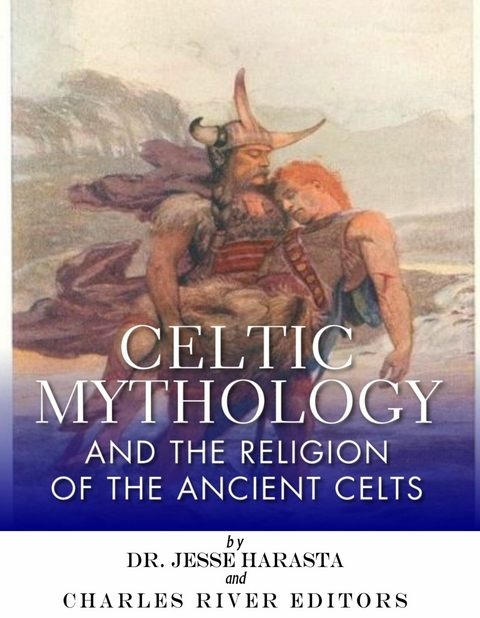
Celtic Mythology: The Religion of the Ancient Celts examines the history and legacy of the religion practiced by the Ancient Celts. Along with pictures and a bibliography, you will learn about Celtic mythology like you never have before, in no time at all.
"e;Throughout all of Gaul there are two classes of people who are treated with dignity and honor. This does not include the common people, who are little better than slaves and never have a voice in councils. Many of these align themselves with a patron voluntarily, whether because of debt or heavy tribute or out of fear of retribution by some other powerful person. Once they do this, they have given up all rights and are scarcely better than servants. The two powerful classes mentioned above are the Druids and the warriors. Druids are concerned with religious matters, public and private sacrifices, and divination."e; - Julius CaesarThe Celts are one of the most well-known groups in Europe and one of the least understood. Depending on which classifications are used, the Celts are also one of the oldest civilizations in Europe. In the centuries before Christ, the Celts were spread out across much of continental Europe, and though they are mostly identified with Gaul, evidence suggests they also spread as far as Portugal. Though they were spread out across Europe before the height of the Roman Empire, most people associate the Celts with the British Isles today, particularly Ireland and Scotland. After they had been relegated to those smaller regions as a result of the Romans and other migrations, the culture of the Celts as it is currently understood began to congeal during the Early Middle Ages, and Celtic culture, folklore, and legend have all become inextricably intertwined with Irish history and British history as a whole.Historically, Celtic cultures differ from their English and French neighbors in a number of ways, including social organization, language, values and economic systems, but one of the most captivating of these has always been their myths. Celtic Myths, which can be read in translation without needing special training in grammar, are more accessible than the Celtic languages, and unlike the other distinctive features that have faded over the centuries, myths still have their immediacy and power when read today. While much has undoubtedly been lost from the ancient Celts over time, medieval manuscripts help scholars understand how Celtic myths have reached the form they have today. Like many ancient belief systems, Celtic mythology shares Indo-European roots, meaning Celtic beliefs have cousins in related societies like the Norse, Greeks, Romans and Slavs, with a foundation of shared mythmaking that goes back several millennia. Descriptions of Celtic mythology by their contemporaries, including the Ancient Romans and Greeks, provide a hazy picture, while the tales recorded by Christian monks and undoubtedly bear the stamp of their own religious affiliations.Celtic Mythology: The Religion of the Ancient Celts examines the history and legacy of the religion practiced by the Ancient Celts. Along with pictures and a bibliography, you will learn about Celtic mythology like you never have before, in no time at all.
| Erscheint lt. Verlag | 2.5.2025 |
|---|---|
| Sprache | englisch |
| Themenwelt | Sachbuch/Ratgeber ► Geschichte / Politik ► Vor- und Frühgeschichte / Antike |
| Geschichte ► Allgemeine Geschichte ► Altertum / Antike | |
| Schlagworte | Babylon • Caesar • Druids • Europe • Greek • Ireland • Rome |
| ISBN-10 | 1-4753-3247-5 / 1475332475 |
| ISBN-13 | 978-1-4753-3247-6 / 9781475332476 |
| Informationen gemäß Produktsicherheitsverordnung (GPSR) | |
| Haben Sie eine Frage zum Produkt? |
 EPUB (Ohne DRM)
Digital Rights Management: ohne DRM
Dieses eBook enthält kein DRM oder Kopierschutz. Eine Weitergabe an Dritte ist jedoch rechtlich nicht zulässig, weil Sie beim Kauf nur die Rechte an der persönlichen Nutzung erwerben.
Dateiformat: EPUB (Electronic Publication)
EPUB ist ein offener Standard für eBooks und eignet sich besonders zur Darstellung von Belletristik und Sachbüchern. Der Fließtext wird dynamisch an die Display- und Schriftgröße angepasst. Auch für mobile Lesegeräte ist EPUB daher gut geeignet.
Systemvoraussetzungen:
PC/Mac: Mit einem PC oder Mac können Sie dieses eBook lesen. Sie benötigen dafür die kostenlose Software Adobe Digital Editions.
eReader: Dieses eBook kann mit (fast) allen eBook-Readern gelesen werden. Mit dem amazon-Kindle ist es aber nicht kompatibel.
Smartphone/Tablet: Egal ob Apple oder Android, dieses eBook können Sie lesen. Sie benötigen dafür eine kostenlose App.
Geräteliste und zusätzliche Hinweise
Buying eBooks from abroad
For tax law reasons we can sell eBooks just within Germany and Switzerland. Regrettably we cannot fulfill eBook-orders from other countries.
aus dem Bereich