


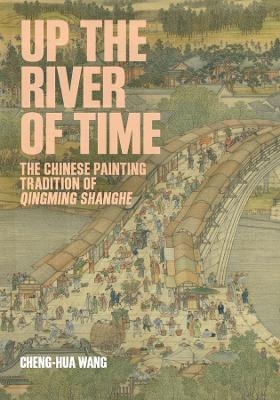
Up the River of Time
The Chinese Painting Tradition of Qingming Shanghe
Seiten
2026
Harvard University, Asia Center (Verlag)
978-0-674-30261-7 (ISBN)
Harvard University, Asia Center (Verlag)
978-0-674-30261-7 (ISBN)
- Noch nicht erschienen (ca. März 2026)
- Versandkostenfrei
- Auch auf Rechnung
- Artikel merken
Qingming shanghe, dubbed China’s Mona Lisa, is a revered painting attributed to Zhang Zeduan (960–1127). Up the River of Time is the first study to treat the Qingming shanghe as a painting tradition, showing how the Northern Song original and later iterations shaped the norms of painting and redefined the meanings of reproduction and forgery.
Qingming shanghe (Up the River during Qingming), dubbed China’s Mona Lisa, is a painting whose primordial version is attributed to Zhang Zeduan, a painter who lived during the Northern Song dynasty (960–1127). It is so revered that to this day there exist more than one hundred handscroll paintings with this title, including the original and later versions produced during the late Ming through the High Qing. Up the River of Time is the first study in any language to treat the entire cultural constellation of Qingming shanghe as a painting tradition. Cheng-hua Wang investigates how the original Northern Song version—deemed a classic in art-historical research—and its later iterations shaped the norms of painting, triggered cultural associations, fostered the genre of cityscapes, and redefined the meanings of “reproduction” and “forgery.” By studying the thematic links between the painting’s various versions and tracing their development over several centuries, Wang leads us to revisit China’s painting history. Such a focus that pivots toward broad considerations of thematic and cultural significance prompts a reassessment of what defines artistic value. Over time, Qingming shanghe catalyzed a new artistic culture in China.
Qingming shanghe (Up the River during Qingming), dubbed China’s Mona Lisa, is a painting whose primordial version is attributed to Zhang Zeduan, a painter who lived during the Northern Song dynasty (960–1127). It is so revered that to this day there exist more than one hundred handscroll paintings with this title, including the original and later versions produced during the late Ming through the High Qing. Up the River of Time is the first study in any language to treat the entire cultural constellation of Qingming shanghe as a painting tradition. Cheng-hua Wang investigates how the original Northern Song version—deemed a classic in art-historical research—and its later iterations shaped the norms of painting, triggered cultural associations, fostered the genre of cityscapes, and redefined the meanings of “reproduction” and “forgery.” By studying the thematic links between the painting’s various versions and tracing their development over several centuries, Wang leads us to revisit China’s painting history. Such a focus that pivots toward broad considerations of thematic and cultural significance prompts a reassessment of what defines artistic value. Over time, Qingming shanghe catalyzed a new artistic culture in China.
Cheng-hua Wang is an Associate Professor of Art and Archaeology at Princeton University.
| Erscheint lt. Verlag | 17.3.2026 |
|---|---|
| Reihe/Serie | Harvard-Yenching Institute Monograph Series |
| Zusatzinfo | 2 photos, 92 color photos, 1 table |
| Sprache | englisch |
| Maße | 216 x 279 mm |
| Themenwelt | Kunst / Musik / Theater ► Kunstgeschichte / Kunststile |
| Sachbuch/Ratgeber ► Freizeit / Hobby ► Malen / Zeichnen | |
| Geisteswissenschaften ► Geschichte ► Regional- / Ländergeschichte | |
| ISBN-10 | 0-674-30261-3 / 0674302613 |
| ISBN-13 | 978-0-674-30261-7 / 9780674302617 |
| Zustand | Neuware |
| Informationen gemäß Produktsicherheitsverordnung (GPSR) | |
| Haben Sie eine Frage zum Produkt? |
Mehr entdecken
aus dem Bereich

aus dem Bereich
das große Buch der Tierporträts
Buch | Softcover (2025)
Edition Michael Fischer / EMF Verlag
CHF 34,90
alle wichtigen Grundlagen und experimentelle Wege, um ausdrucksstarke …
Buch | Hardcover (2025)
Edition Michael Fischer (Verlag)
CHF 36,90


