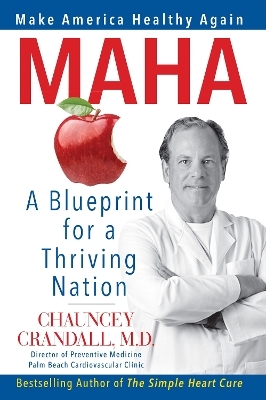
MAHA
Humanix Books (Verlag)
978-1-63006-314-6 (ISBN)
A simple message EVERYONE needs to hear and heed, NOW!
MAKE AMERICA HEALTHY AGAIN
Dr Chauncey Crandall—world-renowned cardiologist and author of the bestselling, groundbreaking The Simple Heart Cure—presents a comprehensive blueprint for improving public health in America, by addressing not just individuals’ behaviors, but systemic issues, policy changes, and societal shifts needed to create a healthier Nation, and WORLD!
The path to making America healthy again requires a holistic approach that integrates individual responsibility with comprehensive policy changes. By embracing the principles of preventive care, prioritizing mental well-being, and promoting equity in health access, we can lay the foundation for a thriving, resilient nation.
A healthier America is not only possible—it is essential for the well-being of future generations. By acting now, both at the personal and policy levels, we can create a society where every individual can live a long, healthy, and fulfilling life. Let this book be a call to action for everyone: to take steps today toward a healthier tomorrow and to work collectively toward building a nation that values health as its greatest wealth.
MAHA explores the many facets of America's health crisis, offering a comprehensive roadmap for how individuals, communities, and governments can work together to create a healthier nation. Here are the key takeaways and solutions from each chapter, emphasizing the dual responsibility of personal actions and systemic changes needed to address the current challenges:
Key Actions for Individuals:
Adopt a Healthy Diet (Food as Medicine): Choose whole foods, reduce processed food intake, and focus on a plant-based, nutrient-rich diet. This approach can prevent and even reverse many chronic conditions.
Incorporate Regular Movement (Rethinking Exercise): Make physical activity a daily habit, whether through walking, stretching, or functional exercises. Consistency, rather than intensity, is key to reaping the benefits of regular movement.
Prioritize Mental Health: Practice mindfulness, meditation, and seek support when needed. Mental well-being is foundational to overall health, and addressing stress and anxiety can lead to better physical health outcomes.
Engage in Preventive Healthcare: Regular check-ups and screenings are vital for early detection and prevention of disease. Take charge of your health by staying informed and proactive about your healthcare needs.
Build Strong Social Connections: Strengthen ties with family, friends, and community groups. Social support plays a crucial role in mental and physical health, reducing the risk of isolation and promoting resilience.
Advocate for Personal Health Rights: Stay informed about health policies and advocate for transparent, patient-centered healthcare. Use your voice to support better access to healthcare and policies that prioritize preventive care.
Key Actions for Government and Communities:
Reform Healthcare Policy for Prevention: Shift focus from reactive treatment to preventive care. Policies should prioritize early interventions, lifestyle education, and access to primary care, reducing the burden of chronic diseases.
Promote Access to Healthy Food: Implement policies that make nutritious foods more affordable and accessible, particularly in food deserts. Support local farming, improve food labeling, and incentivize healthier food options in schools and public institutions.
Invest in Urban Planning for Active Living: Design walkable cities with accessible green spaces, bike lanes, and safe recreational areas. By creating environments that encourage physical activity, communities can foster healthier lifestyles.
Address Mental Health at the Policy Level: Increase funding for mental health services and integrate mental health care into primary care settings. Public awareness campaigns can help reduce stigma and encourage people to seek the help they need.
Combat Health Misinformation: Launch educational campaigns to provide accurate, evidence-based information on health topics, including the risks and benefits of vaccinations. Support health literacy programs to help the public make informed decisions.
Support Health Equity Initiatives: Tackle systemic health disparities by improving access to quality healthcare, nutritious food, and safe environments, especially in underserved communities. Policies should address the social determinants of health to ensure fair opportunities for all.
Promote Sustainable Health Practices: Implement environmental policies that reduce pollution and support sustainable farming. A focus on eco-health initiatives can improve public health and protect the planet for future generations.
Dr Crandall has been heralded for his values and message of hope to all his patients, and believes in using every weapon in his medical arsenal — conventional medicine, emerging treatments, lifestyle changes, even alternative therapies — to help his patients recover.
Dr Crandall’s MAHA is a vision for a healthier future for America and the world.
DR. CHAUNCEY CRANDALL IV, M.D., F.A.C.C. is a world-renowned Cardiologist practicing medicine in Palm Beach Florida, as well as the author of The Simple Heart Cure: The 90-Day Program to Stop & Reverse Heart Disease, The Simple Heart Cure Diet and Meal Plan, Touching Heaven and Raising the Dead. He also writes a popular monthly newsletter which is published by Newsmax Media: Dr. Crandall’s Heart Health Report. He has been heralded for his values and message of hope to all his patients. Dr. Crandall is currently Assistant Professor of Medicine at Mount Sinai Heart New York and the Director of Preventive Medicine and Complex Cardiology at the Mount Sinai Heart New York–Palm Beach, FL. Dr. Crandall practices interventional, vascular, and transplant cardiology. Dr. Crandall received his post-doctoral training in Internal Medicine at Yale University School of Medicine where he also completed three years of research in the Cardiovascular Surgery Division. Dr. Crandall completed his Cardiology Fellowship training at Beth Israel Hospital and Mt. Sinai Medical Center in New York City and completed advanced Interventional Cardiology Fellowship training at the Medical College of Virginia. Following his Interventional Fellowship training, Dr. Crandall remained at the Medical College of Virginia for six years as Assistant Professor of Medicine and as Chief of the Heart Transplant Program, Director of Medical Education and Director of Cardiac Critical Care. In 1993, Dr. Crandall accepted a Faculty Professor appointment at the Duke University School of Medicine Cardiovascular Division and relocated to Palm Beach, Florida where he established the Duke University Interventional Cardiology Program – Palm Beach. Dr. Crandall has continued his private and academic practice in the Palm Beach area and is currently on staff at the Palm Beach Gardens Medical Center, Good Samaritan Medical Center, Jupiter Medical Center, and Icahn School of Medicine at Mount Sinai in New York. Dr. Crandall has lectured both nationally and internationally on topics that include heart transplantation, interventional cardiology, preventive cardiology, cardiology health care of the elderly and medical care to the poor in third world nations. He speaks regularly to professional groups and with the speaking team of international evangelist Reinhard Bonnke. Dr. Crandall is also Chairman of the non-profit Chadwick Foundation and devotes extensive time to missionary based medicine and education in the Caribbean, Africa, South America, Europe, and Haiti. Chauncey Crandall IV, M.D. is an eleventh generation American, born and raised in Virginia just outside Washington D.C. His background includes seven generations of ministers, some of which helped birth religious freedom in the New World. Dr. Crandall runs after all that God has to offer and is not afraid to walk firmly in his faith. He walks in bold humility and his faith in God has led him to see countless miracles. He lectures and ministers on a national and international level. He is committed to his Savior, the power of the Holy Spirit, and his family. https://chaunceycrandall.com/ http://crandallreport.com/
TABLE OF CONTENTS to MAHA: MAKE AMERICA HEALTHY AGAIN: A BLUEPRINT FOR A THRIVING NATION by Dr. Chauncey CrandallChapter 1: The Health Crisis in America
Overview of the current health crisis in the United States.
Statistics on obesity, chronic disease, mental health, and addiction.
Factors contributing to the decline in national health (diet, lifestyle, healthcare access, environmental factors).
The economic and societal costs of poor health.
Chapter 2: Food as Medicine
The power of nutrition in preventing and reversing disease.
Analysis of the Standard American Diet (SAD) and its health consequences.
Importance of whole foods, plant-based diets, and reducing processed foods.
How food policy impacts public health.
Case studies of individuals or communities that have improved health through diet changes.
Chapter 3: Rethinking Exercise: Movement for Every Body
Importance of physical activity for overall health and longevity.
Debunking common exercise myths (e.g., you need a gym, high-intensity workouts are the only way).
Accessible ways to incorporate movement into daily life (walking, stretching, functional fitness).
How cities and workplaces can promote active living.
Profiles of programs successfully getting people moving.
Chapter 4: Mental Health Matters
The mental health epidemic in America: stress, anxiety, depression, and burnout.
Impact of social media, technology, and modern lifestyles on mental well-being.
Addressing stigma around mental illness and seeking care.
Holistic approaches to mental health, including mindfulness, therapy, and social connections.
Policy recommendations for improving mental health services.
Chapter 5: A New Healthcare Paradigm
Overview of the U.S. healthcare system and its challenges (costs, accessibility, focus on treatment rather than prevention).
The need for a preventive approach to healthcare.
Examples of successful healthcare models that prioritize preventive care and holistic treatments.
How healthcare policy can be reshaped to focus on long-term health outcomes.
Chapter 6: Building Healthy Communities
The role of environment and community in shaping health outcomes.
How urban design and green spaces can promote well-being.
The importance of access to fresh foods, clean air, and safe places to exercise.
Community-led health initiatives and their success stories.
Policies and programs that can foster healthier neighborhoods.
Chapter 7: Fixing the Food System
The impact of industrial agriculture on public health and the environment.
Addressing food deserts and food insecurity in urban and rural areas.
The rise of organic, local, and regenerative farming as alternatives.
How government policies can support healthier, more sustainable food systems.
Role of schools and institutions in shaping food habits.
Chapter 8: The Role of Technology in Health
How digital health tools are transforming care delivery (telemedicine, fitness trackers, health apps).
The potential and pitfalls of wearable technology for tracking health.
How artificial intelligence and big data can help predict and prevent disease.
Privacy concerns and ethical considerations in digital health.
Future trends in health technology.
Chapter 9: Combating Health Misinformation
The dangers of misinformation in public health (e.g., anti-vaccine movements, fad diets, and pseudoscience).
How social media amplifies health myths and false information.
Tools for identifying reliable health sources.
Strategies for public health campaigns to combat misinformation.
The role of education in fostering health literacy.
Chapter 10: The Corporate Influence on Health
How corporate interests (food, pharma, insurance) shape public health policies and consumer behaviors.
The influence of advertising on diet, lifestyle, and healthcare choices.
Case studies of corporate initiatives that have either harmed or helped public health.
The role of corporate responsibility and ethics in promoting a healthier nation.
How to hold corporations accountable for their impact on public health.
Chapter 11: Health Equity: Bridging the Gaps
Addressing health disparities across racial, socioeconomic, and geographic lines.
The intersection of health and social justice.
How systemic inequalities impact access to care, nutrition, and fitness.
Successful initiatives that are closing the health equity gap.
Policy recommendations to ensure that all Americans have access to health resources.
Chapter 12: A Sustainable Future for Health
The connection between environmental sustainability and public health.
How climate change, pollution, and resource depletion are impacting human health.
Strategies for making healthcare and food production more sustainable.
The role of policy in supporting a sustainable health system.
Inspiring examples of eco-health initiatives.
Chapter 13: Resilience and Immunity: Strengthening America’s Defense
Understanding the immune system and its role in overall health.
The impact of stress, diet, and lifestyle on immunity.
How to build personal resilience through nutrition, movement, and mental well-being.
The importance of community resilience in the face of pandemics and health crises.
A roadmap for boosting national immunity and preparedness.
Chapter 14: Public Policy for a Healthier Nation
The role of government in shaping public health (taxes on sugary drinks, food labeling, healthcare access).
Lessons from other countries with healthier populations.
How grassroots movements can influence public health policy.
Roadmap for enacting legislative changes to improve public health outcomes.
How local, state, and federal levels can collaborate to promote health.
Chapter 15: A Call to Action: Making America Healthy Again
Summarizing key takeaways from the book.
How individuals, communities, and policymakers can contribute to a healthier nation.
The economic and social benefits of prioritizing public health.
Vision for the future: What a healthy America would look like.
A personal call for readers to take steps toward improving their own health and the health of their community.
| Erscheinungsdatum | 24.10.2025 |
|---|---|
| Zusatzinfo | Illustrations |
| Verlagsort | Boca Raton, FL |
| Sprache | englisch |
| Maße | 127 x 203 mm |
| Themenwelt | Sachbuch/Ratgeber ► Gesundheit / Leben / Psychologie ► Alternative Heilverfahren |
| Medizin / Pharmazie ► Gesundheitsfachberufe | |
| Medizin / Pharmazie ► Gesundheitswesen | |
| Medizin / Pharmazie ► Naturheilkunde | |
| Studium ► Querschnittsbereiche ► Prävention / Gesundheitsförderung | |
| Sozialwissenschaften ► Politik / Verwaltung ► Staat / Verwaltung | |
| ISBN-10 | 1-63006-314-2 / 1630063142 |
| ISBN-13 | 978-1-63006-314-6 / 9781630063146 |
| Zustand | Neuware |
| Informationen gemäß Produktsicherheitsverordnung (GPSR) | |
| Haben Sie eine Frage zum Produkt? |
aus dem Bereich