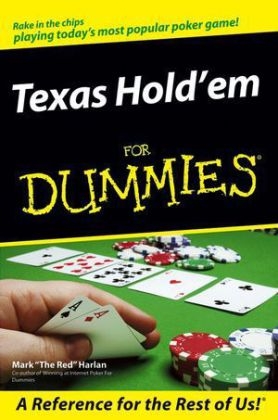
Texas Hold'em For Dummies
For Dummies (Verlag)
978-0-470-04604-3 (ISBN)
- Titel erscheint in neuer Auflage
- Artikel merken
Want to play — and win — poker's hottest game?
Turn on the TV, drop by a newsstand, or just browse the checkout your local supermarket and you'll see firsthand that Texas Hold 'Em is the poker game everyone's playing. It's a game that's deceptively simple, yet within its easy framework you’ll find truth and trickery, boredom and fear, skill and misfortune—in other words, all the things that make life fun and worth living! Texas Hold'em For Dummies introduces you to the fundamental concepts and strategies of this wildly popular game. It covers the rules for playing and betting, odds, etiquette, Hold'em lingo, and offers sound advice to avoid mistakes. This handy reference guide gives new and even seasoned players winning strategies and tactics not just for playing the game, but for winning. You'll learn:
Rules and strategies for limit, no-limit, tournament, and online play
How to "play" the other players
The importance of your bankroll—recommended sizes and more
Hands you should and should not play
How to camouflage your play and dodge traps
When, who, and how to bluff
How to maximize your win with check-raising and trapping
The different approaches for playing in private games, casinos, card rooms, tournaments, and on the Internet
How to use mathematics to your advantage
Texas Hold 'Em is a game of both skill and chance. But it's a game that can be beaten, and whether you want to make money, sharpen your game, or just have a good time, Texas Hold 'Em for Dummies will give you the winning edge.
Mark “The Red” Harlan was born in Rawlins, Wyoming, and has lived exactly the life you’d expect as a result. Armed with a degree in Applied Mathematics (from a university he loathes so much that he refuses to even utter the name), he fell headlong into a 20-year stint in the Silicon Valley’s computer industry. Red’s professional experience includes human-interface work at Apple Computer, development of the bidding schema used by eBay, overseeing application development at Danger (makers of the T-Mobile Sidekick), as well as co-founding CyberArts Licensing (suppliers of the poker software seen on the MANSION and GamesGrid sites). At the tender age of 8, he won a pinewood derby competition in the Cub Scouts, giving him his first heavy swig of victory that would forever warp his oh-so-soft-and-pliable mind. Under the influence of this experience, he started playing poker that same year (“might as well win money if you’re going to win”) and became good enough by 2005 to be a net money winner in that year’s World Series of Poker. Red is a member of the American Society of Journalists and Authors and has an extensive writing background ranging from penning InfoWorld’s Notes from the Fringe during the heyday of the Internet, to being lead author of the book he thinks everyone should own (his mom does): Winning at Internet Poker For Dummies (Wiley). Red maintains a Web site of poker articles at www.redsdeal.com and welcomes non-spam e-mail at RedsDeal+HEFD@gmail.com (be sure to include the +).
Introduction 1
About This Book 1
Conventions Used in This Book 2
What You’re Not to Read 2
Foolish Assumptions 3
How This Book Is Organized 3
Part I: Everything’s Bigger in Texas:Welcome to Texas Hold’em! 3
Part II: Texas Hold’em: Play by Play 3
Part III: Movin’ On to Higher Stakes: Advanced Strategies of Hold’em 4
Part IV: Casinos, Card Rooms, and the Internet: Places to Play Hold’em 4
Part V: The Part of Tens 4
Glossary 4
Icons Used in This Book 5
Where to Go from Here 5
Part I: Everything’s Bigger in Texas: Welcome to Texas Hold’em! 7
Chapter 1: A Bird’s-Eye View of Texas Hold’em 9
Considering Why You Want to Play 10
Working with Game Dynamics 11
The importance of position 11
Playing move by move 11
Moving Up a Notch 14
Gleaning your opponents 14
Playing the roles 14
Figuring in math 16
Places You Can Play 16
Home games 16
Casinos and poker rooms 17
Online 17
Chapter 2: Ranking and Reading a Hand 19
Hand Rankings 19
High card only — no pairs 21
One pair 21
Two pair 21
Three-of-a-kind 21
Straight 21
Flush 22
Full house 22
Four-of-a-kind 22
Straight flush 22
Royal flush 22
Reading a Hand 23
Straightforward hands 23
Subtle hands 24
Counterfeiting 25
Paying a Hand 27
The winner 27
Tie hands 29
Chapter 3: Just Tell Me How to Play: Texas Hold’em Basics 31
The Order of Play 31
The Dealer Button 32
Dealing the Cards 33
The hole cards 33
The flop 34
The turn 34
The river 35
The showdown 35
Posting Blinds 37
Betting 39
Spread-Limit Hold’em 39
Limit Hold’em 40
Pot-Limit Hold’em 41
No-Limit Hold’em 41
The Importance of Your Bankroll 42
Recommended bankroll sizes 43
Moving up and moving down in limits 44
Poker Etiquette 46
Handling your cards 46
Handling your chips 47
Playing in turn 48
Tipping the dealer 48
Keeping an eye on the game 48
Watching your manners 49
Part II: Texas Hold’em: Play by Play 51
Chapter 4: Beginning with Two 53
The Importance of Position 53
Early position 54
Middle position 55
Late position 56
The Hands You Should Play, by Relative Position at a Table 56
Considering the Players in a Hand 59
Keeping track of the number of players 59
Watching the types of players 60
Hands You Should and Should Not Play 61
Probable winners 62
Quite possible losers 62
Borderline hands 63
Using “Fold or Raise” to Make a Call 64
Chapter 5: Flopping ’Til You’re Dropping 65
Fitting or Folding 65
Great flops 66
Good flops 66
Very borderline flops 67
Downright dangerous flops 67
Just plain bad flops 68
Betting the Flop 69
Sizing up the table for a bet 69
Making the bet 70
Calling a Bet 71
Raising the Dough 73
Check-Raising 73
Getting a Free Card 75
The free card setup 75
Defending against a free card 76
Chapter 6: Taking Your Turn 77
Watching a Hand Fill Out 77
To check-raise or bet: That is the question 78
Made flushes: The notable exception 78
Watching for “hidden” improvements 80
Keeping Track of the Action 81
Determining a hit 82
Comprehending the miss 83
Chapter 7: Dipping in the River 85
Final Betting 85
All-checking, no dancing 85
Walking through the firestorm 86
Betting in moderation 88
Deciding if you’re being bluffed 88
Showing a Hand or Not? 89
Watching for Mistakes 92
Part III: Movin’ On to Higher Stakes:Advanced Strategies of Hold’em 95
Chapter 8: Playing the Players 97
Classifying Players 97
Aggressive versus passive players 98
Deciding tight versus loose 99
Combining your evaluations 100
Looking for Tells 102
Watching the right place at the right time 102
Who’s acting and who isn’t? 103
Watching other people’s hands 103
Listening to what people say 105
Involuntary reactions 106
Failing all else 107
Zeroing In on Specifics 108
Figuring out the table in order 108
Looking at individuals 109
Chapter 9: Bluffing: When Everything Isn’t What It Appears to Be 111
Bluffing Basics 111
Your turn not to tell 112
Don’t bluff people worse than you 112
Making your bluff count 114
When to Bluff 114
Bluffing based on your image of “predictability” 114
Looking at your hand from the outside 115
Bluffing in the right game 116
Who to Bluff 118
Preying on weak personalities 118
Taking advantage of other situations 119
The Semi-Bluff 120
When to semi-bluff 120
Why semi-bluff? 121
Getting Caught — Now What? 121
Chapter 10: Maximizing Your Win: Check-Raising and Trapping 123
Check-Raising 123
Bluffing on a check-raise 123
Playing a good hand on a check-raise 124
Considering a check-raise 125
Check-raising round by round 125
Trapping through Slow Play 126
Timing a slow play 126
The Theory of Two and slow playing 127
The act of slow-playing 128
Maximizing Your Returns 129
Deciding when to sit back 129
Rafting the river: Check or bet? 129
Chapter 11: Camouflaging Your Play and Dodging Traps 131
Setting Expectations throughout a Game 131
Setting a style 132
Changing your style 134
Avoiding Pitfalls 134
When aggressive players merely call 135
Raising and reraising after rounds of checking in Limit 136
Judging when you’re dominated 136
Chapter 12: Considering Mathematics 139
Delving Fact from Fiction in Math and Poker 139
Close enough is good enough 140
Understanding players is better than understanding numbers 141
Taking a Shortcut with Math 142
Counting your “outs” 142
Calculating your pot odds 144
Taking a Shortcut with Math 145
Combining outs and pot odds 145
Using quick math tricks 145
Considering implied odds 146
Flipping a coin 147
Using Math to Your Advantage 150
Memorizing a little goes a long way 151
Calculating deeper 152
Chapter 13: Advancing Your Knowledge 155
Playing with Game Theory 156
What game theory means 156
Understanding how to use it 156
Cashing In on Equity Theory 158
Cross-breeding the animal of psychology with the beast of mathematics 158
Going back to square one 163
Part IV: Casinos, Card Rooms, and the Internet: Places to Play Hold’em 165
Chapter 14: There’s No Place Like Home: Playing in Private Games 167
Determining the Level and Type of Play 167
Identifying stakes and games 168
Playing with friends 168
Meeting strangers 170
What You Should Give 171
Skimming the pot 171
Bringing on the refreshments 172
What You Can Get 172
Enjoying the situation 172
Watching the action 173
Looking for the unusual 173
Chapter 15: Opting for the Internet: Online Games 177
Choosing a Site 177
Picking a site 178
Transferring money 179
Exploring the bonuses 180
Watching Your Back 182
Being wary of robots 182
Spotting collusion 183
Chapter 16: Harrah’s, Here I Come: Playing in Card Rooms 185
Playing in a Professional Card Room 185
Introducing the staff 185
Getting started 188
Exploring your possibilities 189
Avoiding Common Mistakes 191
Betting properly 191
Playing in turn 192
Raising properly 192
Minding your own money 192
Playing only your hand 193
Trying to Score a Jackpot 193
High-hand jackpots 193
Specific-hand jackpots 194
Bad-beat jackpots 194
Qualifying for jackpots 195
Chapter 17: Competing in Tournaments 197
Coming to Grips with the Differences 197
Tourney basics 198
Rebuying and adding on 201
Prize structures 204
Understanding Your Chip Position 205
Your position at your table 205
Your position in the tourney as a whole 206
Playing Your Way Through 206
Shifting tables 206
Maneuvering relative to the herd 207
Seating adjustments 210
Bursting the bubble 210
Adjusting Your Play for Prizes 211
Keeping your eyes on the prize 211
Splitting the prize money 211
Part V: The Part of Tens 215
Chapter 18: Ten Differences between Online and Real-World Play 217
Not Telling in Live Action 217
Adjusting to Speed 218
Understanding Position 218
Taking Up Space 219
Getting at Your Cash 219
Becoming “Serious” in the Real World 220
Adding Up Online Mathematics 220
Tipping the Dealer 220
Changing Your Venue 221
Keeping Track of Your Online Cash 221
Chapter 19: Ten (Or So) Common Mistakes 223
Playing Too Many Starting Hands 223
Playing Tired 224
Playing Too Low or Too High of a Limit 224
Coin-Flipping Too Often in Tournaments 224
Ignoring What You Know about
Players at Your Table 225
Becoming Impatient 225
Staying Too Long in a Tough Game 226
Letting Your Emotions Get the Best of You 226
Treating Your Internet Money Like It’s Fake 227
Chapter 20: Ten Ways to Improve Your Home Game 229
Upgrading Your Deck 229
Chipping Up 230
Chowing Down 230
Lighting Up 230
Venting It All 231
Trashing the Place 231
Wiping Out the Badness 231
Standardizing Chairs 231
Getting Tabled 232
Renting Your Game 232
Chapter 21: Ten Bad Beats 235
Red versus Spudnut 235
Woman Beaten by Madness 236
Hellmuth Yanks His Hair Out 236
Nuts about Flushes 236
Moneymaker 237
Moneymaker, Part Deux 237
When Wheels Go Flat 238
No-Limit Means No-Money 238
Mr. Aggressive versus Johnny Conservative 238
Not All Beats Are Bad 239
Chapter 22: Ten Things You Can Do to Improve Your Hold’em Game 241
Studying Your Way Up 241
Showing Off Your Game 242
Keeping Track of Your Bankroll 242
Exercising 242
Digging into the Math 243
Reading Poker Web Sites 243
Scoring a Free Magazine 244
Throwing in the Towel 244
Varying Your Opponents 245
Playing Other Games 245
Glossary 247
Index 255
| Erscheint lt. Verlag | 29.9.2006 |
|---|---|
| Sprache | englisch |
| Maße | 155 x 231 mm |
| Gewicht | 318 g |
| Einbandart | Paperback |
| Themenwelt | Sachbuch/Ratgeber ► Freizeit / Hobby ► Spielen / Raten |
| ISBN-10 | 0-470-04604-X / 047004604X |
| ISBN-13 | 978-0-470-04604-3 / 9780470046043 |
| Zustand | Neuware |
| Informationen gemäß Produktsicherheitsverordnung (GPSR) | |
| Haben Sie eine Frage zum Produkt? |
aus dem Bereich