


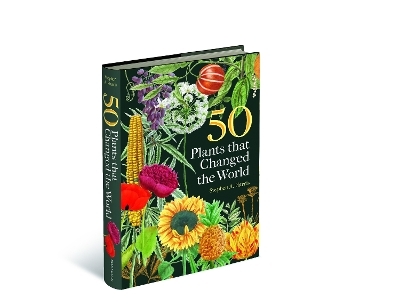
50 Plants that Changed the World
Seiten
2025
|
2nd New edition
Bodleian Library (Verlag)
978-1-85124-652-6 (ISBN)
Bodleian Library (Verlag)
978-1-85124-652-6 (ISBN)
An exciting journey through history, this beautifully illustrated new edition tells the stories of fifty plants that have been key to the development of the western world.
Have you ever stopped to think about how your morning cappuccino came to be? From the coffee bush that yielded the beans, to the grass for the cattle – or perhaps the soya – that produced the milk, plants are an indispensable part of our everyday life.
Beginning with some of the earliest uses of plants, Stephen Harris takes us on an exciting journey through history, identifying fifty plants that have been key to the development of the western world, discussing trade, imperialism, politics, medicine, travel and chemistry along the way. There are plants here that have changed landscapes, fomented wars and fuelled slavery. Others have been the trigger for technological advances, expanded medical knowledge or simply made our lives more pleasant. Plants have provided paper and ink, chemicals that could kill or cure, vital sustenance and stimulants. Some, such as barley, have been staples from earliest times; others, such as oil palm, are newcomers to western industry.
We remain dependent on plants for our food, our fuel and our medicines. As the wide-ranging and engaging stories in this beautifully illustrated book demonstrate, their effects on our lives continue to be profound and often unpredictable.
Have you ever stopped to think about how your morning cappuccino came to be? From the coffee bush that yielded the beans, to the grass for the cattle – or perhaps the soya – that produced the milk, plants are an indispensable part of our everyday life.
Beginning with some of the earliest uses of plants, Stephen Harris takes us on an exciting journey through history, identifying fifty plants that have been key to the development of the western world, discussing trade, imperialism, politics, medicine, travel and chemistry along the way. There are plants here that have changed landscapes, fomented wars and fuelled slavery. Others have been the trigger for technological advances, expanded medical knowledge or simply made our lives more pleasant. Plants have provided paper and ink, chemicals that could kill or cure, vital sustenance and stimulants. Some, such as barley, have been staples from earliest times; others, such as oil palm, are newcomers to western industry.
We remain dependent on plants for our food, our fuel and our medicines. As the wide-ranging and engaging stories in this beautifully illustrated book demonstrate, their effects on our lives continue to be profound and often unpredictable.
Stephen A. Harris is Druce Curator of the Oxford University Herbaria.
Introduction
The plants
Barley
Mandrake
Beets
Opium poppy
Brassicas
Cannabis
Bread wheat
Broad bean
Alliums
Pea
Olive
Grape
Papyrus
Yew
Rose
Pines
Reeds
Oak
Apple
Pepper
Carrot
Woad
Citrus
Nutmeg
White mulberry
Tobacco
Tulip
Chilli
Quinine
Cocoa
Potato
Tomato
Coffee
Maize
Pineapple
Smooth meadow grass
Lycopods
Cotton
Sugar cane
Coconut
Rice
Tea
Ragwort
Banana
Rubber
Sunflower
Oil palm
Soya
Corncockle
Thale cress
| Erscheinungsdatum | 15.05.2025 |
|---|---|
| Zusatzinfo | 60 Illustrations, color |
| Sprache | englisch |
| Maße | 156 x 234 mm |
| Themenwelt | Sachbuch/Ratgeber ► Natur / Technik ► Natur / Ökologie |
| ISBN-10 | 1-85124-652-5 / 1851246525 |
| ISBN-13 | 978-1-85124-652-6 / 9781851246526 |
| Zustand | Neuware |
| Informationen gemäß Produktsicherheitsverordnung (GPSR) | |
| Haben Sie eine Frage zum Produkt? |
Mehr entdecken
aus dem Bereich



aus dem Bereich
die Geschichte einer außergewöhnlichen Begegnung
Buch | Hardcover (2025)
Klett-Cotta (Verlag)
CHF 34,90
eine Geschichte der letzten 500 Jahre
Buch | Hardcover (2025)
C.H.Beck (Verlag)
CHF 47,60


