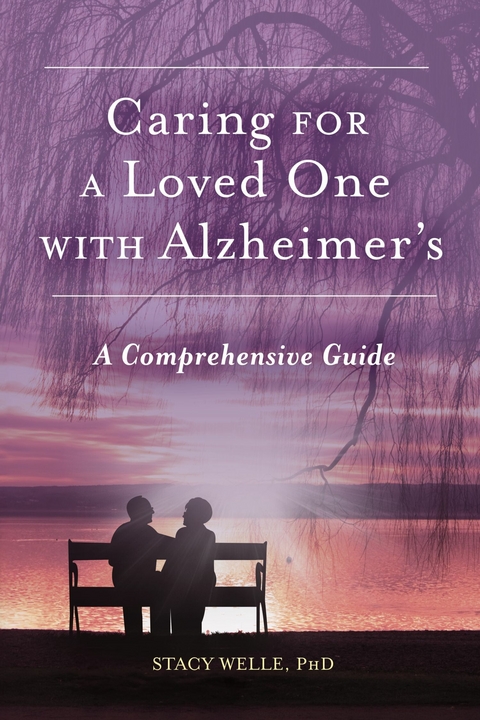
Caring for a Loved One with Alzheimer's (eBook)
124 Seiten
Bookbaby (Verlag)
979-8-3509-6772-2 (ISBN)
Dr. Stacy Welle is a dedicated advocate and author specializing in Alzheimer's caregiving, drawing on her extensive educational background. With degrees in Family Social Science, Education, Curriculum and Instruction, and Business Management and Leadership, Stacy offers a unique perspective informed by both academic rigor and personal experience. Inspired by her interactions with family members and friends affected by Alzheimer's, Stacy's writing blends practical advice with heartfelt empathy. Stacy resides in the Twin Cities area of Minnesota, where she balances her role as a mother to three adult children with her career in curriculum design at a university.
Caring for a Loved One with Alzheimer's: A Comprehensive Guide"e; provides a thorough understanding of Alzheimer's disease, detailing its symptoms, stages, and progression. It explains the science behind the disease, helping caregivers comprehend the changes in their loved ones. Early chapters emphasize the importance of planning and preparation, covering legal and financial considerations and offering checklists and templates. The book delivers practical advice on managing daily care, handling behavioral challenges, and maintaining safety and dignity. Effective communication and emotional support are highlighted, teaching caregivers compassionate interaction techniques and coping strategies. It underscores the significance of building a support network, providing resources like support groups and respite care. Self-care for caregivers is emphasized, offering tips on maintaining physical and mental health. This compassionate guide equips caregivers with the knowledge and tools to confidently and lovingly care for their loved ones with Alzheimer's, acknowledging the journey's emotional and physical demands.
Chapter 2
Understanding Alzheimer’s
A. Definition and characteristics of Alzheimer’s
Definition of Alzheimer’s
Alzheimer’s is a progressive neurological disorder that causes cognitive decline, memory loss, and behavioral changes. It is the most common form of dementia, accounting for 60%–80% of dementia cases (Alzheimer’s Association, 2024). Alzheimer’s typically affects older adults but can also occur in younger individuals, known as early-onset Alzheimer’s (Alzheimer’s Association, 2024).
Characteristics of Alzheimer’s
1. Memory loss
One of the hallmark symptoms of Alzheimer’s is the progressive loss of short-term memory. Individuals may have difficulty remembering recent events, conversations, or newly learned information.
2. Cognitive decline
Alzheimer’s affects cognitive function, leading to difficulties in reasoning, problem-solving, decision-making, and judgment. Individuals may struggle with tasks that require attention, concentration, and complex thinking.
3. Language impairment
Alzheimer’s can impact language skills, causing difficulties finding the right words, following conversations, or expressing thoughts coherently. Individuals may have trouble with naming objects or understanding written or spoken language.
4. Disorientation and confusion
Individuals with Alzheimer’s often experience disorientation regarding time, place, and people. They may get lost in familiar surroundings, have trouble recognizing faces, or exhibit confusion about daily routines.
5. Mood and behavior changes
Alzheimer’s can lead to changes in mood, personality, and behavior. Individuals may exhibit agitation, aggression, irritability, anxiety, or depression. Changes in personality traits or social withdrawal can also occur.
6. Difficulty with activities of
daily living
As Alzheimer’s progresses, individuals may struggle with performing basic activities of daily living such as bathing, dressing, grooming, and feeding themselves. Impaired motor skills and coordination may also become evident.
7. Impaired judgment and decision-making
Alzheimer’s can affect an individual’s ability to make sound judgments and decisions. They may engage in risky behaviors, have difficulty with financial management, or exhibit poor judgment in social situations.
8. Loss of independence
As Alzheimer’s disease, individuals may become increasingly dependent on others for care and support. The loss of independence can be emotionally challenging for the affected individual and their caregiver(s).
9. Progressive nature of the disease
Alzheimer’s is a progressive disease, meaning that symptoms worsen over time as brain cells are damaged and cognitive function declines. The rate of progression varies among individuals, but the disease ultimately leads to severe cognitive impairment and loss of functional abilities. A friend who has experienced the caregiving role firsthand stated, “For a person with Alzheimer’s, every day is the last best day.”
10. No known cure for the disease
Currently, there is no cure for Alzheimer’s. Treatment focuses on managing symptoms, improving the quality of life, and providing support for individuals and their caregivers through medication, cognitive stimulation, therapy, and other interventions.
Understanding the definition and characteristics of Alzheimer’s disease is crucial for early diagnosis, appropriate treatment, and adopting effective caregiving strategies to support individuals living with this challenging condition.
B. Stages of Alzheimer’s disease
Alzheimer’s is typically divided into several stages to help healthcare providers, caregivers, and family members understand the progression of the disease and tailor appropriate interventions and support for individuals at different points in their journey with Alzheimer’s. The duration of each stage and the specific symptoms can vary for individuals, but they generally follow a pattern of gradual cognitive decline and functional impairment. Here is an overview of the typical stages of Alzheimer’s:
1. Preclinical stage
In the preclinical stage, individuals show no noticeable symptoms of Alzheimer’s, but biological changes in the brain, such as the accumulation of abnormal proteins like beta-amyloid and tau, may already be occurring. Biomarker tests and imaging studies can sometimes detect these changes before symptoms manifest, allowing for early intervention and monitoring.
2. Mild cognitive impairment
(MCI) stage
MCI is often considered an intermediate stage between the average cognitive decline associated with aging and more severe dementia like that seen in Alzheimer’s. Individuals with MCI due to Alzheimer’s may experience mild memory loss, language difficulties, and challenges with tasks that require cognitive skills. However, these symptoms are not severe enough to interfere significantly with daily functioning.
3. Early stage (mild Alzheimer’s)
In the early stage of Alzheimer’s, symptoms become more apparent. They may include persistent memory lapses, difficulty finding words, getting lost in familiar places, and trouble with organization and planning. Individuals can typically still perform daily activities but may require more support and reminders to manage tasks effectively.
4. Middle stage (moderate Alzheimer’s)
The middle stage of Alzheimer’s is characterized by a more pronounced decline in cognitive function and an increasing need for assistance with activities of daily living. Symptoms may include significant memory loss, confusion about time and place, changes in behavior and personality, difficulty recognizing familiar people, and challenges with communication. As independence decreases, individuals may require supervision and support with tasks like dressing, bathing, and eating.
5. Late stage (severe Alzheimer’s)
In the late stage of Alzheimer’s, individuals experience severe cognitive impairment, profound memory loss, disorientation, and a loss of ability to communicate effectively. Physical function declines, and individuals may lose the ability to walk, sit up, or swallow independently. They become increasingly dependent on others for round-the-clock care and assistance with all aspects of daily living. Individuals in the late stage of Alzheimer’s are vulnerable to infections, complications, and other health issues, requiring specialized care in a supportive environment.
Understanding the stages of Alzheimer’s can help caregivers and healthcare professionals provide appropriate care, support, and interventions tailored to the changing needs of individuals with the disease as it progresses. Early diagnosis, ongoing monitoring, and a comprehensive care plan can enhance the quality of life and support individuals and their families throughout the Alzheimer’s journey.
C. Common symptoms and challenges faced by individuals with Alzheimer’s
Individuals with Alzheimer’s often face a range of symptoms and challenges that can impact their cognitive abilities, behavior, emotions, and daily functioning. These symptoms can vary in severity and progression as the disease advances. This can be as frustrating to the individual as it is to those watching the changes advance. Here are some common symptoms and challenges faced by individuals with Alzheimer’s:
1. Memory loss
- Difficulty remembering recent events, conversations, or information
- Repeating questions or statements
- Forgetting names of family members or familiar objects
2. Disorientation and confusion
- Getting lost in familiar places
- Forgetting the date, time, or location
- Confusion about daily routines or tasks
3. Communication difficulties
- Difficulty finding the right words
- Trouble following conversations or expressing thoughts clearly
- Repeating words or phrases
4. Mood and behavior changes
- Exhibiting agitation, irritability, or aggression
- Suffering from anxiety, restlessness, or depression
- Presenting changes in sleep patterns
5. Impaired judgment and decision-making
- Difficulty making decisions or solving problems
- Showing poor judgment in social situations
- Engaging in risky behaviors
6. Personality changes
- Exhibiting changes in personality traits or behavior
- Showing diminished interest in previously enjoyed activities
- Demonstrating social withdrawal or apathy
7. Difficulty with activities of
daily living
- Facing challenges with dressing, bathing, grooming, or eating
- Facing difficulty managing medications or following a daily routine
- Feeling the need for assistance with household tasks
8. Wandering and agitation
- Presenting restlessness, leading to wandering behaviors
- Exhibiting agitation or pacing
- Facing difficulty in staying still or remaining calm
9. Incontinence
- Facing loss...
| Erscheint lt. Verlag | 28.8.2024 |
|---|---|
| Sprache | englisch |
| Themenwelt | Sachbuch/Ratgeber ► Gesundheit / Leben / Psychologie ► Lebenshilfe / Lebensführung |
| ISBN-13 | 979-8-3509-6772-2 / 9798350967722 |
| Informationen gemäß Produktsicherheitsverordnung (GPSR) | |
| Haben Sie eine Frage zum Produkt? |
 EPUB (Ohne DRM)
Größe: 3,4 MB
Digital Rights Management: ohne DRM
Dieses eBook enthält kein DRM oder Kopierschutz. Eine Weitergabe an Dritte ist jedoch rechtlich nicht zulässig, weil Sie beim Kauf nur die Rechte an der persönlichen Nutzung erwerben.
Dateiformat: EPUB (Electronic Publication)
EPUB ist ein offener Standard für eBooks und eignet sich besonders zur Darstellung von Belletristik und Sachbüchern. Der Fließtext wird dynamisch an die Display- und Schriftgröße angepasst. Auch für mobile Lesegeräte ist EPUB daher gut geeignet.
Systemvoraussetzungen:
PC/Mac: Mit einem PC oder Mac können Sie dieses eBook lesen. Sie benötigen dafür die kostenlose Software Adobe Digital Editions.
eReader: Dieses eBook kann mit (fast) allen eBook-Readern gelesen werden. Mit dem amazon-Kindle ist es aber nicht kompatibel.
Smartphone/Tablet: Egal ob Apple oder Android, dieses eBook können Sie lesen. Sie benötigen dafür eine kostenlose App.
Geräteliste und zusätzliche Hinweise
Buying eBooks from abroad
For tax law reasons we can sell eBooks just within Germany and Switzerland. Regrettably we cannot fulfill eBook-orders from other countries.
aus dem Bereich