


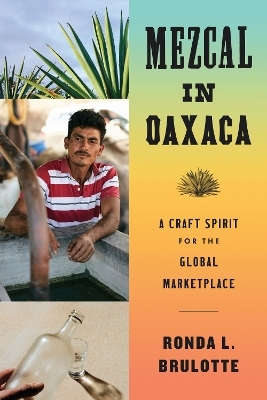
Mezcal in Oaxaca
A Craft Spirit for the Global Marketplace
Seiten
2025
University of Texas Press (Verlag)
978-1-4773-3095-1 (ISBN)
University of Texas Press (Verlag)
978-1-4773-3095-1 (ISBN)
An ethnography of mezcal and how it has become a global, "artisanal" good.
Mezcal is booming. Once considered a peasant drink-the rough, lowbrow cousin of the more refined tequila-the smoky spirit is now prized by connoisseurs the world over. It is also hailed as a savior of Oaxaca, powering a craft industry that can uphold rural economies and Indigenous traditions.
Ronda L. Brulotte traces mezcal’s swift rise and its effects on communities that have distilled and enjoyed the beverage for generations. Only in the late 1990s did mezcal begin to escape its longstanding associations with Indigenous and working-class life, even as these very qualities supply the “authenticity” that elite consumers crave. Through a detailed ethnography of the spirits industry in Oaxaca, Brulotte compares the ideal of the artisanal economy with the reality of participation in global markets. Her findings-focused on tourism-led development and gentrification, the exploitation of women and smallholders, and swelling regional migration pressures-raise troubling questions about the ecological and social sustainability of a new craft imaginary that rebrands rustic products as luxury goods.
Mezcal is booming. Once considered a peasant drink-the rough, lowbrow cousin of the more refined tequila-the smoky spirit is now prized by connoisseurs the world over. It is also hailed as a savior of Oaxaca, powering a craft industry that can uphold rural economies and Indigenous traditions.
Ronda L. Brulotte traces mezcal’s swift rise and its effects on communities that have distilled and enjoyed the beverage for generations. Only in the late 1990s did mezcal begin to escape its longstanding associations with Indigenous and working-class life, even as these very qualities supply the “authenticity” that elite consumers crave. Through a detailed ethnography of the spirits industry in Oaxaca, Brulotte compares the ideal of the artisanal economy with the reality of participation in global markets. Her findings-focused on tourism-led development and gentrification, the exploitation of women and smallholders, and swelling regional migration pressures-raise troubling questions about the ecological and social sustainability of a new craft imaginary that rebrands rustic products as luxury goods.
Ronda L. Brulotte is a professor and chair of the Department of Geography & Environmental Studies and affiliated faculty in Anthropology and Latin American Studies at the University of New Mexico. She is the author of Between Art and Artifact: Archaeological Replicas and Cultural Production in Oaxaca, Mexico and coeditor of Edible Identities: Food as Cultural Heritage.
List of Illustrations
Preface
Introduction: Mezcal Is Good to Think With
1. Mezcal and Coloniality
2. Mezcal in the New Craft Imaginary
3. A Taste for Agave
4. Mezcal, Mole, and Oaxaca Tourism
5. Valuing Women or Creating Value?
6. Can Mezcal Save a Village?
Conclusion: Mezcal in a Twenty-First-Century Wonderland
Acknowledgments
Notes
Bibliography
Index
| Erscheinungsdatum | 26.04.2025 |
|---|---|
| Zusatzinfo | 16 b&w photos, 2 maps |
| Verlagsort | Austin, TX |
| Sprache | englisch |
| Maße | 152 x 229 mm |
| Gewicht | 454 g |
| Themenwelt | Sachbuch/Ratgeber ► Essen / Trinken ► Getränke |
| Sozialwissenschaften | |
| ISBN-10 | 1-4773-3095-X / 147733095X |
| ISBN-13 | 978-1-4773-3095-1 / 9781477330951 |
| Zustand | Neuware |
| Informationen gemäß Produktsicherheitsverordnung (GPSR) | |
| Haben Sie eine Frage zum Produkt? |
Mehr entdecken
aus dem Bereich

aus dem Bereich
das Praxis-Handbuch für Kaffeeliebhaber, Baristas und Espresso-Fans
Buch | Hardcover (2023)
Edel Verlagsgruppe
CHF 41,90


