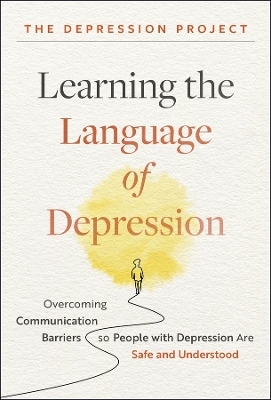
Learning the Language of Depression
John Wiley & Sons Inc (Verlag)
978-1-394-31728-8 (ISBN)
As The Depression Project hears every single day from members of their 3,000,000+ person social media community, a “language barrier” often exists between people with depression and those around them — in the sense that many words, everyday expressions and non-verbal forms of communication can take on a vastly different meaning than they otherwise would when they are coming from someone who has depression. And, as The Depression Project also continuously hears, this “language barrier” can result in people with depression being judged and criticized; having conflict with their loved ones; feeling alone, misunderstood and unsupported; and being more at risk of attempting suicide.
Consequently, in order to overcome this “language barrier” and therefore help people with depression feel safe, understood, supported and much better as a result. This book will:
Explain what people with depression are actually going through when they say “I have depression” (it is much more than sadness); when they say “I'm fine” (very often they are not); when they say “I'm tired” (“depression tiredness” is very different from “normal tiredness”); when they say “I can't” (which is often misinterpreted as “I won't”, and as that person with depression just being “lazy”); and when they say other commonly spoken phrases that are often misunderstood by people who have never experienced depression themselves before.
Share a wide variety of suggestions to help make it easier for people with depression to put what they are going through into words.
Highlight the language people with depression often use that can indicate they are feeling suicidal (which tragically, is often ignored, dismissed or not picked up on by the people around them).
Look at depression's “facial language barrier”, and explain what people with depression are often actually going through when they smile, avoid eye contact, have muted facial expressions, or look tired or frustrated (when a person has depression, these facial expressions and interactions can often mean something very, very different than they otherwise would).
Address depression's “touch language barrier” by clarifying the reasons why depression can cause someone to be much less tactile and physically intimate than they would otherwise be, and by explaining the steps that can be taken to help prevent this lack of physical intimacy from spiraling into long-term relationship problems.
Learning The Language Of Depression is an ideal book for people with depression who would like some help communicating what they are going through so that they can be better understood, as well as friends and family of someone with depression who would like to better understand their loved one and effectively support them.
Through their social media posts, books and journals, The Depression Project helps people with depression feel better understood, receive the support they deserve, and take the necessary steps to overcome this illness.
Introduction vii
Part I Depression’s “Verbal Language Barrier” 1
Chapter 1 What People with Depression Actually Mean When They Say “I Have Depression” 3
Chapter 2 What People with Depression Actually Mean When They Say “I’m Fine” or “I’m OK” 19
Chapter 3 What People with Depression Actually Mean When They Say “Leave Me Alone” 43
Chapter 4 What People with Depression Actually Mean When They Say “I’m Tired” 47
Chapter 5 What People with Depression Actually Mean When They Say “I Can’t .” 59
Chapter 6 What People with Depression Actually Mean When They Say “I’m Busy” 69
Chapter 7 What People with Depression Actually Mean When They Say “I Want to Go Home” 77
Chapter 8 What People with Depression Actually Mean When They Say “I Don’t Care” 85
Chapter 9 What People with Depression Actually Mean When They Say “I’m Not Hungry” 91
Chapter 10 What People with Depression Actually Mean When They Say “I’m Having a Good Day” 99
Part II Depression’s “Verbal Language Barrier” in the Context of Suicide in Particular 105
Chapter 11 The Language People with Depression Use That Can Mean They Are Suicidal 107
Part III Depression’s “Nonverbal Language Barriers” 137
Chapter 12 Depression’s “Facial Language Barriers” 139
Chapter 13 Depression’s “Touch Language Barriers” 151
Conclusion: A Brief Recap + One Last Suggestion to Help You Continue Navigating Depression’s Language Barriers” Moving Forward 163
Appendix: Questionnaire to Help You Identify What the Storm Zone, the Rain Zone, and the Cloud Zone Look Like for You 171
Notes 179
About The Depression Project 183
Index 187
| Erscheinungsdatum | 26.04.2025 |
|---|---|
| Verlagsort | New York |
| Sprache | englisch |
| Maße | 158 x 229 mm |
| Gewicht | 386 g |
| Themenwelt | Sachbuch/Ratgeber ► Gesundheit / Leben / Psychologie ► Krankheiten / Heilverfahren |
| Sachbuch/Ratgeber ► Gesundheit / Leben / Psychologie ► Psychologie | |
| Geisteswissenschaften ► Psychologie ► Angst / Depression / Zwang | |
| Geisteswissenschaften ► Psychologie ► Persönlichkeitsstörungen | |
| ISBN-10 | 1-394-31728-X / 139431728X |
| ISBN-13 | 978-1-394-31728-8 / 9781394317288 |
| Zustand | Neuware |
| Informationen gemäß Produktsicherheitsverordnung (GPSR) | |
| Haben Sie eine Frage zum Produkt? |
aus dem Bereich