


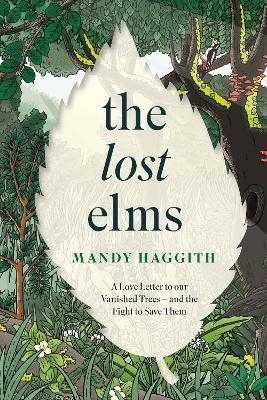
The Lost Elms: A Love Letter to Our Vanished Trees – and the Fight to Save Them
The stunning new nature book from the 'unofficial poet laureate of our woodlands'
Seiten
2025
Wildfire (Verlag)
978-1-0354-1232-7 (ISBN)
Wildfire (Verlag)
978-1-0354-1232-7 (ISBN)
This iconic tree once covered great swathes of Europe and North America; now all but a handful have been wiped out by Dutch Elm Disease. This is the story of our attempt to save the elm, and how its legacy lives on in our mythology and folklore.
A Guardian 'Book of the day'
'A captivating book' - Independent
'Her enthusiasm is contagious.' - Guardian
'A meditation on life, culture and trees.' - FRED PEARCE
'Unofficial poet laureate of our woodlands.' - Scotsman
For millennia,
elms shaped our landscape and our folklore;
then they started dying.
For the past century, a deadly pandemic has raged across the world, destroying all in its path and outmanoeuvring scientists' desperate attempts to halt it.
Dutch elm disease has killed hundreds of millions of trees globally and over 25 million in the UK alone, altering our landscapes forever. Few young people have seen a mature elm tree, yet they once covered great swathes of Europe and North America and their legacy lives on in our mythology.
The Lost Elms is a love letter to our vanished elms - the story of how we have nearly lost them all, and the long, slow fight back. It tells the gripping story of the scientists desperately trying to halt the disease's relentless progress, and demonstrates the deadly effect globalisation can have on the environment, the threat of climate change, the importance of biosecurity and the intricate ways in which trees are interlinked with other species. Woven throughout is a lyrical look at the elm's central place in our history, culture and folklore - the elm features heavily in Greek, Celtic, Japanese, Germanic and Scandinavian mythology; as the 'Liberty Tree' it played a symbolic role in both the American and French Revolutions; and since ancient times the elm has held associations with death and the supernatural.
However all is not lost: recent breakthroughs in ecological understanding reveal elms to be far more resilient than we ever imagined. This tree holds an important place in our history, and now might just offer hopeful lessons for how we can save other disappearing species and our environment.
A Guardian 'Book of the day'
'A captivating book' - Independent
'Her enthusiasm is contagious.' - Guardian
'A meditation on life, culture and trees.' - FRED PEARCE
'Unofficial poet laureate of our woodlands.' - Scotsman
For millennia,
elms shaped our landscape and our folklore;
then they started dying.
For the past century, a deadly pandemic has raged across the world, destroying all in its path and outmanoeuvring scientists' desperate attempts to halt it.
Dutch elm disease has killed hundreds of millions of trees globally and over 25 million in the UK alone, altering our landscapes forever. Few young people have seen a mature elm tree, yet they once covered great swathes of Europe and North America and their legacy lives on in our mythology.
The Lost Elms is a love letter to our vanished elms - the story of how we have nearly lost them all, and the long, slow fight back. It tells the gripping story of the scientists desperately trying to halt the disease's relentless progress, and demonstrates the deadly effect globalisation can have on the environment, the threat of climate change, the importance of biosecurity and the intricate ways in which trees are interlinked with other species. Woven throughout is a lyrical look at the elm's central place in our history, culture and folklore - the elm features heavily in Greek, Celtic, Japanese, Germanic and Scandinavian mythology; as the 'Liberty Tree' it played a symbolic role in both the American and French Revolutions; and since ancient times the elm has held associations with death and the supernatural.
However all is not lost: recent breakthroughs in ecological understanding reveal elms to be far more resilient than we ever imagined. This tree holds an important place in our history, and now might just offer hopeful lessons for how we can save other disappearing species and our environment.
Mandy Haggith lives in a remnant of ancient rainforest in northwest Scotland and spent 20 years as a forest activist, from award-winning local campaigns in Scotland all the way to the United Nations. She is now an honorary research fellow and lecturer in creative writing at the University of the Highlands and Islands. She is the author of Paper Trails: From Trees to Trash - The True Cost of Paper, five novels and six poetry collections, and editor of the tree poem anthology, Into the Forest.
| Erscheinungsdatum | 05.07.2025 |
|---|---|
| Verlagsort | London |
| Sprache | englisch |
| Maße | 158 x 236 mm |
| Gewicht | 497 g |
| Themenwelt | Sachbuch/Ratgeber ► Natur / Technik ► Natur / Ökologie |
| Naturwissenschaften ► Biologie ► Ökologie / Naturschutz | |
| Naturwissenschaften ► Geowissenschaften ► Geografie / Kartografie | |
| ISBN-10 | 1-0354-1232-2 / 1035412322 |
| ISBN-13 | 978-1-0354-1232-7 / 9781035412327 |
| Zustand | Neuware |
| Informationen gemäß Produktsicherheitsverordnung (GPSR) | |
| Haben Sie eine Frage zum Produkt? |
Mehr entdecken
aus dem Bereich


aus dem Bereich
die Geschichte einer außergewöhnlichen Begegnung
Buch | Hardcover (2025)
Klett-Cotta (Verlag)
CHF 34,90
eine Geschichte der letzten 500 Jahre
Buch | Hardcover (2025)
C.H.Beck (Verlag)
CHF 47,60


