


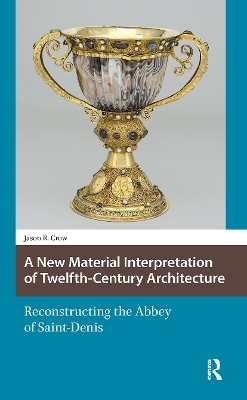
A New Material Interpretation of Twelfth-Century Architecture
Reconstructing the Abbey of Saint-Denis
Seiten
2024
Amsterdam University Press (Verlag)
978-94-6298-226-0 (ISBN)
Amsterdam University Press (Verlag)
978-94-6298-226-0 (ISBN)
This book reassesses the origins and significance of “Gothic” architecture and approaches the interpretation of the twelfth-century church through its materiality Integrates the twelfth-century conceptualization of architecture within art, science, and theology.
Today, we perceive Gothic cathedrals as light-filled forms representing the sacred. The colored light projected from brightly-colored stained glass windows onto the walls and floors of these buildings suggests the presence of divinity. Suger (1081–1151CE), the abbot of the monastery of Saint-Denis, is credited with originating Gothic architecture. However, focus on form and structure has elided attention to the material out of which medieval churches were made. When Suger describes the early church he was replacing, he says that the gold and gems it contained beamed outwardly with a gleaming light that filled the eye. When he restored his church and filled it with the shining souls of his ecclesia, he repeated God’s divine act of creation. His restored church imitated the precious stones that could be shaped and polished to reveal divine light. By crafting stone, Suger fulfilled the divine plan to make heaven on earth.
Today, we perceive Gothic cathedrals as light-filled forms representing the sacred. The colored light projected from brightly-colored stained glass windows onto the walls and floors of these buildings suggests the presence of divinity. Suger (1081–1151CE), the abbot of the monastery of Saint-Denis, is credited with originating Gothic architecture. However, focus on form and structure has elided attention to the material out of which medieval churches were made. When Suger describes the early church he was replacing, he says that the gold and gems it contained beamed outwardly with a gleaming light that filled the eye. When he restored his church and filled it with the shining souls of his ecclesia, he repeated God’s divine act of creation. His restored church imitated the precious stones that could be shaped and polished to reveal divine light. By crafting stone, Suger fulfilled the divine plan to make heaven on earth.
Dr. Jason Robert Crow is a senior lecturer at Monash University and a licensed architect. His research focuses on the impact of technological changes on material ontology and artisanal epistemology. Understanding these changes assists in defining the role of craft in architectural design.
Acknowledgments
Chapter One: Materializing the Way
Chapter Two: Crafting Prayer
Chapter Three: The Everflowing Fountain
Chapter Four: Embodying Heaven on Earth
Postface: Dematerializing Architecture
Bibliography
Primary Sources
Secondary Sources
Index
| Erscheinungsdatum | 22.08.2024 |
|---|---|
| Reihe/Serie | Knowledge Communities |
| Zusatzinfo | 12 Illustrations, black and white |
| Sprache | englisch |
| Maße | 156 x 234 mm |
| Themenwelt | Sachbuch/Ratgeber ► Gesundheit / Leben / Psychologie ► Esoterik / Spiritualität |
| Technik ► Architektur | |
| ISBN-10 | 94-6298-226-0 / 9462982260 |
| ISBN-13 | 978-94-6298-226-0 / 9789462982260 |
| Zustand | Neuware |
| Informationen gemäß Produktsicherheitsverordnung (GPSR) | |
| Haben Sie eine Frage zum Produkt? |
Mehr entdecken
aus dem Bereich



aus dem Bereich
Neue medizinische Fakten zur Nahtoderfahrung
Buch | Softcover (2024)
Patmos Verlag
CHF 34,90
mit einem Geleitwort von Elke Heidenreich
Buch | Hardcover (2024)
Kösel (Verlag)
CHF 41,95


