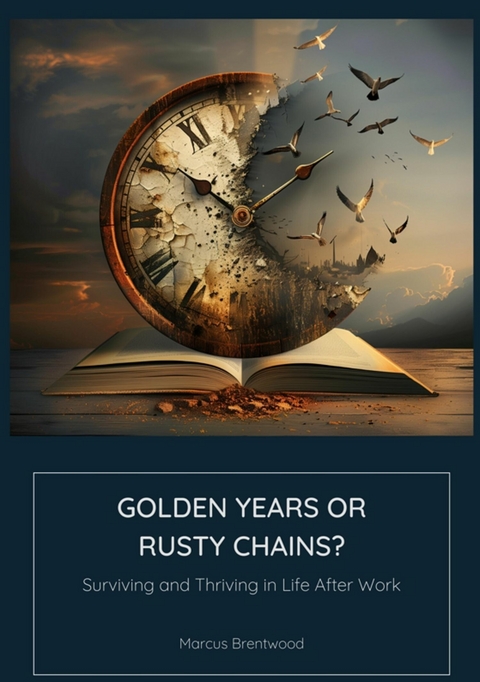
Golden Years or Rusty Chains? (eBook)
93 Seiten
tredition (Verlag)
978-3-384-16849-8 (ISBN)
I. Rethinking Retirement
The Misconception of Retirement
As individuals approach the later stages of their career, the concept of retirement becomes increasingly prominent in their minds. This section delves into the societal expectations surrounding retirement and how they influence one’s personal mindset and planning. We will also examine the risks of strictly adhering to these norms and explore alternative perspectives on transitioning into this new phase of life. Join us on a journey of redefining retirement as a transition and the importance of embracing changes with a proactive mindset.
Societal Perceptions and Expectations
Societal retirement expectations often paint a picture of this life stage as a time of relaxation, leisure, and freedom from the constraints of work. This perception shapes how individuals approach retirement, influencing their mindset and planning for this significant transition. Many people internalize these expectations, working towards accumulating enough savings to retire comfortably and envisioning a period of endless relaxation. However, the reality of retirement often diverges from these societal norms, leading to unforeseen challenges.
When individuals strictly adhere to these societal expectations, focusing solely on financial preparedness, they may overlook crucial aspects of retirement planning. Issues such as loss of purpose, identity, and social connections can emerge when work no longer provides structure and meaning to their lives. As a result, psychological struggles like feelings of disorientation, self-esteem issues, and even depression can arise.
Exploring alternative perspectives on retirement can offer a more holistic approach to planning for this phase of life. Viewing retirement as a time for personal growth, exploration of new interests, and contributing to society in different ways can help individuals prepare for a more fulfilling and purposeful retirement. By embracing a broader outlook and incorporating elements beyond just financial readiness into their retirement planning, individuals can navigate this transition more successfully and lead a rewarding post-work life.
Shifting Paradigms: Retirement as a Lifestyle Transition
Retirement stands not merely as a cessation of one’s professional obligations but as a profound transition necessitating a mental shift well before its onset. This critical period demands an adjustment in perspective, heralding the need for individuals to recalibrate their identities and daily rhythms as they move from a structured work life to a more open-ended one. Lifestyle transitions, inevitable with retirement, bear a transformative impact on various facets of life—ranging from social connections and personal purpose to the very fabric of one’s daily existence.
In navigating this intricate period of change, the role of planning cannot be overstated. Deliberate foresight and strategic anticipation help in cushioning the impact of abrupt alterations, affording individuals the agency to steer their transition towards a more enriching path. Embracing this transition with proactivity is fundamental; it engenders a spirit of exploration and a receptiveness to new opportunities that may arise in the wake of retirement.
Ultimately, retirement signifies not an end but a new beginning, a juncture ripe with possibilities for individuals to chart a course towards personal growth and well-being. By cultivating a mindset that welcomes change, individuals can not only navigate this transition with resilience but also uncover latent passions and pursuits that might have lain dormant amidst the confines of a demanding career.
Challenging the Traditional Notions of Retirement
Traditional views of retirement have long centered around the concept of ceasing work entirely, often envisioning a life filled with endless leisure and relaxation. While this approach may seem appealing at first glance, it comes with its own set of potential drawbacks. The sudden absence of a structured routine and the loss of one’s professional identity can lead to feelings of disorientation, a lack of purpose, and even a decline in mental well-being.
Challenges in adopting alternative retirement models stem from ingrained societal expectations and the fear of deviating from the norm. Implementing non-traditional retirement lifestyles requires individuals to break free from conventional thinking and embrace new ways of structuring their post-work years. Whether it involves phased retirement, starting a new business venture, or engaging in purposeful volunteer work, these alternative models can offer a sense of continued productivity and fulfillment.
Exploring alternative retirement concepts opens up a world of possibilities, allowing individuals to stay mentally and physically active, nurture personal growth, and maintain a sense of purpose and community engagement. Rethinking retirement is essential in today’s rapidly evolving world, encouraging individuals to challenge outdated notions and embrace diverse paths towards a fulfilling and enriching post-career life. By reshaping traditional retirement ideals, individuals can forge a new paradigm that prioritizes continued growth, contribution, and personal satisfaction in their later years.
The Evolution of Work and Retirement
In reviewing the historical perspective of work and retirement, the concept of retirement has undergone a profound transformation over the centuries. Initially, retirement was not a choice but a consequence of age or physical limitations, with individuals typically forced out of the workforce. With the industrial revolution, mandatory retirement ages became more commonplace, as aging workers were often replaced by younger, more efficient labor. This shift marked a significant departure from the idea of work until death and laid the foundation for the concept of retirement as a distinct life stage.
Economic factors have played a crucial role in shaping retirement decisions. The development of pension systems, social security, and healthcare benefits has provided individuals with the financial security to retire at a certain age. The availability and scope of these benefits have influenced when people choose to retire and the quality of life they can expect post-retirement.
Technological advancements have also had a considerable impact on retirement trends. The rise of automation, digitalization, and remote work options has created new opportunities for individuals to continue working beyond traditional retirement ages. This has led to a reevaluation of the concept of retirement, with many people now viewing it as a phased transition rather than a sudden endpoint.
Changing work patterns, such as the gig economy and freelance opportunities, have further blurred the lines between work and retirement. These shifts have prompted individuals to reconsider their retiring age and explore new ways to stay engaged in the workforce later in life.
The evolution of work and retirement reflects a dynamic interplay of historical, economic, technological, and social factors. The transition from mandatory to voluntary retirement, influenced by economic considerations and technological advancements, has redefined traditional notions of work and retirement, offering new possibilities for continued engagement and fulfillment in later life.
The Retirement Paradox
As we transition into the post-work phase of life, a myriad of unexpected challenges may arise. From grappling with the loss of familiar work structures to navigating the complex landscape of financial insecurity, the road to retirement is filled with psychological shifts and practical hurdles. In this section, we will delve into the various aspects of post-work challenges, including the impact on self-esteem, time management issues, potential physical health consequences, and the importance of preparing for lifestyle changes. Join us as we explore the nuances of life after work and uncover strategies to navigate this new chapter with grace and resilience.
Unexpected Challenges in Life After Work
In the realm of retirement, one encounters a paradoxical twist: the anticipated liberation and leisure of post-work life can unexpectedly give rise to psychological and physical challenges. The psychological realm is significantly affected by the shift in routine and structure that retirement brings. The abrupt absence of the familiar work environment and its associated deadlines and responsibilities can leave retirees feeling disoriented, struggling to manage time effectively without the familiar markers of a working day.
Furthermore, retirement often precipitates a profound loss of identity. For many, professional roles provide not just a livelihood but a sense of purpose and self-worth. Without this defining aspect, retirees may confront a reduction in self-esteem as they navigate a new landscape devoid of the validating markers of work-related achievements.
Hand in hand with these psychological challenges come potential physical health consequences. The decreased levels of physical activity resulting from the absence of a job can have far-reaching impacts on overall well-being. Sedentary lifestyles associated with retirement can contribute to...
| Erscheint lt. Verlag | 9.3.2024 |
|---|---|
| Verlagsort | Ahrensburg |
| Sprache | englisch |
| Themenwelt | Sachbuch/Ratgeber ► Gesundheit / Leben / Psychologie ► Lebenshilfe / Lebensführung |
| Recht / Steuern | |
| Sozialwissenschaften ► Soziologie ► Spezielle Soziologien | |
| Schlagworte | aging • Anti-Aging • Financial Planning • getting old • Goal Setting • Golden Age • Health • life experience • lifestyle • Nutrition • Re-Aging • Retirement • retirement planning • social support • Wellness |
| ISBN-10 | 3-384-16849-6 / 3384168496 |
| ISBN-13 | 978-3-384-16849-8 / 9783384168498 |
| Informationen gemäß Produktsicherheitsverordnung (GPSR) | |
| Haben Sie eine Frage zum Produkt? |
 EPUB (Wasserzeichen)
DRM: Digitales Wasserzeichen
Dieses eBook enthält ein digitales Wasserzeichen und ist damit für Sie personalisiert. Bei einer missbräuchlichen Weitergabe des eBooks an Dritte ist eine Rückverfolgung an die Quelle möglich.
Dateiformat: EPUB (Electronic Publication)
EPUB ist ein offener Standard für eBooks und eignet sich besonders zur Darstellung von Belletristik und Sachbüchern. Der Fließtext wird dynamisch an die Display- und Schriftgröße angepasst. Auch für mobile Lesegeräte ist EPUB daher gut geeignet.
Systemvoraussetzungen:
PC/Mac: Mit einem PC oder Mac können Sie dieses eBook lesen. Sie benötigen dafür die kostenlose Software Adobe Digital Editions.
eReader: Dieses eBook kann mit (fast) allen eBook-Readern gelesen werden. Mit dem amazon-Kindle ist es aber nicht kompatibel.
Smartphone/Tablet: Egal ob Apple oder Android, dieses eBook können Sie lesen. Sie benötigen dafür eine kostenlose App.
Geräteliste und zusätzliche Hinweise
Buying eBooks from abroad
For tax law reasons we can sell eBooks just within Germany and Switzerland. Regrettably we cannot fulfill eBook-orders from other countries.
aus dem Bereich