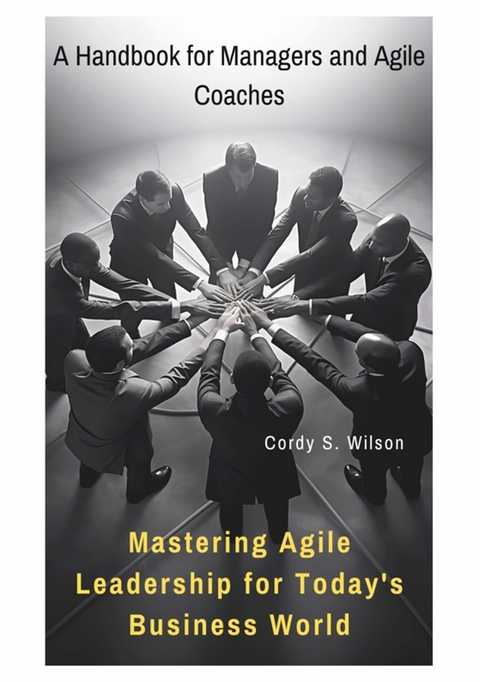
Mastering Agile Leadership for Today's Business World (eBook)
116 Seiten
tredition (Verlag)
978-3-384-07841-4 (ISBN)
Chapter 1: The basics of agility
What is agility?
In today's increasingly competitive business environment, the term "agility" is frequently employed; however, what does it actually mean? Agility, at its core, is a mindset, a philosophy that enables you to function effectively in an environment that is constantly changing. This method of working is characterized by its adaptability, which enables teams and organizations to quickly adjust to new circumstances without sacrificing their efficiency. The concept of agility is not merely a technique or a collection of tools; rather, it is a culture that is founded on a set of principles and values.
Agility can be traced back to the 1990s, when software developers were looking for ways to work faster and more efficiently. This is when the concept of agility was brought into existence. Over the course of time, the term has expanded significantly beyond the realm of information technology and is now utilized in a wide variety of business domains, ranging from production to marketing. The reason for this is that the fundamental principles of agility are applicable to a wide range of situations and can be utilized in a variety of contexts.
Accepting uncertainty is a fundamental principle of agility, and it is one of the most important principles. It is in many cases impossible to plan everything in advance in a world that is constantly shifting and evolving. The agile teams are aware of this fact and are ready to make adjustments to their plans whenever it is required. They have short cycles of work, which are frequently referred to as "sprints," and they review their progress on a regular basis to make sure that they are on the right path.
One more essential principle is the close collaboration that exists between members of the team and the impacted parties. Communication is of the utmost importance in an agile workspace. Teams get together on a regular basis to discuss the current state of the work and any obstacles that may be present. In order to guarantee that the final product satisfies the requirements and generates genuine value, they collaborate closely with the various stakeholders.
Because of this, agility is much more than a collection of methods or techniques; rather, it is an all-encompassing approach to work that strives for adaptability, flexibility, and continuous improvement. It places people at the center of the process and acknowledges that the most successful outcomes are achieved through the collaboration of teams that are self-organized and committed to their work. In this sense, agility is not only a method of conduct in the workplace, but it is also a way of life.
As we proceed with our investigation into the meaning of agility, it is of the utmost importance to comprehend the function of the values and principles that serve as the foundation for this mode of operation. In 2001, a document known as the Agile Manifesto was released. This document is credited with laying the groundwork for numerous agile methodologies. It places a greater emphasis on the value of individuals and interactions as opposed to processes and tools, working products as opposed to comprehensive documentation, customer collaboration as opposed to contract negotiation, and adapting to change as opposed to following a plan. The meaning of these four sets of values should not be interpreted as either/or choices; rather, they should be regarded as priorities that center on the most important aspects.
The ability to continuously improve is an essential component of agility. Agile teams are always looking for new ways to improve the working conditions of their teams. Adaptation and regular reflection are the means by which this is accomplished. The team conducts a retrospective at the conclusion of each sprint or work cycle, during which they assess their performance and look for areas in which they can make improvements. Because members of the team are actively involved in shaping their working environment, this culture of self-examination not only promotes efficiency but also increases the level of satisfaction experienced by those members of the team.
Self-organization and personal responsibility are two additional benefits that come from agility. It is not uncommon for an agile team to lack hierarchies and roles that are predetermined. In addition to having the authority to make decisions that have an impact on their work, every member of the group is accountable for the accomplishment of the project. Having a structure that is decentralized allows the team to respond to challenges in a more timely and adaptable manner because it is not dependent on receiving instructions from a higher authority.
Not only that, but the idea of "fail fast" is closely connected to the concept of agility. This indicates that it is preferable to experience failure quickly and gain knowledge from it rather than to devote a significant amount of time and resources to a plan that turns out to be impractical in the future. Agile teams are able to reduce opportunities for risk and respond more quickly to issues because they work in short cycles and continually review the results of their work.
The fact that agility is not a cure-all should be emphasized as much as possible. On the other hand, it is not appropriate for every organization or every project. However, in a world that is becoming more complicated and uncertain, it offers a robust framework for organizations such as those that need to innovate and adapt in order to maintain their competitive edge. Because of this, agility is less of a method and more of a mindset, a way of perceiving and reacting to the elements of the world. This forces us to question our preconceived notions, collaborate closely with other people, and remain flexible in the face of change. This skill is of the utmost significance in the modern-day business world, where opportunities are abundant.
The importance placed on the satisfaction of customers is yet another facet that defines agility. Teams that use agile methodology collaborate closely with their customers or other stakeholders to guarantee that the solutions they develop are in fact suitable for the requirements of the market. It is not just the product development teams that are implementing this customer-centric approach; it is also being implemented in other departments within the company, such as human resources and customer service. Agile teams have the ability to ensure that they are not only doing the right thing, but also doing it correctly by collecting feedback on a regular basis and making adjustments in an iterative manner.
However, in order to take advantage of the flexibility that agility provides, one must adhere to a certain level of discipline. It may appear to be a contradiction, but if there are no well-defined structures and procedures in place, agility can result in chaos. Frameworks such as Scrum, Kanban, and Lean are utilized by agile teams because they offer structure and guidelines without stifling creativity and innovation. This is the reason why agile teams rely on these frameworks. On the other hand, these frameworks are not rigid models; rather, they are guidelines that can be modified according to the circumstances and requirements of the team.
The ability to concentrate on tasks that are manageable and small is another characteristic of agility. Agile teams, as opposed to pursuing large, monolithic projects, break their work down into smaller pieces that are easier to manage and quicker to implement. Their goal is to achieve greater efficiency. By taking this approach, the team is able to make rapid progress while still retaining the flexibility to make course corrections when they are required.
In addition, there is a social component to agility. A culture of openness and mutual respect is fostered as a result, and every member of the team is given the opportunity to freely express their ideas and concerns. Open communication is essential to the success of agile projects because it assists in elucidating misunderstandings and defining goals that are shared by all parties involved. A setting like this makes people feel valued and engaged, which in turn leads to an increase in both the quantity of work produced and the quality of that work.
To provide a brief summary, agility can be defined as an approach to work that is multi-faceted and intricate, and it goes far beyond the simple application of methods or tools. An approach that takes into account both the organizational and human aspects of work is referred to as a holistic approach. To achieve this, it is necessary to strike a delicate equilibrium between adaptability and self-control, between independence and cooperation, and it places individuals and the requirements they have at the forefront of all considerations.
After going over the various aspects of agility, it is necessary to dispel some of the misconceptions that are commonly held about it. It is important to note that agility is not the same thing as disorganization or a lack of structure. Agile methods, on the other hand, call for a high level of discipline and can be quite structured throughout the process. Nevertheless, they provide the flexibility to modify these structures as required in order to facilitate a more effective response to change.
Second, agility is not something that is exclusive to new businesses or technology companies. It is possible to apply the principles and methods in a wide range of industries and settings, ranging from the manufacturing industry to the healthcare industry. It is not about finding a recipe that is universally applicable; rather, it is about addressing the unique difficulties and requirements of each organization.
Thirdly,...
| Erscheint lt. Verlag | 3.12.2023 |
|---|---|
| Verlagsort | Ahrensburg |
| Sprache | englisch |
| Themenwelt | Sachbuch/Ratgeber ► Beruf / Finanzen / Recht / Wirtschaft ► Bewerbung / Karriere |
| Wirtschaft ► Betriebswirtschaft / Management ► Projektmanagement | |
| Wirtschaft ► Betriebswirtschaft / Management ► Unternehmensführung / Management | |
| Schlagworte | Agile • Commitment • Employee • Enterpreneurship • HR • Human Ressources Management • KANBAN • Leaders • Leadership • Management • Manager • Motivation • Scrum • VUCA-World |
| ISBN-10 | 3-384-07841-1 / 3384078411 |
| ISBN-13 | 978-3-384-07841-4 / 9783384078414 |
| Informationen gemäß Produktsicherheitsverordnung (GPSR) | |
| Haben Sie eine Frage zum Produkt? |
 EPUB (Wasserzeichen)
DRM: Digitales Wasserzeichen
Dieses eBook enthält ein digitales Wasserzeichen und ist damit für Sie personalisiert. Bei einer missbräuchlichen Weitergabe des eBooks an Dritte ist eine Rückverfolgung an die Quelle möglich.
Dateiformat: EPUB (Electronic Publication)
EPUB ist ein offener Standard für eBooks und eignet sich besonders zur Darstellung von Belletristik und Sachbüchern. Der Fließtext wird dynamisch an die Display- und Schriftgröße angepasst. Auch für mobile Lesegeräte ist EPUB daher gut geeignet.
Systemvoraussetzungen:
PC/Mac: Mit einem PC oder Mac können Sie dieses eBook lesen. Sie benötigen dafür die kostenlose Software Adobe Digital Editions.
eReader: Dieses eBook kann mit (fast) allen eBook-Readern gelesen werden. Mit dem amazon-Kindle ist es aber nicht kompatibel.
Smartphone/Tablet: Egal ob Apple oder Android, dieses eBook können Sie lesen. Sie benötigen dafür eine kostenlose App.
Geräteliste und zusätzliche Hinweise
Buying eBooks from abroad
For tax law reasons we can sell eBooks just within Germany and Switzerland. Regrettably we cannot fulfill eBook-orders from other countries.
aus dem Bereich