Endocrinology and Diabetes (eBook)
John Wiley & Sons (Verlag)
978-1-118-68222-7 (ISBN)
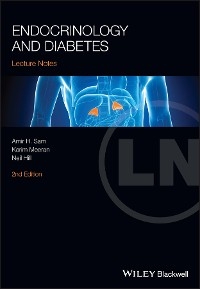
ENDOCRINOLOGY AND DIABETES
Lecture Notes
2nd Edition
Balancing depth and accessibility, Endocrinology and Diabetes: Lecture Notes, 2nd Edition, provides medical students and junior doctors with the key information needed to understand mechanisms of endocrine conditions. This popular revision guide covers endocrine anatomy and physiology, scientific background, clinical presentations, diagnosis and management of various endocrine disorders. Clear and concise chapters focus on conditions commonly encountered in both clinical practice and assessments.
Now in full colour, the second edition has been updated with further figures that demonstrate features of endocrine conditions.
- Features enhanced and expanded coverage of all major topics within diabetes and endocrinology
- Reflects the current knowledge base, evidence, and best practices in the field
- Provides easy access to the scientific background, presentation, diagnosis, and management of each condition
- Offers up-to-date information for those preparing for MRCP or endocrinology specialty exams
- Includes boxed sections in every chapter highlighting key points to aid revision and recall
Endocrinology and Diabetes: Lecture Notes, 2nd Edition, remains a must-have for medical students, specialist nurses, junior doctors, and trainees working on endocrinology rotations or preparing for the Specialty Certificate Examination in Endocrinology.
For more information on the complete range of Wiley medical student and junior doctor publishing, please visit: www.wiley.com
To receive automatic updates on Wiley books and journals, join our email list. Sign up today at www.wiley.com/email
This new edition is also available as an e-book. For more details, please see http://www.wiley.com/buy/9781118682241
All content reviewed by students for students
Wiley Medical Education books are designed exactly for their intended audience. All of our books are developed in collaboration with students. This means that our books are always published with you, the student, in mind.
If you would like to be one of our student reviewers, go to www.reviewmedicalbooks.com to find out more.
Professor Amir H. Sam is Head of Imperial College School of Medicine, London, UK. He is a Consultant Physician and Endocrinologist at Hammersmith and Charing Cross hospitals, UK. Professor Karim Meeran is Head of Speciality for Endocrinology at Imperial College Healthcare NHS Trust, and Director of Teaching at Imperial College School of Medicine, London, UK. Dr Neil Hill is a Consultant in Diabetes, Endocrinology and General Internal Medicine at Imperial College Healthcare NHS Trust, UK.
Acknowledgements vi
1 Thyroid anatomy and physiology 1
2 Hypothyroidism 8
3 Thyrotoxicosis 13
4 Goitre thyroid nodules and cancer 26
5 Adrenal anatomy and physiology 34
6 Adrenal insufficiency 38
7 Primary hyperaldosteronism 47
8 Phaeochromocytomas and paragangliomas 53
9 Congenital adrenal hyperplasia 60
10 Adrenal incidentalomas 66
11 Pituitary anatomy and physiology 69
12 Pituitary tumours and other sellar disorders 74
13 Hypopituitarism 87
14 Hyperprolactinaemia 91
15 Acromegaly 96
16 Cushing syndrome 101
17 Diabetes insipidus 109
18 Hyponatraemia and syndrome of inappropriate antidiuretic hormone secretion 113
19 Male reproductive physiology and hypogonadism 119
20 Gynaecomastia 127
21 Female reproductive physiology amenorrhoea and premature ovarian insufficiency 131
22 Polycystic ovary syndrome 139
23 Menopause 144
24 Calcium homeostasis hypercalcaemia and primary hyperparathyroidism 147
25 Hypocalcaemia 155
26 Osteomalacia 160
27 Osteoporosis 164
28 Paget Disease of Bone 170
29 Disorders of puberty 174
30 Growth and stature 181
31 Endocrine disorders of pregnancy 189
32 Neuroendocrine tumours 198
33 Obesity 209
34 Diabetes mellitus: classification pathogenesis and diagnosis 217
35 Treatment of diabetes mellitus 225
36 Diabetic emergencies 238
37 Diabetic retinopathy 246
38 Diabetic nephropathy 252
39 Diabetic neuropathy 257
40 Musculoskeletal and dermatological manifestations of diabetes 261
Index 269
1
Thyroid anatomy and physiology
Anatomy
The thyroid gland consists of left and right lobes connected by a midline isthmus (Figure 1.1). The isthmus lies below the cricoid cartilage, and the lobes extend upward over the lower half of the thyroid cartilage. The thyroid is covered by the strap muscles of the neck and overlapped by the sternocleidomastoids. The pretracheal fascia encloses the thyroid gland and attaches it to the larynx and the trachea. This accounts for the upward movement of the thyroid gland on swallowing.
The thyroid gland develops from the floor of the pharynx in the position of the foramen caecum of the adult tongue as a downgrowth that descends into the neck. During this descent, the thyroid gland remains connected to the tongue by the thyroglossal duct, which later disappears. However, aberrant thyroid tissue or thyroglossal cysts (cystic remnants of the thyroglossal duct) may occur anywhere along the course of the duct (Figure 1.2). Such thyroid remnants move upward when the tongue is protruded.
The thyroid gland is composed of epithelial spheres called follicles (Figure 1.3), whose lumens are filled with a proteinaceous colloid containing thyroglobulin. Two basic cell types are present in the follicles. The follicular cells secrete thyroxine (T4) and triiodothyronine (T3) and originate from a downward growth of the endoderm of the floor of the pharynx (see above). The parafollicular or C cells secrete calcitonin and arise from neural crest cells that migrate into the developing thyroid gland. The follicles are surrounded by an extensive capillary network.
Physiology
Thyroid hormones act on many tissues. They regulate:
- organogenesis, growth, and development (central nervous system, bone)
- energy expenditure
- protein, carbohydrate, and fat metabolism
- gut motility
- bone turnover
- heart rate and contractility, and peripheral vascular resistance
- beta‐adrenergic receptor expression
- muscle contraction and relaxation
- the menstrual cycle
- erythropoiesis.
Iodine is essential for normal thyroid function. It is obtained by the ingestion of foods such as seafood, seaweed, kelp, dairy products, some vegetables, and iodized salt. The recommended iodine intake for adults is 150 μg per day (250 μg per day for pregnant and lactating women). Dietary iodine is absorbed as iodide. Iodide is excreted in the urine.
Thyroid hormone synthesis
Figure 1.4 illustrates different steps in thyroid hormone synthesis.
- Thyroglobulin is synthesised in the rough endoplasmic reticulum and is transported into the follicular lumen by exocytosis.
- Iodide is transported into the thyroid follicular cells via a sodium–iodide symporter on the basolateral membrane of the follicular cells. Iodide transport requires oxidative metabolism.
Figure 1.1 Thyroid gland.
Figure 1.2 Possible sites of remnants of the thyroglossal duct.
- Inside the follicular cells, iodide diffuses to the apical surface and is transported by pendrin (a membrane iodide–chloride transporter) into the follicular lumen.
- Within the colloid lumen, thyroid peroxidase (TPO) enzyme catalyses the process of oxidation of the iodide (2I−) to iodine (I2) and its binding (organification) to the tyrosine residues of thyroglobulin to form monoiodotyrosine (MIT) and diiodotyrosine (DIT).
- DIT and MIT molecules are linked by TPO to form thyroxine (T4) and triiodothyronine (T3) in a process known as coupling.
- Thyroglobulin containing T4 and T3 is resorbed into the follicular cells by endocytosis and is cleaved by lysosomal enzymes (proteases and peptidases) to release T4 and T3. T4 and T3 are then secreted into the circulation.
- Uncoupled MIT and DIT are deiodinated, and the free tyrosine and iodide are recycled.
The thyroid gland stores T4 and T3 incorporated in thyroglobulin, and can therefore secrete T4 and T3 more quickly than if they had to be synthesised.
Extrathyroidal T3 production
T4 is produced entirely by the thyroid gland. The production rate of T4 is about 100 μg per day. However, only 20% of T3 is produced directly by the thyroid gland (by coupling of MIT and DIT). Around 80% of T3 is produced by the deiodination of T4 in peripheral extrathyroidal tissues (mainly liver and kidney). The total daily production rate of T3 is about 35 μg.
T4 is converted to T3 (the biologically active metabolite) by 5′‐deiodination (outer‐ring deiodination), mediated by deiodinases type 1 (D1) and type 2 (D2). D1 is the predominant deiodination enzyme in the liver, kidney and thyroid. D2 is the predominant deiodination enzyme in muscle, brain, pituitary, skin, and placenta. Type 3 deiodinase (D3) catalyses the conversion of T3 to reverse T3 (the inactive metabolite) by 5‐deiodination (inner ring deiodination), as shown in Figure 1.5.
Figure 1.3 (a) A low‐power histological image of thyroid tissue showing numerous follicles filled with colloid and lined by cuboidal epithelium. (b) A high‐power view of follicles lined by cuboidal epithelium. (c) Thyroid follicles (lined by follicular cells), surrounding capillaries and parafollicular cells.
Changes in T3 concentration may indicate a change in the rate of peripheral conversion and may not be an accurate measure of the change in thyroid hormone production. For example, the rate of T3 production (by 5′‐deiodination of T4) is reduced in acute illness and starvation.
Total and free T4 and T3
Approximately 99.97% of circulating T4 and 99.7% of circulating T3 are bound to plasma proteins: thyroid‐binding globulin (TBG), transthyretin (also known as thyroid‐binding prealbumin), albumin, and lipoproteins.
Only the unbound thyroid hormone is available to the tissues. T3 is less strongly bound and therefore has a more rapid onset and offset of action. The binding proteins have both storage and buffer functions. They help to maintain the serum free T4 and T3 levels within narrow limits, and also ensure continuous and rapid availability of the hormones to the tissues.
Figure 1.4 Steps in thyroid hormone synthesis. (1) Thyroglobulin (TG) is synthesised in the endoplasmic reticulum (ER) in the thyroid follicular cells and is transported into the follicular lumen. The small blue squares represent the amino acid residues comprising TG. (2) Iodide is transported into the follicular cell by the sodium–iodide (Na+/I−) symporter (NIS). (3) Iodide diffuses to the apical surface and is transported into the follicular lumen by pendrin (P). (4) Iodide is oxidised and linked to tyrosine residues in TG to form diiodotyrosine (DIT) and monoiodotyrosine (MIT) molecules. (5) Within the TG, T4 is formed from two DIT molecules, and T3 is formed from one DIT and one MIT molecule. (6) TG containing T4 and T3 is resorbed into the follicular cell by endocytosis. (7) TG is degraded by lysosomal enzymes to release T4 and T3 molecules, which move across the basolateral membrane of the follicular cell into the adjacent capillaries. TPO, thyroid peroxidase.
Figure 1.5 The conversion of T4 to T3 by 5′‐deiodination and to reverse T3 by 5‐deiodination.
Figure 1.6 (a) If serum thyroid‐binding globulin (TBG) levels are decreased, the level of thyroid hormone bound to TBG also decreases (the dark blue part of the bar). However, homeostatic mechanisms will maintain the free thyroid hormone levels (the light blue part of the bar). Note that although free hormone levels are unchanged, the ‘total’ hormone levels measured will be lower. (b) If TBG levels are increased, the level of thyroid hormone bound to TBG also increases (the dark blue part of the bar). However, homeostatic mechanisms will maintain the free hormone levels (the light blue part of the bar). Note that although free hormone levels are unchanged, the ‘total’ hormone levels measured will be higher.
Free thyroid hormone concentrations are easier to interpret than total thyroid hormone levels. This is because the level of bound hormone alters with changes in the levels of thyroid‐binding proteins, even though free T4 (and T3) concentrations do not change and the patient remains euthyroid (Figure 1.6). Box 1.1 summarises factors that may alter TBG levels.
Other causes of increased serum total T4 and T3 levels include familial dysalbuminaemic hyperthyroxinaemia (due to the presence of an abnormal albumin with a higher affinity for T4) and the presence of anti‐T4 antibodies. Patients with these conditions are euthyroid, have normal serum thyroid‐stimulating hormone (TSH) levels, and usually have normal serum free T4 and T3 levels when measured by appropriate methods.
Thyroid...
| Erscheint lt. Verlag | 8.6.2023 |
|---|---|
| Reihe/Serie | Lecture Notes |
| Lecture Notes | Lecture Notes |
| Sprache | englisch |
| Themenwelt | Sachbuch/Ratgeber ► Gesundheit / Leben / Psychologie |
| Medizin / Pharmazie ► Medizinische Fachgebiete ► Innere Medizin | |
| Schlagworte | Diabetes • diabetes clinical guide • diabetes quick reference • diabetes revision guide • endocrine disease endocrinology medical student guide • endocrinology • endocrinology clinical guide • endocrinology quick reference • endocrinology revision guide • endocrinology trainee guide • Endokrinologie • Medical Science • Medizin |
| ISBN-10 | 1-118-68222-X / 111868222X |
| ISBN-13 | 978-1-118-68222-7 / 9781118682227 |
| Informationen gemäß Produktsicherheitsverordnung (GPSR) | |
| Haben Sie eine Frage zum Produkt? |
 EPUB (Adobe DRM)
Kopierschutz: Adobe-DRM
Adobe-DRM ist ein Kopierschutz, der das eBook vor Mißbrauch schützen soll. Dabei wird das eBook bereits beim Download auf Ihre persönliche Adobe-ID autorisiert. Lesen können Sie das eBook dann nur auf den Geräten, welche ebenfalls auf Ihre Adobe-ID registriert sind.
Details zum Adobe-DRM
Dateiformat: EPUB (Electronic Publication)
EPUB ist ein offener Standard für eBooks und eignet sich besonders zur Darstellung von Belletristik und Sachbüchern. Der Fließtext wird dynamisch an die Display- und Schriftgröße angepasst. Auch für mobile Lesegeräte ist EPUB daher gut geeignet.
Systemvoraussetzungen:
PC/Mac: Mit einem PC oder Mac können Sie dieses eBook lesen. Sie benötigen eine
eReader: Dieses eBook kann mit (fast) allen eBook-Readern gelesen werden. Mit dem amazon-Kindle ist es aber nicht kompatibel.
Smartphone/Tablet: Egal ob Apple oder Android, dieses eBook können Sie lesen. Sie benötigen eine
Geräteliste und zusätzliche Hinweise
Buying eBooks from abroad
For tax law reasons we can sell eBooks just within Germany and Switzerland. Regrettably we cannot fulfill eBook-orders from other countries.
aus dem Bereich