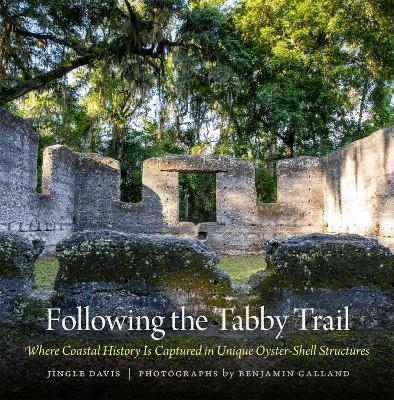
Following the Tabby Trail
University of Georgia Press (Verlag)
978-0-8203-5749-2 (ISBN)
- Lieferbar (Termin unbekannt)
- Versandkostenfrei
- Auch auf Rechnung
- Artikel merken
Though the first documented use of tabby in North America was in 1672 in what is now St. Augustine, Florida, Spanish colonists had used many of its constituent parts a century earlier. In addition to their Spanish-speaking competitors, colonizers from France and the British Isles also enthusiastically adopted the building material for their colonial missions. This meant, of course, that enslaved Africans and Indigenous peoples built with the material. Tabby remained a fashionable, effective, and enduring building material until shortly after the Civil War.
This richly photographed work provides readers with a guide to the underexplored string of tabby structures still standing along the stretch of coast between Florida and South Carolina, an approximately 275-mile trail traced by the book from just south of St. Augustine north to the dead town of Dorchester near Summerville. Sites include such varied structures as ancient Late Archaic shell mounds called middens and rings of shells thousands of years old; Fort Matanzas, built in 1742 but named for a sixteenth-century massacre of French colonists by St. Augustine’s Spanish founder Pedro Menéndez de Avilés; Fort Mose, a significant feature of Florida’s Black Heritage Trail; and homes of the enslaved, warehouses, Charleston’s seawall, churches, and cemeteries.
Jingle Davis (Author) JINGLE DAVIS was a retired journalist who worked for the Atlanta Journal-Constitution for over twenty years, often covering South Georgia and the coast. She is the author of Island Time: An Illustrated History of St. Simons Island, Georgia and Island Passages: An Illustrated History of Jekyll Island, Georgia (both Georgia). Benjamin Galland (Photographer) BENJAMIN GALLAND, born and raised on St. Simons Island, grew up exploring and photographing the pristine and unparalleled beauty of the southeastern coast. Aside from his artistic photography, he owns Volo Project and offers commercial marketing photography specializing in lifestyle, tourism, hospitality, food, and conservation. With a passion for storytelling, the outdoors, and conservation, Galland uses his camera to portray the things that matter most to him. He has five books published with the University of Georgia Press: Island Time: An Illustrated History of St. Simons Island, Georgia; Island Passages: An Illustrated History of Jekyll Island, Georgia; Sapelo: People and Place on a Georgia Sea Island; Cumberland Island: Footsteps in Time; and Following the Tabby Trail: Where Coastal History Is Captured in Unique Oyster-Shell Structures. Galland is an avid outdoorsman and enjoys kayaking, fly-fishing, camping, and exploring.
| Erscheinungsdatum | 18.05.2022 |
|---|---|
| Reihe/Serie | Wormsloe Foundation Publication |
| Illustrationen | Benjamin Galland |
| Zusatzinfo | 4 Maps; 4 Maps; 4 Maps; 4 Maps; 4 Maps; 4 Maps; 4 Maps; 4 Maps |
| Verlagsort | Georgia |
| Sprache | englisch |
| Maße | 203 x 203 mm |
| Themenwelt | Sachbuch/Ratgeber ► Natur / Technik ► Natur / Ökologie |
| Reisen | |
| Technik ► Architektur | |
| ISBN-10 | 0-8203-5749-9 / 0820357499 |
| ISBN-13 | 978-0-8203-5749-2 / 9780820357492 |
| Zustand | Neuware |
| Informationen gemäß Produktsicherheitsverordnung (GPSR) | |
| Haben Sie eine Frage zum Produkt? |
aus dem Bereich