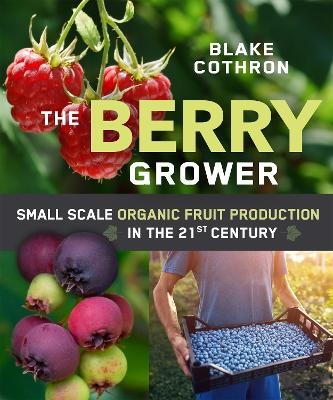
The Berry Grower
New Society Publishers (Verlag)
978-0-86571-965-1 (ISBN)
Grow Berries that Thrive—At Home, in your Market Garden, or on your Small Farm
Unlock the secrets to profitable, sustainable, and innovative berry growing. From backyard plots to market gardens, The Berry Grower equips you to grow organic small fruits successfully in any setting.
What You'll Learn
Whether you're a beginner or experienced grower, this guide gives you practical strategies, expert insights, and hands-on knowledge to produce high-quality fruit that sells or feeds your family. You'll discover how to:
Plan and manage your orchard or berry patch for efficiency and profit
Cultivate a wide range of fruits including raspberries, blackberries, strawberries, currants, gooseberries, figs, and lesser-known but high-value varieties
Optimize soil fertility, manage weeds naturally, and control pests organically
Adapt to climate change, drought, and extreme weather with resilient growing methods
Harvest, handle, and pack fruit professionally for the market or CSA
Diversify products beyond fresh fruit for increased revenue and market stability
Learn from interviews with successful small-scale growers and market gardeners across the US.
Why This Book Works for You
Blake Cothron draws on over 20 years of experience as an organic farmer, nursery operator, educator, and speaker. His expertise makes complex concepts approachable, whether you're planning your first backyard patch or expanding a small-scale farm.
Praise from Experts
"Blake covers everything from soup to nuts, figuratively, in growing these fruits in various settings, for home use or markets. A number of the fruits he mentions are not yet well-known, but are worth growing."
― Lee Reich, PhD, author of Growing Figs in Cold Climates and The Ever Curious Gardener
Start Growing your Future
Today From self-sufficiency at home to profitable small fruit production for local markets, The Berry Grower provides everything you need to turn soil into success. Pick up your copy and begin growing your best berries yet.
Blake Cothron is an organic farmer, nurseryman, writer, musician, and speaker, with over 20 years' experience in organic agriculture, botany, horticulture, and growing food. He is the co-owner and co-operator of Peaceful Heritage Nursery, a 4-acre USDA Certified Organic research farm, orchard, and edible plant nursery. Author of Pawpaws: The Complete Growing and Marketing Guide, he has also written for Permaculture Design magazine and various online publications. Blake has an educational blog and YouTube channel devoted to fruit growing, and he is an educator with the Organic Association of Kentucky. He divides his time between farming, research, writing, beekeeping, gardening, travel, yoga, meditation, and being a husband and father in beautiful Kentucky.
Preface
PART 1: THE BASICS
1. Why Small Scale, Small Fruits?
— Why small fruit growing? — How and where to start? — Understanding current climate challenges — Small fruits to the rescue — Why micro fruit farming? — Limitations of small fruit growing — Maximize profits by being the workforce— The future of small and micro farming
2. 21st Century Strategic Planning
— Planning it out — How to research — Evaluating agricultural profit forecasts — Understanding your bioregion and regional climate — Choosing cultivars — How many plants?— Pollination
3. Sourcing Plants and Navigating the 21st Century Nursery Scene
— Sourcing plants and plant material — Sources to avoid — Organic or conventional? — Navigating the nursery scene — Quality nurseries
4. Creating Beds
— Creating space for small fruits to thrive — Mechanical tillage — No-till options — Spacing — Managing walkways — Stale bedding — Planting the beds — Planting in rows— Cover cropping
5. Managing Soil Fertility Organically
— Practical considerations — Soluble and insoluble organic fertilizers — Animal-product based fertilizers — Vegan plant-based fertilizers — Mineral fertilizers — Compost and manures — Consider the impacts — Applying organic fertilizers— Unlocking latent soil fertility
6. Planting Successfully
— Handling and inspecting nursery stock — Storing dormant plants — Effectively handling cuttings — Pre-planting preparations — Proper planting practices— Post-planting care
7. Organic Weed Management
— Using permanent grass cover — Mulch — Landscape fabric — Flame weeding — Plant Guilds
8. Tools of the Trade
9. Maintenance, Protection, and Organic Pest Control
— Integrated Pest Management (IPM) — Insect management — Common animal pests — Frost protection
PART 2: GETTING TO KNOW YOUR FRUIT ALLIES
10. Blackberries
— Types of modern blackberries — Site considerations — Cultivation — Fertilizing — Mulch and irrigation — Pests/Diseases/Challenges — Harvest — Marketing— Recommended cultivars
11. Blueberries
— Species — Cultivation — Planting — Weed control — Irrigation — Pruning — Pests/Diseases/Challenges — Cultivars (by region)— Harvesting and marketing
12. Raspberries
— Species — Cultivation — Irrigation — Pruning — Thinning — Trellising — Mulch— Propagation — Pests/Diseases/Challenges — Marketing— Cultivars
13. Strawberries
— Cultivation — Growing Methods — Thinning — Planting — Irrigation — Harvesting — Marketing — Pests/Diseases/Challenges— Cultivars
14. Juneberries
— Cultivation — Best species by region — Irrigation — Pests/Diseases/Challenges — Marketing— Cultivars
15. Muscadine Grapes
— Cultivation — Irrigation — Pollination — Pests and diseases — Marketing— Cultivars
16. Mulberries
— Species of mulberries — Cultivation — Irrigation — Potential for commercial production — Harvesting — Pests/Diseases/Challenges — Marketing— The future of mulberries— Recommended cultivars
17. Gooseberries
— Cultivation — Irrigation — Pests and diseases — Harvesting — Marketing— Recommended cultivars
18. Currants
— Cultivation — Irrigation — Pests and diseases — Harvesting — Marketing— Cultivars
19. Figs
— Cultivation — Cold region (USDA zones 5–7) — Understanding high tunnel fig growing — Warm region (USDA zones 8–10) — Harvesting
— Marketing — Pests and diseases— Cultivars
20. Tomatoes
— Cultivation — Pests and diseases — Irrigation — Marketing— Cultivars
21. Other Small Fruits Worthy of Consideration ...Or Not
— Aronia (Aronia melanocarpa) — Autumn Olive (Elaeagnus umbellata) and Goumi (Elaeagnus multiflora) — Bush and Nanking Cherries
— Kiwiberry (Actinidia arguta) — Cactus Fruits — Cornelian Cherry (Cornus mas) — Hardy Passionfruit (Passiflora incarnata) — Elderberry (Sambucus canadensis) — Feijoa (Acca sellowiana) — Goji (Lycium barbarum) — Hybrid Cane Berries — Rosehips — Seaberry/sea buckthorn(Hippophae rhamnoides) — Munson Grapes — Che (Maclura tricuspidata) — Honeyberry (Lonicera caerulea)
PART 3: HARVESTING, MARKETING, AND THE FUTURE
22. Harvesting and Post-Harvesting
— Harvest efficiency— Protecting, storing, and chilling
23. Market Planning and Strategies
— Direct marketing methods
24. The Future of Small Fruit Growing
— Climate change and fruit growing— Rescuing the genetic pool by selecting your own local cultivars
25. Interviews with Successful Small Fruit Market Growers
26. Conclusion
Appendix: Jivamritam
Notes
Resources
Index
About the Author
About New Society Publishers
| Erscheinungsdatum | 13.10.2021 |
|---|---|
| Zusatzinfo | 8 Illustrations, color; 50 Illustrations, black and white |
| Verlagsort | Gabriola Island |
| Sprache | englisch |
| Maße | 191 x 225 mm |
| Gewicht | 508 g |
| Themenwelt | Sachbuch/Ratgeber ► Natur / Technik ► Garten |
| Naturwissenschaften ► Biologie ► Botanik | |
| Wirtschaft ► Betriebswirtschaft / Management ► Planung / Organisation | |
| Weitere Fachgebiete ► Land- / Forstwirtschaft / Fischerei | |
| ISBN-10 | 0-86571-965-9 / 0865719659 |
| ISBN-13 | 978-0-86571-965-1 / 9780865719651 |
| Zustand | Neuware |
| Informationen gemäß Produktsicherheitsverordnung (GPSR) | |
| Haben Sie eine Frage zum Produkt? |
aus dem Bereich