


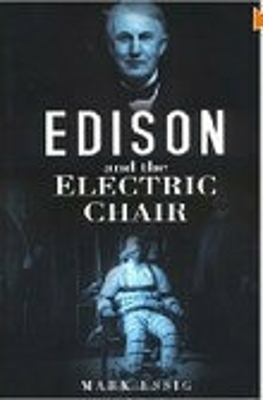
Edison and the Electric Chair
Seiten
2003
The History Press Ltd (Verlag)
978-0-7509-3643-9 (ISBN)
The History Press Ltd (Verlag)
978-0-7509-3643-9 (ISBN)
- Titel z.Zt. nicht lieferbar
- Portofrei ab CHF 40
- Auch auf Rechnung
- Artikel merken
Edison and the electric chair
In 1879 Thomas Edison unveiled a world-changing invention - the light bulb and then launched the electrification of America's cities. A decade later, despite having been an avowed opponent of the death penalty, Edison threw his laboratory resources and reputation behind the creation of a very different sort of device - the electric chair. Deftly exploring this startling chapter in history, Edison and the Electric Chair delivers a provocative new examination of Edison himself.
Edison championed the electric chair for reasons that remain controversial to this day. In the 1880s, as he was desperately promoting his revolutionary direct-current lines, his bitter rival, George Westinghouse, was undercutting his business with a less expensive alternating-current system. The battle for electrical dominance reached its peak just as New York's legislators were seeking a more humane alternative to the gallows. Called on for his expertise, Edison helped persuade state officials to reject the guillotine and lethal injection in favour of electricity. He conducted dramatic tests and asserted that 'it will be so lightning-quick that the criminal can't suffer much'. But there was a catch: while Edison could claim that his own direct current was perfectly safe, only Westinghouse's alternating current could cause certain death in the electric chair.
Was Edison genuinely concerned about the suffering of the condemned? Or was he waging a campaign to smear alternating current and boost his own system? Exploring the fascinating history of electricity, Mark Essig captures an era when the public was mesmerized and terrified by an invisible force that produced blazing light, powered streetcars, carried telephone conversations - and killed.
In 1879 Thomas Edison unveiled a world-changing invention - the light bulb and then launched the electrification of America's cities. A decade later, despite having been an avowed opponent of the death penalty, Edison threw his laboratory resources and reputation behind the creation of a very different sort of device - the electric chair. Deftly exploring this startling chapter in history, Edison and the Electric Chair delivers a provocative new examination of Edison himself.
Edison championed the electric chair for reasons that remain controversial to this day. In the 1880s, as he was desperately promoting his revolutionary direct-current lines, his bitter rival, George Westinghouse, was undercutting his business with a less expensive alternating-current system. The battle for electrical dominance reached its peak just as New York's legislators were seeking a more humane alternative to the gallows. Called on for his expertise, Edison helped persuade state officials to reject the guillotine and lethal injection in favour of electricity. He conducted dramatic tests and asserted that 'it will be so lightning-quick that the criminal can't suffer much'. But there was a catch: while Edison could claim that his own direct current was perfectly safe, only Westinghouse's alternating current could cause certain death in the electric chair.
Was Edison genuinely concerned about the suffering of the condemned? Or was he waging a campaign to smear alternating current and boost his own system? Exploring the fascinating history of electricity, Mark Essig captures an era when the public was mesmerized and terrified by an invisible force that produced blazing light, powered streetcars, carried telephone conversations - and killed.
Mark Essig has a doctorate in American History from Cornell University, where he specialised in the history of science, cultural history and American literature. He lives in Los Angeles.
| Erscheint lt. Verlag | 13.11.2003 |
|---|---|
| Verlagsort | Stroud |
| Sprache | englisch |
| Maße | 148 x 210 mm |
| Gewicht | 790 g |
| Themenwelt | Literatur ► Biografien / Erfahrungsberichte |
| Sachbuch/Ratgeber ► Geschichte / Politik | |
| Geschichte ► Teilgebiete der Geschichte ► Technikgeschichte | |
| Recht / Steuern ► Strafrecht ► Kriminologie | |
| ISBN-10 | 0-7509-3643-6 / 0750936436 |
| ISBN-13 | 978-0-7509-3643-9 / 9780750936439 |
| Zustand | Neuware |
| Informationen gemäß Produktsicherheitsverordnung (GPSR) | |
| Haben Sie eine Frage zum Produkt? |
Mehr entdecken
aus dem Bereich

aus dem Bereich
eine Geschichte der Fehlbarkeit von Mensch und Technologie
Buch | Hardcover (2025)
C.H.Beck (Verlag)
CHF 44,75
von Gutenberg bis zum Smartphone
Buch | Hardcover (2025)
Klett-Cotta (Verlag)
CHF 33,55
Buch | Softcover (2024)
Lehmanns Media (Verlag)
CHF 27,90


